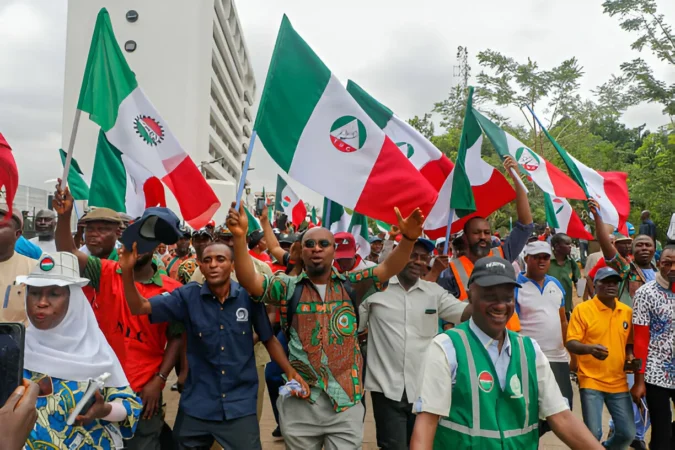


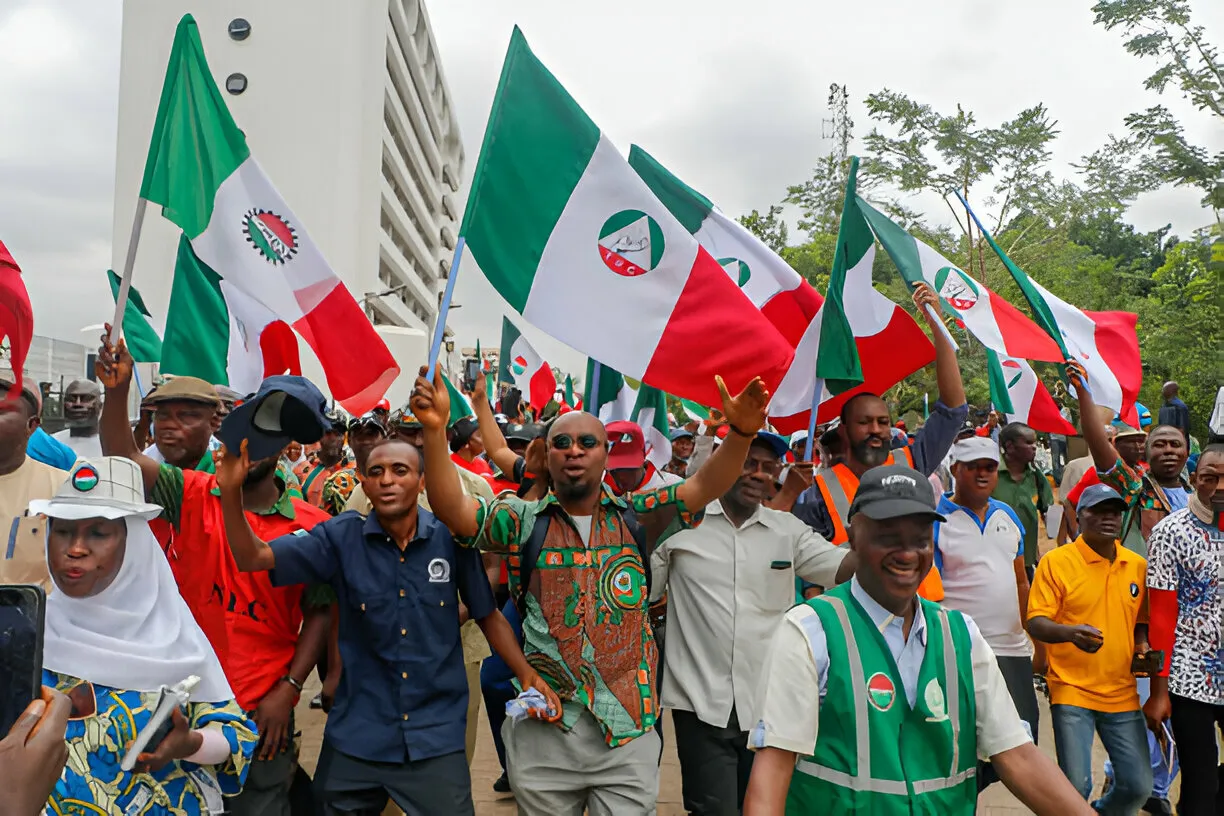
ABUJA, Nigeria — Nigeria faces renewed industrial tension after the Nigeria Labour Congress (NLC) rejected the Federal Government’s response to demands for urgent economic relief and the commencement of negotiations for a new national minimum wage.
The labour union says rising living costs have eroded workers’ purchasing power, leaving many struggling to afford essential goods and services despite the current minimum wage having increased from ₦30,000 to ₦70,000 in 2024.
In a letter dated October 13, 2026, and addressed to Labour and Employment Minister Muhammad Maigari Dingyadi, NLC President Joe Ajaero argued that the government’s response failed to address the substance of workers’ grievances.
The dispute has raised concerns about a possible nationwide strike if the two sides fail to reach an agreement before the union’s 14-day ultimatum expires. However, the NLC has not formally declared an immediate strike.
Why the NLC is demanding immediate negotiations
At the centre of the dispute is a disagreement over when negotiations for the next national minimum wage should begin.
The Federal Government maintains that the existing ₦70,000 minimum wage, signed into law on July 29, 2024, is due for review on June 1, 2027, under the statutory three-year review cycle.
The government argues that beginning another review before that date would be premature and inconsistent with the legal framework governing minimum-wage negotiations.
The NLC disputes that interpretation. It argues that the National Minimum Wage Act of 2019, as amended in 2024, provides grounds for beginning preparations earlier and that negotiations should commence sufficiently in advance to prevent delays in implementing a new agreement.
The union says it is not demanding the immediate introduction of a new minimum wage but wants the administrative process to begin, including the nomination of representatives, the establishment of a tripartite committee and the setting of a negotiation agenda.
In its response, the union acknowledged that the ministry had replied relatively quickly but questioned whether that response would produce meaningful action.
“However, while we appreciate this prompt acknowledgement, we are constrained to observe that speed without substance may amount to an empty gesture,” the NLC wrote, according to Vanguard.
The disagreement therefore concerns both the timing of wage negotiations and the legal interpretation of the framework governing them.
Petrol prices, tax relief and wage awards
The minimum-wage dispute forms part of a broader set of demands aimed at easing pressure on Nigerian workers.
The NLC wants the government to reduce petrol prices to the levels prevailing when the current minimum wage was signed into law in 2024. It also wants tax relief measures agreed upon in 2023 implemented and immediate wage awards introduced to cushion the effects of rising living costs.
The union has further called for the implementation of outstanding agreements involving the Joint Health Sector Unions and the Joint Public Sector Negotiating Council.
These demands reflect the connection between workers’ earnings and the wider cost of living. Higher transport costs can increase the price of food and other goods, while rising expenses for healthcare, housing and education reduce the amount households can spend on other necessities.
The government, meanwhile, has cited measures including the Presidential Compressed Natural Gas Initiative, food-security interventions and other social-support programmes as part of its response to economic hardship.
It has also said relevant ministries and agencies are being engaged to address demands falling within their responsibilities and reiterated its willingness to maintain dialogue with organised labour.
The two sides have yet to agree on a timetable that would resolve the immediate dispute.
Inflation eases, but household pressures remain
Nigeria’s latest inflation figures offer a more complicated picture of the economy.
According to figures reported by Punch on October 16, headline inflation declined to 14.63 per cent in September 2026, from 15.39 per cent in August. The moderation was supported largely by lower food inflation, although energy costs continued to rise.
The decline in headline inflation is a potentially positive development, but it does not necessarily mean that households are experiencing an equivalent reduction in their expenses.
Inflation measures the rate at which prices change over time. When inflation slows, prices may still be rising, only at a slower pace. Furthermore, the cumulative increase in the cost of essential goods can leave households paying substantially more than they did before.
For workers whose wages have not kept pace with those increases, the practical issue is purchasing power: how much food, transport, healthcare and other necessities their earnings can cover.
This is central to the NLC’s argument that the nominal increase in the minimum wage has not translated into a corresponding improvement in workers’ living standards.
However, assessing the extent of the pressure requires looking beyond the headline inflation rate to wage growth, food prices, transport costs and household expenditure patterns.
What a possible strike could mean for Nigeria
The prospect of industrial action places pressure on both the government and organised labour to find a negotiated settlement.
A nationwide strike could disrupt public services and economic activity, depending on the sectors and workers involved. It could also intensify pressure on businesses and households already dealing with elevated living costs.
For the government, the challenge is to respond to workers’ immediate concerns while maintaining a predictable legal and fiscal framework for wage negotiations.
For the NLC, the challenge is to secure concrete concessions without allowing the dispute to escalate in ways that could impose additional costs on the public.
The union’s ultimatum is therefore an important test of the government’s ability to manage industrial relations through negotiation rather than confrontation. But the possibility of a strike should not be confused with a confirmed decision to call one.
The next significant development will be whether the government offers a more definite timetable for addressing the union’s demands and whether the NLC considers that response sufficient.
A dispute over more than the minimum wage
The confrontation exposes a wider tension in Nigeria’s economic policy: the difference between improving headline economic indicators and ensuring that households experience tangible improvements in their standard of living.
A falling inflation rate can signal that price pressures are easing, but it does not automatically restore the purchasing power lost during earlier periods of rapid price increases. For wage earners, the relevant question is whether earnings can cover essential expenses and provide a reasonable measure of financial security.
This explains why the NLC is pursuing several demands simultaneously. Its position links minimum-wage negotiations to petrol prices, tax relief and outstanding labour agreements rather than treating salary levels as an isolated issue.
The dispute also highlights the importance of clear legal timelines. The government and the union disagree over when preparations for a new wage agreement should begin. Even if the current statutory review date remains June 2027, the timing of preliminary negotiations is a separate practical question that could potentially be addressed through dialogue.
Also Read: Tinubu defends economic reforms amid Nigeria cost-of-living crisis
An early start to negotiations would not, by itself, guarantee a new wage or resolve disagreements over the size of any increase. It could, however, provide more time for consultations, economic assessments and agreement on implementation.
The government must also weigh the fiscal implications of higher public-sector wage costs, while organised labour must demonstrate how its proposals would help workers without overlooking the broader economic conditions affecting employers and public finances.
Neither side can resolve these questions through competing statements alone. A credible settlement would require a clear timetable, transparent negotiations, realistic commitments and a mechanism for monitoring implementation.
What happens next?
The immediate priority is to prevent the dispute from escalating while establishing a credible path towards addressing workers’ demands.
The government has maintained that it remains open to dialogue, while the NLC has warned that assurances without concrete action will not be enough. Whether those positions can be reconciled will determine the next phase of the dispute.
For Nigerian workers, the outcome will matter less in terms of the statements exchanged between officials and union leaders than in whether their earnings can keep pace with the cost of essential goods and services.
For the government, the challenge is to demonstrate that economic recovery can translate into improved living standards without undermining fiscal stability.
The dispute remains unresolved. Until the two sides reach an agreement or the NLC announces its next course of action, the prospect of industrial unrest will remain a significant concern for Nigeria’s economy and public services.