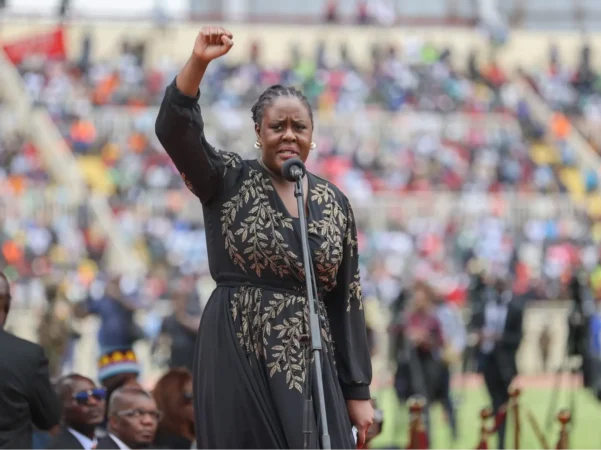


SIAYA, Kenya — East African Legislative Assembly (EALA) lawmaker Winnie Odinga has declared her intention to contest the Nairobi Senate seat in the 2027 General Election, moving her political ambitions into the open as questions continue over the direction of Kenya’s opposition politics following the death of her father, former Prime Minister Raila Odinga.
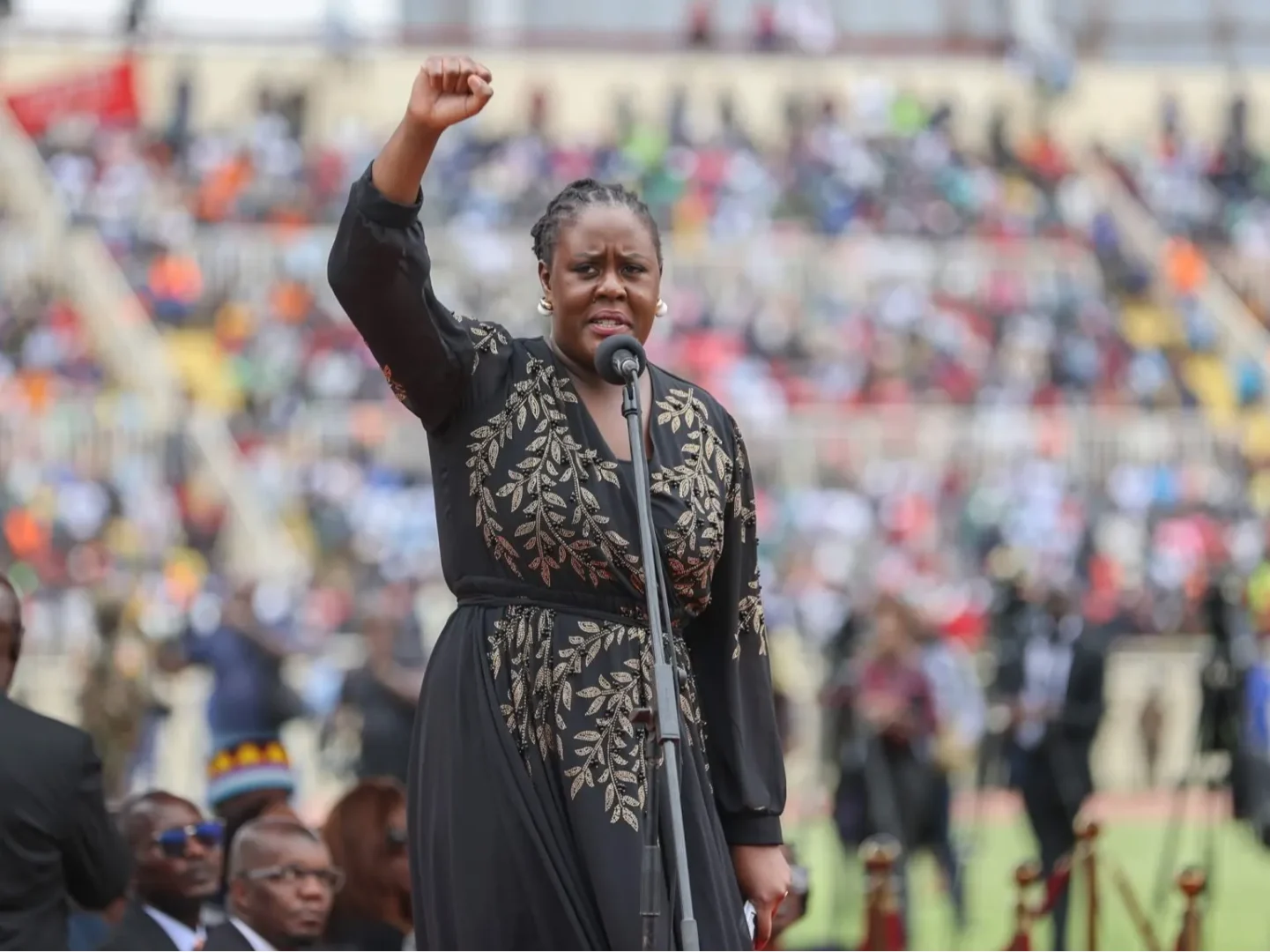
Winnie made the announcement on Thursday, October 15, during the first anniversary commemoration of Raila’s death at Migwena Grounds in Bondo, Siaya County. She directly referenced Nairobi Senator Edwin Sifuna’s reported pursuit of higher political office as she explained her decision to enter the race.
“Let it not be a rumour, there is space for me. I am running for Nairobi Senator,” she declared, urging young Kenyans to contest elective positions rather than remain on the sidelines of political leadership.
Her announcement puts Nairobi’s senatorial contest firmly in the political conversation ahead of the next general election. Sifuna won the seat in 2022 on an Orange Democratic Movement (ODM) ticket and has since become associated with the Linda Mwananchi movement and calls for a broader national political role.
Winnie, however, did not publicly specify which party ticket she intends to pursue, leaving a significant question about how her candidacy will fit into the political alignments taking shape before 2027.
The Sifuna factor in Winnie’s decision
Winnie’s reference to Sifuna was one of the most consequential elements of her announcement. Rather than simply declaring an ambition to enter elective politics, she presented the Nairobi Senate seat as an opportunity arising from the incumbent senator’s reported interest in higher office.
That framing brings the political plans of two prominent figures into the same conversation, although it does not establish that they are engaged in a direct contest or that their wider political interests are necessarily opposed.
Sifuna’s next move remains important to the shape of the race. If he pursues another elective position, the Nairobi Senate seat could attract a different field of candidates. If he seeks re-election, the question of party nominations and competing political vehicles could become more immediate.
The situation is further complicated by the evolving relationship between ODM and the Linda Mwananchi movement. The movement has become associated with Sifuna and other political figures, but Winnie’s announcement alone does not establish whether she intends to contest under its banner, through ODM or on another party ticket.
That uncertainty matters because party nominations, political alliances and candidate selection can shape the choices available to voters. The next phase of the story will therefore depend not only on who declares an interest in the seat, but also on the formal decisions made by the parties involved.
A call for young people to enter politics
Winnie also used her announcement to urge young Kenyans to seek elective office at different levels, including governor, senator, member of Parliament and member of county assembly.
“Na siende peke yangu. I want young people to come out and vie for these seats,” she said.
The appeal places youth participation alongside her own political ambition. It also raises a broader question about representation: whether young people can move beyond political mobilisation and take up meaningful roles in decision-making.
Young Kenyans have frequently featured in public debate over employment, the cost of living, access to opportunity and accountability. Encouraging them to contest elections is one way to widen participation, but participation alone does not guarantee that their concerns will be reflected in policy.
The practical test will be whether aspiring candidates can access party structures, compete fairly for nominations, raise the resources required to campaign and articulate programmes that respond to constituents’ needs.
Winnie’s call is therefore both a political message and a challenge to the wider party system. If young people are to participate beyond rallies and online debate, parties will need to provide credible pathways into leadership and meaningful opportunities to influence their platforms.
What the Nairobi Senate seat entails
Nairobi’s Senate contest carries significance because of the county’s economic importance and the scale of its public-service challenges. Yet the responsibilities of a senator differ from those of a governor or a member of the National Assembly.
Under Article 96 of the Constitution, the Senate represents counties, participates in legislation concerning counties, determines the basis for allocating national revenue among county governments and exercises oversight over national revenue allocated to counties.
The senator does not directly manage Nairobi’s day-to-day services, which fall primarily under the county government. A candidate seeking the seat must therefore explain how they would use the Senate’s legislative and oversight responsibilities to address issues affecting residents.
For Nairobi voters, that could include scrutiny of county funding, legislation affecting urban services and accountability for how public resources are used. The value of a candidate’s programme will depend on how clearly it connects the constitutional role of the Senate to the problems residents face.
Winnie’s declaration establishes her intention to seek the position. The next question is what priorities she would advance and how she would distinguish her proposed approach from that of other contenders.
Raila Odinga’s legacy and Winnie’s political future
The timing of the announcement gave it an additional personal and political dimension. Winnie spoke during the first anniversary of her father’s death, a period of remembrance for a figure whose decades-long career shaped Kenya’s opposition politics and national debate.
She also addressed questions about her absence from the public spotlight, saying that losing her father had taken a profound emotional toll. Her remarks offered context for her period away from public view and acknowledged the support she had received from Kenyans.
The moment brought together personal grief and a decision about her own political future. But the significance of Raila’s legacy should not obscure the independent political choices Winnie will now have to make.
Also Read: Dynasty or Destiny? Inside Winnie Odinga’s battle for Raila’s legacy
The Odinga name carries considerable historical recognition, but voters will still have questions about a candidate’s policies, record, accountability and capacity to represent their interests. Political inheritance can shape public attention; it does not replace the need to articulate a clear programme.
For Winnie, entering the Nairobi Senate race would mark a more direct move into elective politics in Kenya, building on her current role in the East African Legislative Assembly. How she translates that experience into a platform for Nairobi residents remains to be seen.
The questions ahead of 2027
Winnie’s announcement brings three issues into sharper focus: which party ticket she will seek, how her plans relate to Sifuna’s political ambitions, and what agenda she intends to offer Nairobi voters.
Those questions are more consequential than speculation about a contest between personalities. They will help determine the political choices presented to voters and whether the candidates’ campaigns address the responsibilities of the offices they seek.
Her call for young people to enter politics also presents a test for political parties, which must show whether they can turn appeals for participation into meaningful opportunities for new candidates.
For now, Winnie has made her intention clear. The formal nomination process, her choice of political vehicle and the details of her proposed agenda remain important developments to watch.
As the 2027 election approaches, the Nairobi Senate race will be shaped not simply by the prominence of the people seeking the seat, but by their political platforms, organisational decisions and ability to explain how they would represent the county’s interests.