


NAIROBI, Kenya — Canada has updated its travel guidance for Kenya following confirmation of an imported case of Bundibugyo Ebola in Nairobi, joining other governments issuing health advice as Kenyan authorities work to prevent further transmission.
The Canadian guidance urges travellers to follow local public-health instructions, maintain good hygiene and avoid healthcare facilities in affected areas unless they require urgent treatment. Travellers are also advised to monitor their health during their stay and for 21 days after leaving Kenya.
“If you develop symptoms of Ebola disease, isolate yourself from others and seek medical care right away,” the advisory states.
Canada also warns against contact with people suspected of having Ebola, contaminated items and the bodies of people who have died from the disease or unexplained illnesses. It says the risk to most travellers remains low when appropriate precautions are followed.
The update comes after Kenya confirmed its first imported case of Bundibugyo virus disease on October 6, involving a Kenyan citizen who had been living in the Democratic Republic of the Congo (DRC). The patient subsequently died in Nairobi.
Kenya traces contacts linked to confirmed case
Kenya’s Ministry of Health has intensified contact tracing and surveillance following confirmation of the case.
The patient had reportedly been living in the DRC, where he became ill and received treatment at several hospitals. He travelled by road to Kampala, Uganda, before boarding a flight to Nairobi on October 3.
After arriving at Jomo Kenyatta International Airport (JKIA), he was taken to Nairobi Hospital, where he was isolated and tested. Samples tested positive for Bundibugyo virus at both the National Virology Reference Laboratory and the Kenya Medical Research Institute (KEMRI), according to the Ministry of Health and the WHO.
The WHO said the patient died on October 5 and was buried the following day under Kenya’s safe and dignified burial protocol.
By October 7, health authorities had identified 57 contacts linked to the patient, with 10 people placed under quarantine at the National Police Service Hospital in Nairobi. The Ministry said efforts to trace and follow up with the remaining contacts were continuing.
Further updates on October 8 indicated that authorities had accounted for additional contacts as the tracing exercise expanded.
The health response includes enhanced surveillance, isolation arrangements and additional screening for travellers arriving from countries considered at higher risk.
US and UK issue health guidance
Canada’s update follows similar measures by the United States and the United Kingdom.
The US Embassy in Nairobi issued a health alert on October 7, advising American citizens who may have been exposed to the virus to monitor their health and seek medical advice if symptoms develop.
The UK Foreign, Commonwealth and Development Office also updated its Kenya health guidance following confirmation of the imported case. It advised travellers to follow instructions from Kenyan authorities and monitor official health updates. Its existing regional travel warnings for parts of Kenya remain separate from the Ebola-related guidance.
The different advisories reflect precautions being taken after the case was confirmed. They do not, by themselves, establish that Ebola is spreading widely within Kenya.
Screening intensified at JKIA
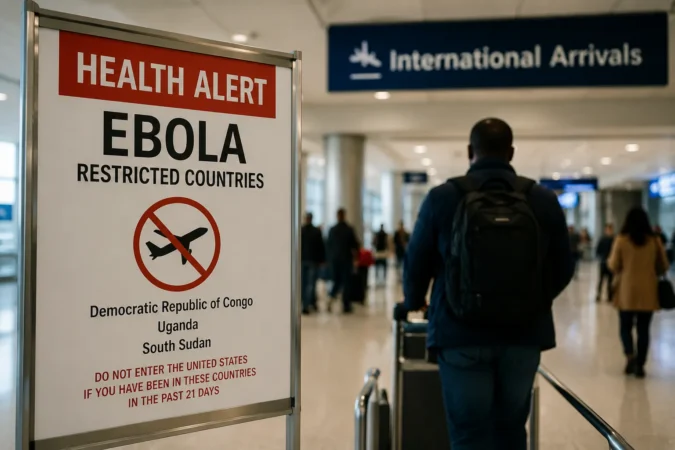
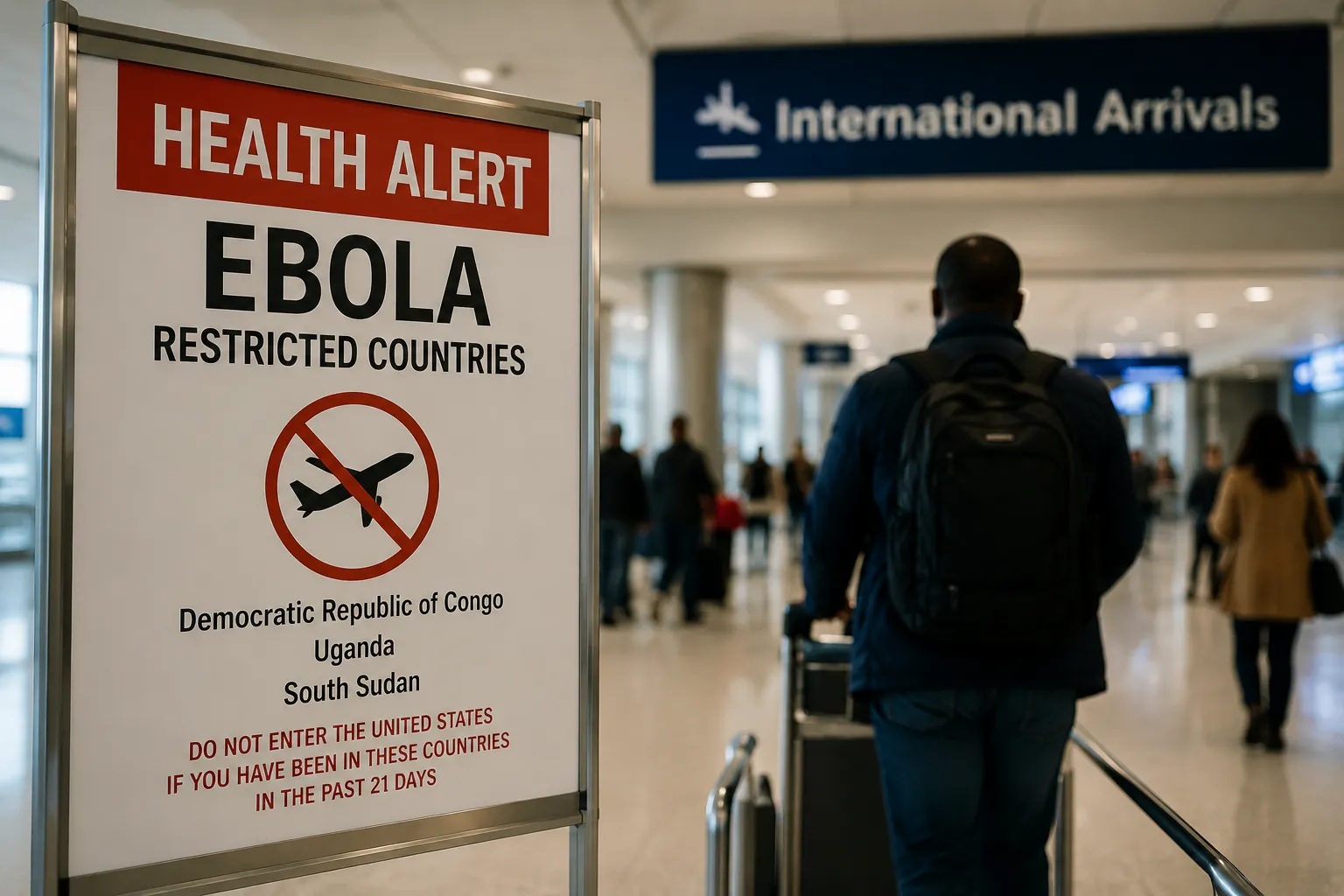
Kenya has stepped up screening at JKIA, including enhanced checks for travellers arriving from 10 countries identified by authorities as relevant to the outbreak response.
The measures are intended to help identify travellers who may require further assessment and to strengthen surveillance at a key international entry point.
However, the confirmed case has also raised questions about how the patient travelled through the region before the diagnosis.
Reuters reported that the patient passed through Uganda before flying to Nairobi, despite having experienced illness and receiving treatment in the DRC. Health experts have noted that screening based primarily on temperature checks may not detect every infected traveller, particularly when early symptoms are difficult to distinguish from other illnesses.
Kenyan authorities are investigating the circumstances of the journey while coordinating with regional and international health agencies.
Government says Kenya is not experiencing a wider outbreak
Health Cabinet Secretary Aden Duale has sought to reassure the public, tourists and investors that Kenya is managing an imported case rather than experiencing a wider outbreak.
The Ministry of Health said a single imported case does not, by itself, establish sustained transmission within the country. It has also reviewed isolation capacity at designated facilities, including Nairobi Hospital, Kenyatta National Hospital, Moi Teaching and Referral Hospital, the National Police Service Hospital and Port Reitz Hospital.
Also Read: Canada imposes Ebola-related travel restrictions on Uganda, South Sudan and DRC
The WHO is supporting Kenya’s response, including surveillance and outbreak-control measures.
The wider outbreak in the DRC remains the principal source of concern. In its October 8 update, the WHO reported 8,728 confirmed cases and 4,205 confirmed deaths in the DRC as of October 6.
Bundibugyo virus is a distinct species of Ebola virus. The WHO said the outbreak’s spread in eastern DRC continues to complicate control efforts, while public-health responses in neighbouring countries focus on detecting possible infections and tracing contacts.
What travellers should know
Travellers in Kenya should follow guidance from local health authorities and their home governments, monitor for symptoms and seek medical attention promptly if they become unwell.
People who suspect they may have been exposed should contact health professionals before arriving unannounced at a healthcare facility, so appropriate precautions can be arranged.
The 21-day monitoring period cited in travel guidance reflects the recognised incubation window for Ebola. It is a precaution for identifying possible illness after exposure, not an indication that every traveller to Kenya is considered at risk.
Canada’s advisory also retains its broader security guidance for Kenya, including warnings related to terrorism and crime, as well as separate restrictions for certain border areas.
For now, the public-health priority remains identifying and monitoring contacts, strengthening surveillance and preventing further transmission while keeping the public informed through verified updates.