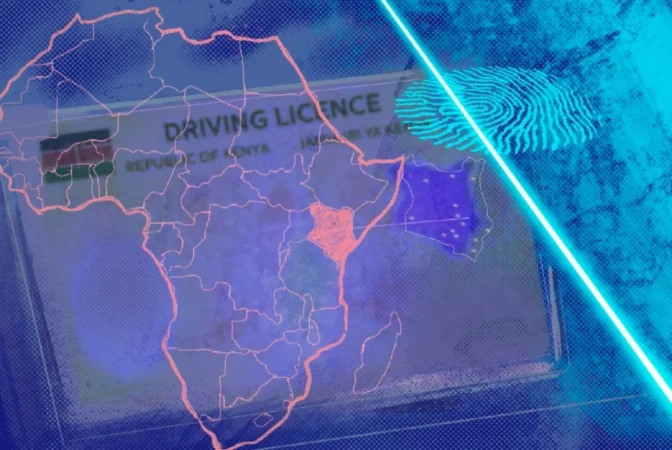





NAIROBI, Kenya — The National Transport and Safety Authority (NTSA) says motorists can now collect their driving licences in under two minutes, in what the agency describes as a major improvement in service delivery.
The announcement, made on Thursday during Customer Service Week, is aimed at reducing the time motorists spend at NTSA offices, where long queues and delays in document collection have been a recurring source of complaints.
“Happy Customer Week, at NTSA we have transformed service delivery. Visit and collect your driving licence in under two minutes. No more queues at NTSA,” the authority said.
The new arrangement requires motorists whose licences are ready for collection to visit an NTSA office.
The two-minute claim therefore relates to the collection process, rather than meaning that a new driving licence application, biometric enrolment and card production can all be completed within two minutes.
That distinction is significant because NTSA has faced sustained criticism over delays affecting motorists who have already completed the required application and biometric processes.
From long queues to faster collection
For motorists who have already received confirmation that their licences are ready, the new service could significantly reduce the time spent at NTSA offices.
The agency has previously faced congestion at its service centres, with motorists reporting long queues while waiting to collect documents.
The latest announcement appears designed to address that particular part of the process by separating the production of the licence from the final collection experience.
It also comes as the authority seeks to rebuild confidence in its licensing and registration services following months of complaints over delayed driving licences and vehicle number plates.
Licence delays remain a wider problem
The two-minute collection promise comes against a backdrop of persistent challenges in the production and issuance of motorists’ documents.
In June, NTSA Director General Nashon Kondiwa acknowledged that the authority was facing delays in the production of vehicle number plates.
He said the agency had inherited a backlog of more than 30,000 plates that had already been paid for but had not been printed. Kondiwa said 5,000 had been cleared over three months as the authority worked to reduce the backlog.
The authority also faced complaints from motorists who said they had completed biometric enrolment and paid for driving licences but were still waiting for their cards weeks or months later.
Those delays have made the speed of the final collection process only one part of a much larger service-delivery challenge.
A licence collected in two minutes does little to help a motorist who has already waited months for the document to be produced.
NTSA proposes private-sector role
The authority has been exploring a broader restructuring of how driving licences and number plates are produced.
In June, Kondiwa said NTSA was considering bringing private-sector investors into the production and distribution of the documents, arguing that government should not necessarily be directly involved in manufacturing and selling number plates and driving licences.
He said the proposed model could expand the number of centres available to motorists and address some of the capacity constraints that have contributed to delays.
Kondiwa linked the delays partly to funding constraints affecting the smart driving licence programme, which was launched in 2017.
The proposal would represent a significant shift from the existing model, under which NTSA has played the central role in the production and issuance of the documents.
Smart licence reforms remain in court
However, NTSA’s wider plans to modernise driving licences and traffic enforcement have encountered a separate legal challenge.
In May, the High Court issued conservatory orders suspending implementation of a public-private partnership between NTSA and a consortium led by Pesa Print Limited.
The proposed partnership covers the design, production, installation and maintenance of smart driving licences as well as an automated traffic fines system. The Road Safety Association of Kenya challenged the arrangement, raising questions including public participation, procurement and data protection.
The court later extended the interim orders while consolidated petitions challenging the arrangement continued.
Also Read: Kenya to roll out smart driving licences with instant fines system
In August, the High Court maintained the freeze as the case proceeded, with a ruling scheduled for November 26, 2026, according to court reporting. A contempt application was also filed alleging that NTSA had failed to comply with earlier orders, allegations that remain part of the ongoing proceedings.
The legal dispute means that NTSA’s effort to improve the customer experience is unfolding alongside a broader unresolved debate over how Kenya should modernise its driving-licence and traffic-enforcement systems.
A test of whether service delivery is changing
The latest two-minute collection announcement offers motorists a more immediate change than the larger reforms that remain under consideration or litigation.
For those whose licences are already ready, faster collection could remove one of the most frustrating parts of dealing with NTSA.
But the broader test will be whether the authority can reduce the time taken from application to production and finally collection.
That is where the experience of motorists who have already waited weeks or months will provide a more meaningful measure of whether service delivery has genuinely improved.
NTSA’s online service portal currently brings together driving-licensing, driver-testing, motor-vehicle registration and other transport services through the eCitizen platform.
The agency’s latest announcement therefore represents a push towards faster front-office service at a time when motorists are also watching for progress on the deeper production and technology reforms.
For now, NTSA’s message is straightforward: motorists with licences ready for collection should no longer have to spend hours at its offices.
Whether the improvement can be extended across the entire licensing process will depend on the authority’s ability to tackle the production capacity, backlog and technology challenges that have persisted behind the queues.