


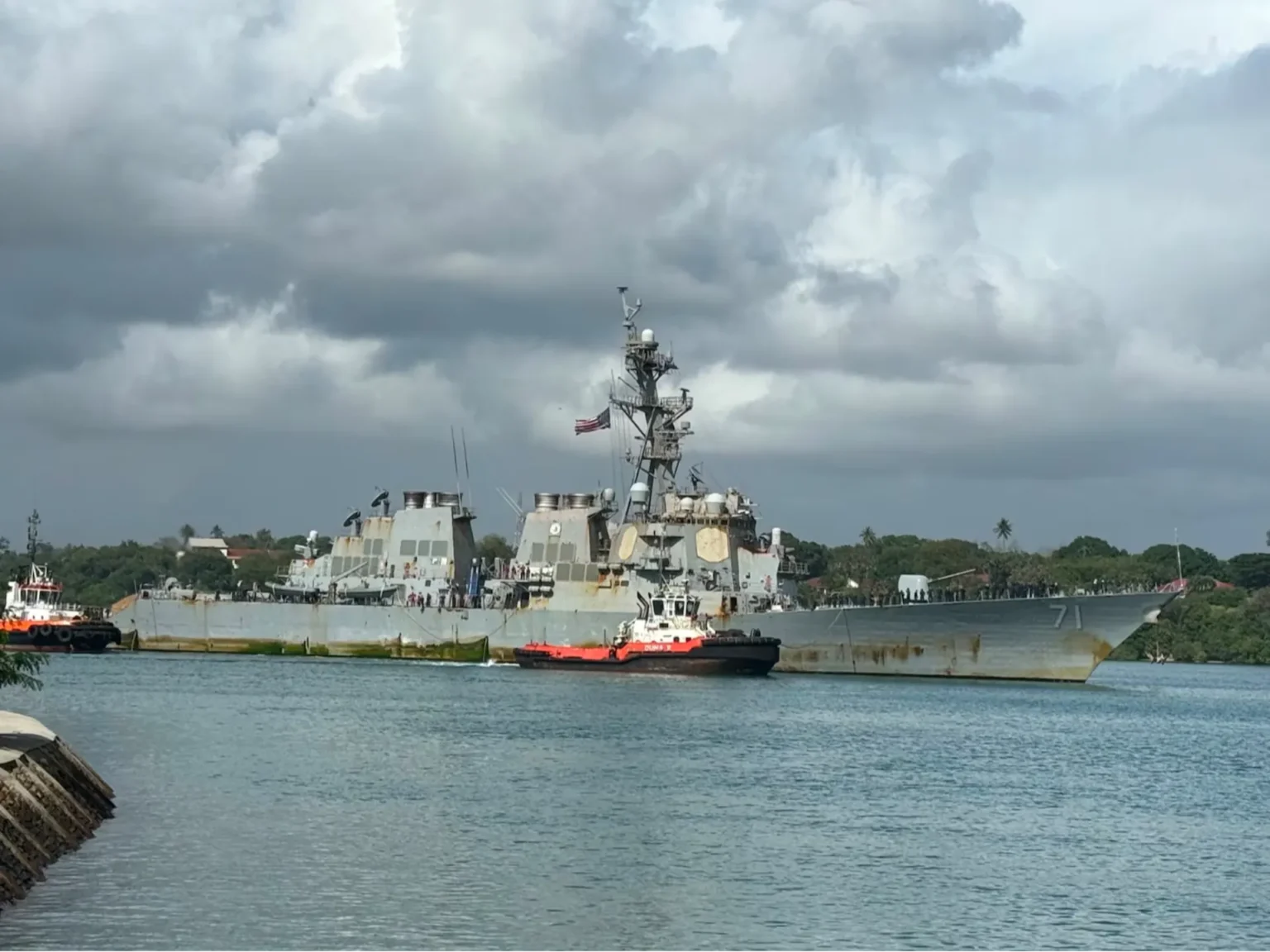
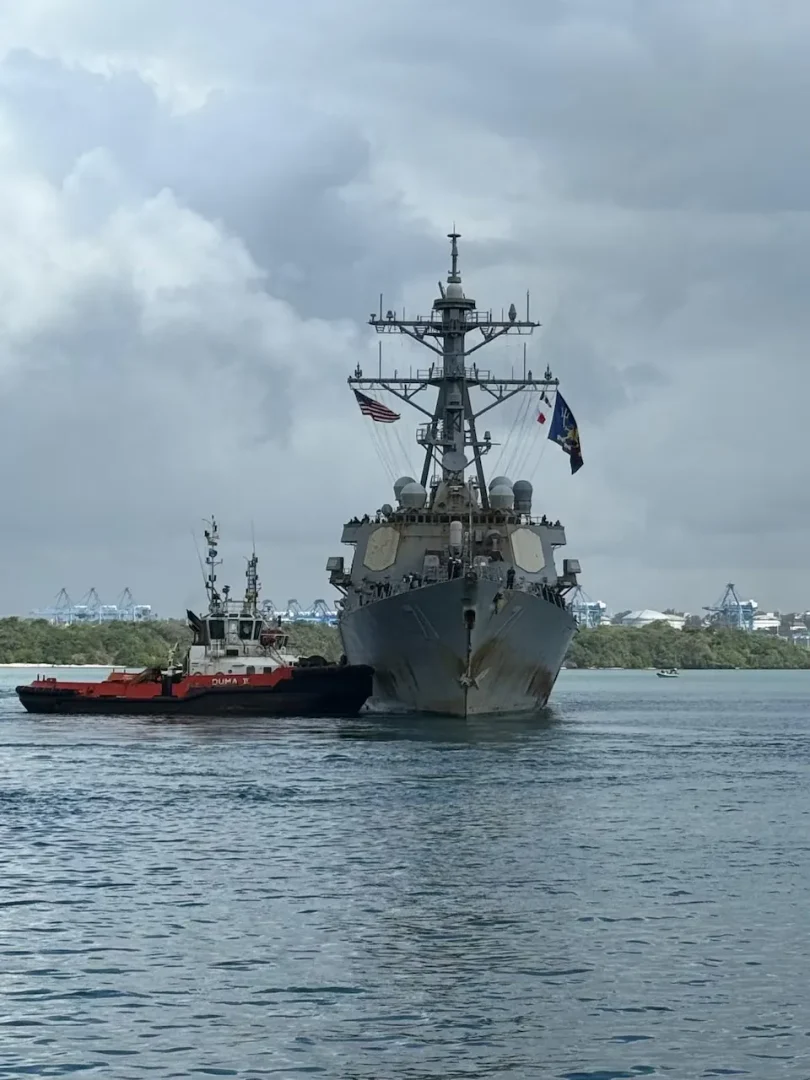
MOMBASA, Kenya — The United States Navy’s guided-missile destroyer USS Ross has arrived at the Port of Mombasa for a scheduled visit, highlighting the longstanding security and maritime partnership between the United States and Kenya.
The Arleigh Burke-class destroyer, USS Ross (DDG 71), arrived in Mombasa on Saturday, September 5, as it continues a deployment that has included operations in the Middle East.
The U.S. Navy said the port visit is intended to support the ship’s readiness while providing an opportunity for engagement between its sailors and Kenyan maritime partners.
The visit comes as Washington and Nairobi continue to cooperate on regional stability and maritime security, including efforts to strengthen the ability of East African countries to counter illicit activity at sea.
“This visit reflects the practical strength of the U.S.-Kenya partnership and our long record of working together on shared regional interests,” said Susan M. Burns, Chargé d’Affaires of the U.S. Embassy in Kenya.
Burns said established arrangements between the two countries allow logistical support for U.S. forces operating in the region, while port visits such as the Mombasa call help sustain naval readiness and create opportunities for professional exchanges with Kenyan partners.
The U.S. Navy said access to regional ports such as Mombasa enables its forces to conduct routine logistics and resupply while maintaining operational readiness.
For the crew of USS Ross, the visit also provides an opportunity to rest and engage with the local community after months at sea.
“Our Sailors have worked exceptionally hard throughout this deployment, executing with discipline and teamwork. This port visit provides a well-earned opportunity to rest, recharge and take pride in the professionalism they bring to every mission,” said Cmdr. Pia Chapman, commanding officer of USS Ross.
“We are grateful to the people of Mombasa for welcoming us, and we value this opportunity to engage with the local community and our Kenyan maritime partners,” Chapman added.
USS Ross deployed in March as part of the George H.W. Bush Carrier Strike Group, which includes the aircraft carrier USS George H.W. Bush and other U.S. Navy vessels. The carrier strike group departed Norfolk, Virginia, on March 31 for a scheduled deployment.
By late April, the strike group was operating in the Arabian Sea as part of the U.S. 5th Fleet’s area of responsibility.
The U.S. Navy’s latest public updates continue to place Ross in the 5th Fleet area of operations, supporting maritime security and stability in the Middle East. A Navy update on August 27 showed the destroyer conducting flight operations in the region.
The deployment has also placed Ross in the wider U.S. military effort associated with Operation Epic Fury. U.S. Central Command says the operation is focused on striking targets intended to dismantle Iran’s security apparatus.
The Navy, however, has described the Mombasa stop as a scheduled port visit focused on readiness, logistics and engagement with Kenya. There is no indication in the material released about the visit that the ship’s arrival is itself a new U.S. military operation involving Kenya.
Kenya has maintained close maritime-security cooperation with the United States and participates in Exercise Cutlass Express, a U.S.-sponsored multinational exercise focused on strengthening maritime law-enforcement capabilities in East Africa and the Western Indian Ocean.
Cutlass Express 2026 brought together 19 partner and allied countries, including Kenya, for training in maritime domain awareness, information sharing, maritime interdiction and countering illicit sea-based activity.
The exercise is sponsored by U.S. Africa Command and enabled by the U.S. Sixth Fleet, which oversees a broad range of naval operations in Europe and Africa.
The U.S. Navy says such cooperation is aimed at improving collective capacity to address threats including illegal, unreported and unregulated fishing, trafficking and other illicit maritime activity.
Also Read: US submarine sinks Iranian warship in Indian Ocean, Hegseth says
The Mombasa visit therefore comes against a broader backdrop of U.S.-Kenya cooperation in the Western Indian Ocean, where maritime security remains important to regional trade, economic activity and national security.
For the United States, access to regional ports provides logistical support and helps sustain the readiness of deployed naval forces. For Kenya, such engagements provide opportunities for professional exchanges and closer cooperation with one of the world’s most capable navies.
The arrival of USS Ross adds another high-profile chapter to that relationship, bringing an American guided-missile destroyer to Kenya’s coast at a time when the U.S. Navy is maintaining a significant maritime presence across the wider Indian Ocean and Middle East.