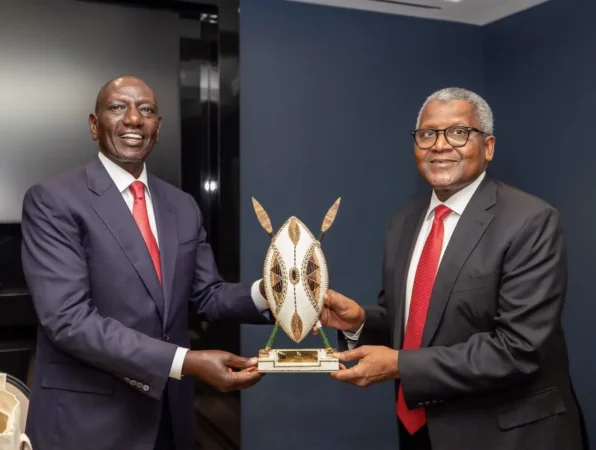


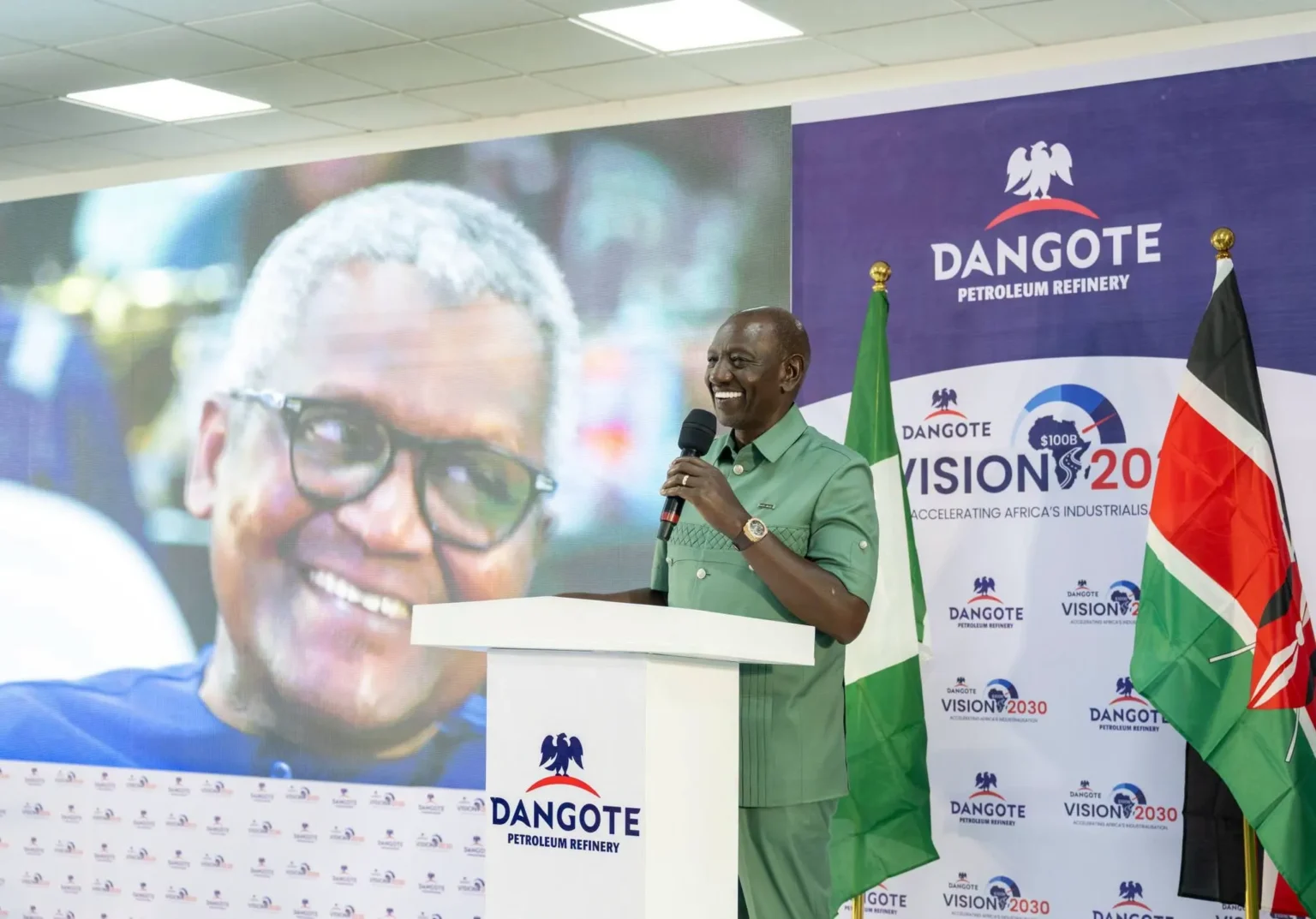
LAMU, Kenya — President William Ruto has defended the planned Dangote East Africa Refinery in Lamu, saying the KSh2 trillion project will proceed despite a court dispute over land and opposition from some local residents.
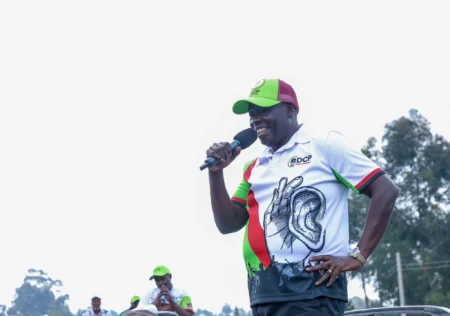
Ruto, speaking during a tour of the Coast region on Tuesday, accused what he described as “disgruntled opposition sponsors” of attempting to frustrate the investment and warned that his administration would not allow investors to be driven away from Kenya.
The President’s remarks came as residents of Chandavai in Lamu challenge the development of the refinery on land they say their families have occupied, cultivated and developed for generations.
More than 130 residents have filed a case at the Environment and Land Court, arguing that their interests in the disputed land have not been properly recognised and that affected families should be consulted and compensated.
The court has ordered that the status quo be maintained on the disputed parcel, identified as LR No. 13061 in the Hindi/Manda Magogoni area, pending an inter partes hearing scheduled for October 14, 2026. The order preserves the position on the land while the dispute is heard; it is not a final determination of ownership or the residents’ compensation claims.
Ruto, however, insisted that the legal challenge would not derail the refinery.
“Nimewaona wakijaribu maneno kwa mitandao, kwa press conference. Nyinyi ndiyo mmepeleka hiyo kesi kortini,” he said, accusing his opponents of sponsoring the court cases.
The President also criticised politicians whom he accused of demanding shares in the project.
He said Kenyans would eventually have an opportunity to acquire shares in the refinery transparently, rejecting what he described as attempts by political actors to secure preferential access.
“Wakenya wote watapata nafasi ya kununua hisa kwa hiyo kampuni. Transparently,” Ruto said.
Land dispute at centre of refinery plans
The dispute has placed land rights and compensation at the centre of preparations for the refinery’s groundbreaking ceremony, scheduled for September 30.
The 133 Chandavai residents say their families have used the land for generations for farming and livestock keeping. They also claim that homes, trees, crops, mosques, shrines and family graves are located on the disputed property.
The residents contend that long-standing occupation and customary or community interests should be recognised even where individuals do not hold formal title deeds.
They have accused government agencies and other parties of failing to adequately identify affected occupants, conduct valuations and provide compensation before development activities began. Those allegations have yet to be determined by the court.
The dispute is also linked to wider infrastructure development around Manda Bay, including LAPSSET-related projects and facilities around the Kenya Navy Base, US Camp Simba and Magogoni Airfield, according to court documents cited in reports on the case.
Ruto defends Dangote
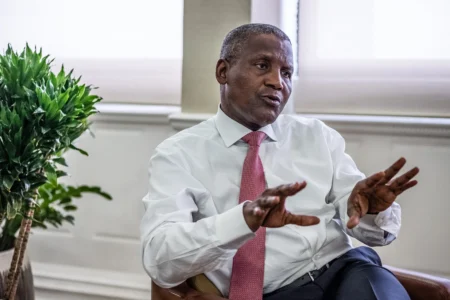
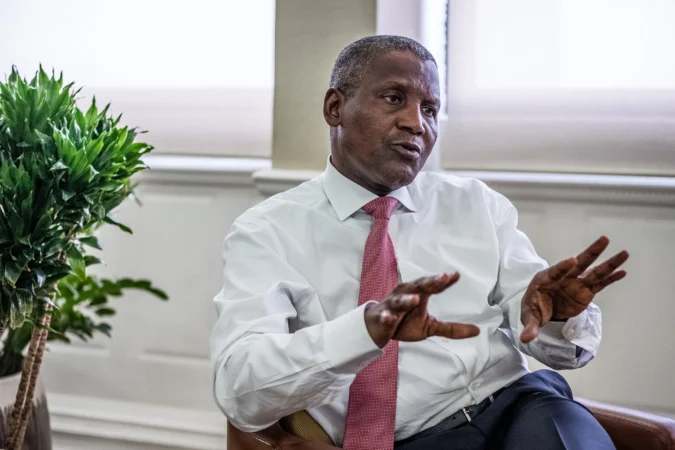
Ruto also used the occasion to defend Aliko Dangote, arguing that Kenya had previously lost investment opportunities because of bureaucratic and political obstacles.
He cited Dangote’s earlier attempts to establish a cement business in Kenya, saying the businessman had faced prolonged conditions before taking investment elsewhere.
“Huyo Dangote alitaka kuweka kampuni ya simiti, akazungushwa na mambo ya masharti mpaka akaenda kwingine,” Ruto said.
He also referred to the regional oil pipeline debate, arguing that delays over investment arrangements contributed to Uganda eventually pursuing an alternative route.
The President said Kenya must create an environment in which major investors can operate without unnecessary restrictions.
“Mwekezaji hataki masharti, anataka incentives,” he said.
Ruto projected that Kenya could attract between $6 billion and $7 billion in foreign direct investment, although that figure represents the President’s projection rather than an independently established outcome.
A major investment with regional ambitions
The proposed refinery is expected to have a processing capacity of about 700,000 barrels of crude oil per day, placing it among the largest planned industrial investments in Kenya. Preparatory work, including soil testing and engineering activities, has already begun at the proposed site.
The project is being presented by the government as a major component of Kenya’s energy-security and industrialisation strategy, with ambitions to supply refined petroleum products to Kenya and the wider East African market.
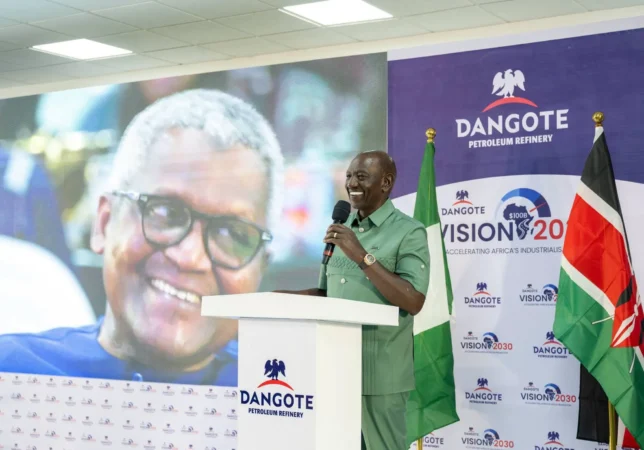
Ruto has repeatedly backed the project. On September 22, he said Kenya would host the groundbreaking ceremony on September 30 and described the refinery as an investment that would strengthen regional energy security and support industrialisation.
Also Read: Dangote dismisses Lamu refinery court challenge as ‘normal’ legal hurdle
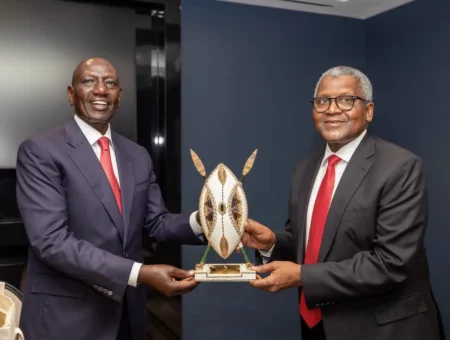
Three days later, he toured Dangote’s 700,000-barrel-per-day refinery in Lekki, Nigeria, ahead of the planned Lamu groundbreaking.
But the Lamu project still faces questions beyond the land dispute, including how it will secure sufficient crude oil supplies. Kenya’s projected domestic crude production is expected to remain far below the refinery’s potential capacity, meaning the facility would depend heavily on imported crude.
For now, the legal dispute remains unresolved.
The October 14 court hearing is expected to provide the next significant step in determining how the competing claims over the disputed land will proceed.
For Ruto, however, the message remains clear: his government intends to proceed with the Dangote refinery and sees the project as a major test of Kenya’s ability to attract and retain large-scale foreign investment.