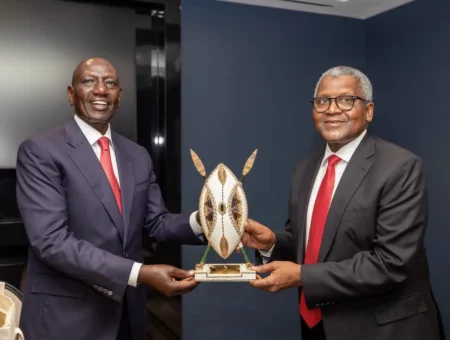
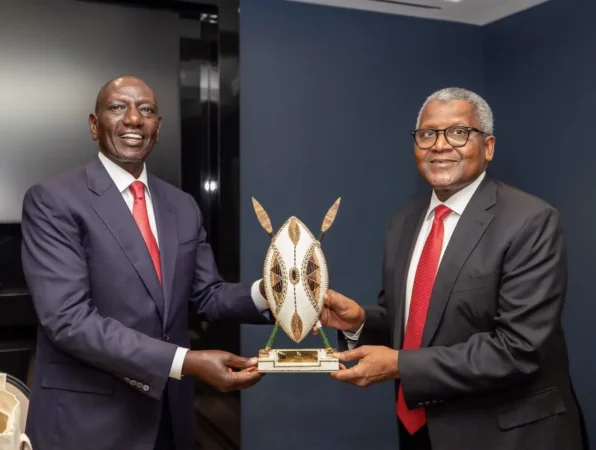




NAIROBI, Kenya — Dangote, chairman of Dangote Group, said he remained confident the planned 700,000-barrel-per-day refinery would go ahead despite an interim order issued by the Malindi Environment and Land Court.
Speaking at an investor event in Nairobi on Tuesday 29, September 2026, Dangote acknowledged the court action but played down its potential impact on the project.
“I’m sure some of you must have seen one court has given an order that we shouldn’t do any construction?” he said. “I said no, no. This is normal for us in Africa. In fact, this is even small.”
“Anyone who wants to cause trouble, we are ready for them,” he added.
The remarks came a day after the court ordered that the status quo be maintained on disputed land in Lamu County until an inter partes hearing scheduled for 14 October 2026.
Court order affects disputed land
The case was brought by 133 residents of Chandavai, who say their families have occupied, cultivated and developed portions of the disputed land for generations.
The residents have challenged what they describe as an unlawful takeover of their ancestral land and have raised concerns about possible displacement and compensation.
According to court documents reported locally, the residents say the land has been used for farming and livestock keeping, with some families also having homes, mosques, shrines and graves on the disputed property. They argue that their longstanding occupation and customary or community interests should be recognised even where they do not hold formal title deeds.
The plaintiffs have sued several government institutions and Dangote Industries, among other parties.
The court has not made a final determination on the ownership claims or the legality of the proposed refinery development.
Instead, Justice Onyango directed that the existing position on the disputed parcel be maintained pending the inter partes hearing on 14 October.
Groundbreaking ceremony still planned
Dangote Group has said the order does not prevent the planned groundbreaking ceremony for the refinery on Wednesday, 30 September.
However, the company acknowledged that activities at the site could be affected because the parties have been directed not to undertake activities on the disputed land until the case is heard.
The distinction means the ceremony can proceed while some activity at the affected site may remain constrained by the court order. Reuters also reported that Dangote Group intends to proceed with the groundbreaking despite the land dispute.
The refinery is expected to have a processing capacity of 700,000 barrels per day and is planned for Lamu, on Kenya’s coast. Dangote has previously put the cost at about $15 billion to $16 billion, with completion targeted for 2030.
A major bet on East Africa
The Lamu project is intended to replicate the industrial model established by Dangote’s refinery near Lagos, Nigeria.
The Nigerian facility has become a major source of refined petroleum products and has helped Nigeria reduce its reliance on imported fuel.
Kenya currently imports its petroleum requirements in refined form, leaving the country exposed to international fuel prices and foreign-exchange pressures.
The proposed Lamu refinery is expected to serve Kenya and other East African markets, although questions remain over how the large facility will secure sufficient crude oil supplies.
Kenya does not currently produce enough crude to supply a refinery of the planned size. Reuters reported earlier this month that the project faces significant challenges over crude supply, financing and infrastructure, with possible supplies expected from regional producers as well as international markets.
Ruto backs the project
President William Ruto has strongly supported the refinery.
During a visit to Dangote’s Lagos refinery on 25 September, Ruto described the Kenyan project as a major example of what African governments, investors and financial institutions could achieve through cooperation.
The President has said the Lamu development could improve fuel security, support industrialisation and create employment.
Also Read: Ruto says Kenyans will be offered shares in planned Dangote East Africa Refinery
Ruto has also said the planned facility could be accompanied by a major power-generation component, although those projections remain part of the government’s broader development plans for the project.
The government has separately indicated that it expects to take an equity stake in the refinery, with part of the shareholding potentially made available to Kenyan investors through the Nairobi Securities Exchange.
Residents’ concerns remain
For residents challenging the project, however, the dispute is about more than construction delays.
They argue that development cannot proceed at the expense of longstanding land rights and say affected communities should be properly identified, consulted and compensated where their interests are established.
The residents have also raised constitutional and environmental concerns, including claims relating to property rights, fair administrative action and the process of compulsory acquisition. Those allegations remain before the court and have not been finally determined.
The October 14 hearing will therefore be an important stage in determining how the land dispute proceeds.
For Dangote, the message remains that the refinery will move forward.
For the residents, the court process represents an opportunity to challenge what they regard as the loss of ancestral land before the project becomes irreversible.
The immediate question is whether the court dispute will remain a temporary legal hurdle or become a more substantial obstacle to one of Kenya’s largest proposed private-sector investments.