


Former Deputy President Rigathi Gachagua has claimed that remarks by Ugandan President Yoweri Museveni about fuel procurement middlemen have vindicated his long-running criticism of Kenya’s government-to-government (G-to-G) petroleum import arrangement.
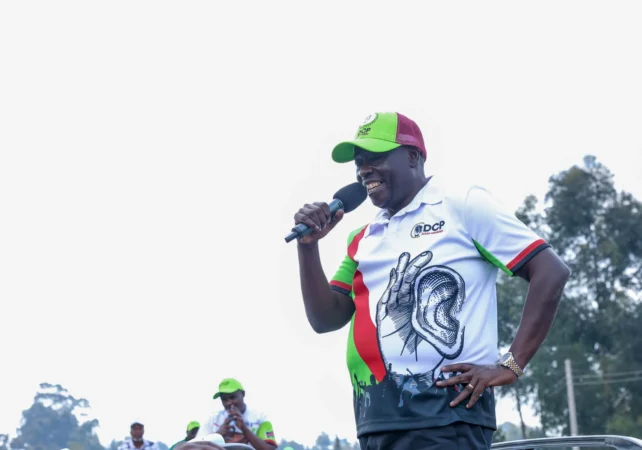
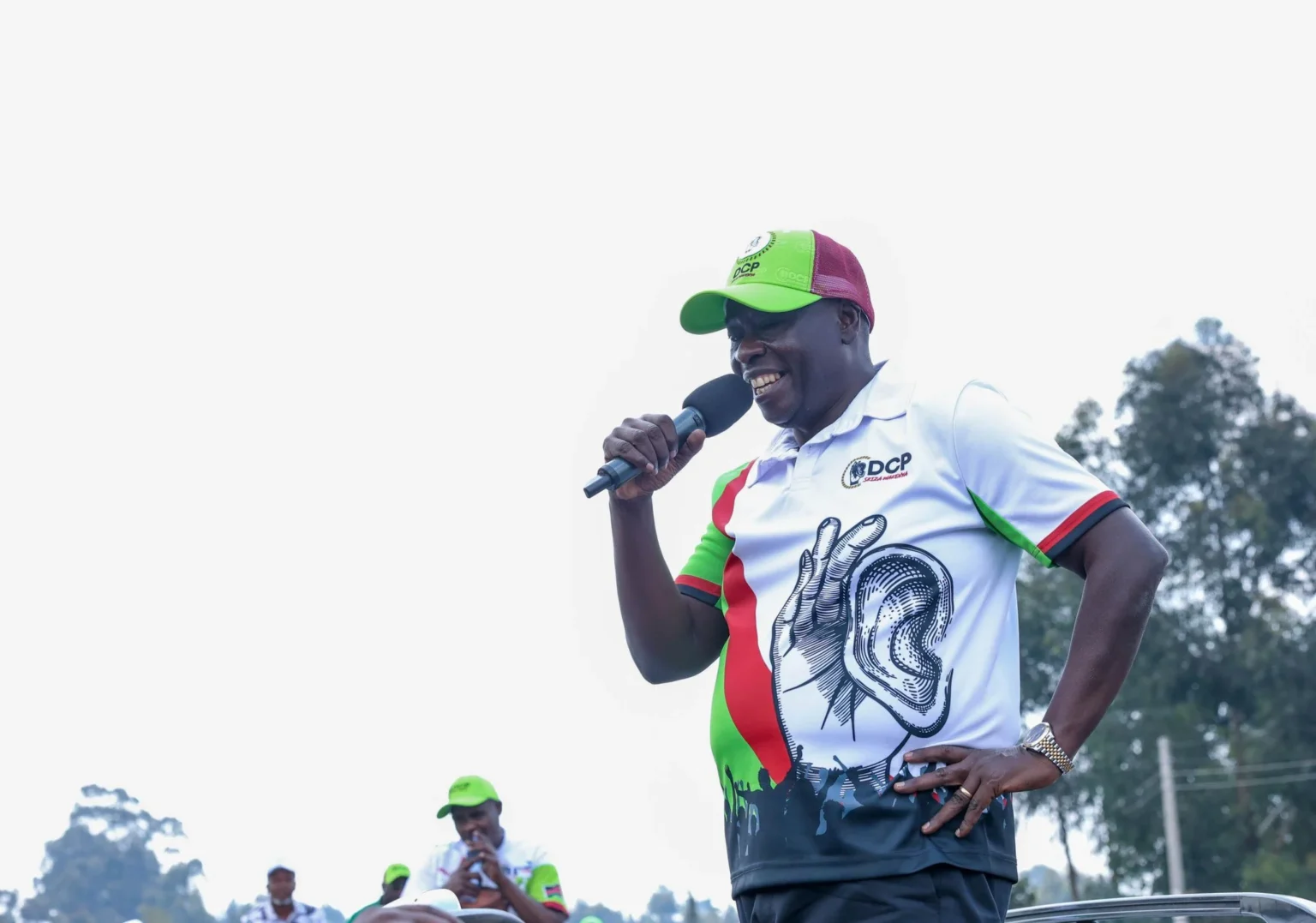
Speaking to Kenyans living in Kansas City on Friday, 18 September, the Democracy for Citizens Party (DCP) leader said Museveni’s disclosure reinforced concerns he had raised after conducting what he described as his own due diligence into the deal.
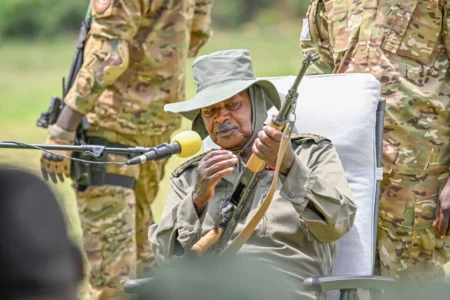
Museveni made his remarks on Thursday, 17 September, while breaking ground for a 320-million-litre petroleum storage terminal in Mpigi District, west of Kampala.
He said an unnamed Kenyan senator had been the first to alert him that Uganda was sourcing petroleum through intermediaries in Kenya rather than buying directly from refiners or bulk suppliers.
“The Republic of Uganda was buying petroleum products through middlemen in Kenya. Can you imagine that? And the person who woke me up first was a senator from Kenya,” Museveni said, adding that he had not been aware of the arrangement and criticising his own technocrats for failing to flag it.
Museveni said the tip prompted him to contact Irene Muloni, then Uganda’s Minister of Energy and Mineral Development, and to push for direct sourcing.
Figures presented at the ceremony by Museveni and Energy Permanent Secretary Irene Batebe showed diesel premiums falling from $118 to $83 per metric tonne after the change, petrol from $97.50 to $61.50, and aviation fuel from $114.25 to $79.25.
Museveni did not name President William Ruto, did not use the word “conned,” and did not refer to Kenya’s G-to-G arrangement by name.
Gachagua’s framing rests on linking Museveni’s account to Ruto’s G-to-G deal, but the dates do not align neatly.
Muloni served as Uganda’s energy minister from May 2011 until December 2019. If Museveni contacted her after the senator’s tip, as he described, the conversation would have taken place no later than 2019 — roughly three years before Ruto became president in September 2022, and nearly four years before Kenya’s G-to-G arrangement began in April 2023.
Uganda’s own shift away from Kenyan intermediaries was formalised through its Petroleum Supply (Amendment) Act, backed by Museveni in November 2023, which made the Uganda National Oil Company (UNOC) the country’s sole petroleum importer under a five-year supply contract with Vitol Bahrain signed in August 2023.
Notably, Museveni and Ruto jointly oversaw a tripartite arrangement in May 2024 allowing UNOC to continue using Kenya Pipeline Company infrastructure — meaning Uganda’s fuel still routes through Mombasa and the Kenyan pipeline network even under the new model.
Gachagua went considerably further than Museveni in his Kansas City remarks, alleging that the G-to-G arrangement was designed to give Ruto personal control of Kenya’s petroleum market.
“It was a big scheme for William Ruto to take over the marketing of petroleum products in Kenya,” he said. He claimed Ruto had travelled to the Middle East, identified three companies, struck a deal with them and then sought a proxy.
“He went to the Middle East and identified three companies and made a deal with them and then looked for a proxy, a company called Gulf Oil. That is the company that fronts William Ruto. So he is the one doing business,” Gachagua alleged.
He offered no documentary evidence for these claims, and they have not been independently verified. Neither State House nor Gulf Energy had responded publicly to the specific allegations at the time of filing.
Gachagua has made similar unsubstantiated claims about Ruto’s alleged commercial interests on several occasions over the past year, including assertions about business holdings spanning banking, cement, transport and other sectors.
Gachagua also used Museveni’s remarks to address a recurring line of criticism — how an experienced political operator could have been outmanoeuvred by Ruto, whose administration he served as deputy president before his impeachment in October 2024.
“I’m happy that President Museveni has realised that Uganda has been conned by William Ruto. I think he just fell short of naming his Kenyan counterpart. I think he was just being decent because of diplomatic relations between the two countries, but that sometimes vindicates me,” he said.
He drew a direct comparison with the Ugandan leader’s political experience. “If he can deceive the Ugandan president, who is Gachagua from Wamunyoro? The Ugandan president is not just another president. It’s a guy who went to the bush and fought for years to become president,” he said, adding: “If William Ruto can convince Kaguta Museveni — poor me.”
Also Read: Gachagua leaks Kindiki’s alleged WhatsApp message to MP Mukunji over Embu violence
Museveni’s disclosure has energised opposition criticism of the G-to-G arrangement more broadly. Democratic Action Party of Kenya leader Eugene Wamalwa said on Saturday that an opposition government would revisit what he called a “G to G rip off,” pledging that Kenyan brokers would be “held to account for each shilling they ripped off Kenyans and Ugandans.”
The identity of the senator who alerted Museveni has itself become a subject of speculation in Kenyan media, with the Ugandan president declining to name him or say when the conversation took place.
The G-to-G arrangement, introduced in 2023, saw Kenya import fuel on credit from three Gulf suppliers in a bid to ease pressure on the shilling.
The government has consistently defended it as a legitimate state-to-state framework, while critics have questioned its cost, transparency and the role of intermediaries within it.