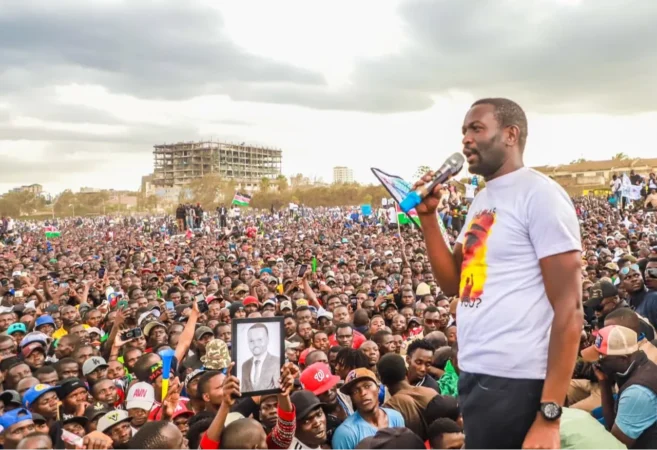


NAIROBI, Kenya — Nairobi Senator Edwin Sifuna’s emergence as a potential presidential contender has added a new dimension to Kenya’s increasingly fluid opposition politics ahead of the 2027 General Election.
The Orange Democratic Movement (ODM) secretary-general has attracted significant attention, particularly among younger Kenyans, through his advocacy for the rule of law, human rights and social justice.
But as opposition parties and politicians negotiate new alliances, Sifuna faces a more complicated political landscape.
Some of the senior figures associated with the Linda Mwananchi movement are pursuing their own political ambitions, while others are exploring alliances that could eventually produce a different presidential arrangement.
The developments have raised questions over whether the movement can maintain a unified political strategy as the 2027 election approaches.
Orengo’s new alliance
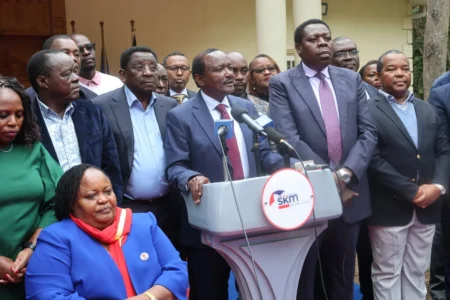
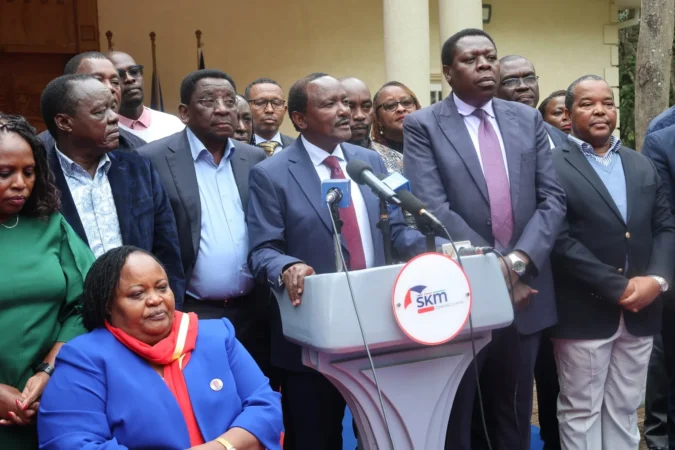
The uncertainty became more visible on 21 September when Siaya Governor James Orengo appeared alongside Wiper leader Kalonzo Musyoka at the unveiling of The Ukombozi Alliance (TUA), a rebranded opposition coalition.
Mr Orengo described the new alliance as the product of consultations among opposition leaders and said its objective was to bring together forces seeking political change.
“There have been wide consultations within the opposition, and the target and destination are now set. All that remains is to hit the target,” he said.
Mr Orengo has also expressed interest in running for President in 2027, potentially putting his ambitions alongside those of politicians within Linda Mwananchi who have been associated with Sifuna’s possible presidential bid.
That does not necessarily mean the movement is breaking apart. But it highlights one of the central difficulties facing Kenya’s opposition: bringing politicians with different electoral ambitions under a single political structure.
Kisii Senator Richard Onyonka, who is associated with Linda Mwananchi, has acknowledged that members of the group have different ambitions.
He said efforts were under way to improve relations between Sifuna and Embakasi East MP Babu Owino, while also pointing to political competition between Saboti MP Caleb Amisi and Trans Nzoia Governor George Natembeya.
“We will try and work on Babu, his relationship with Sifuna,” Mr Onyonka said, adding that discussions were intended to strengthen cohesion within the opposition.
Sifuna’s growing profile
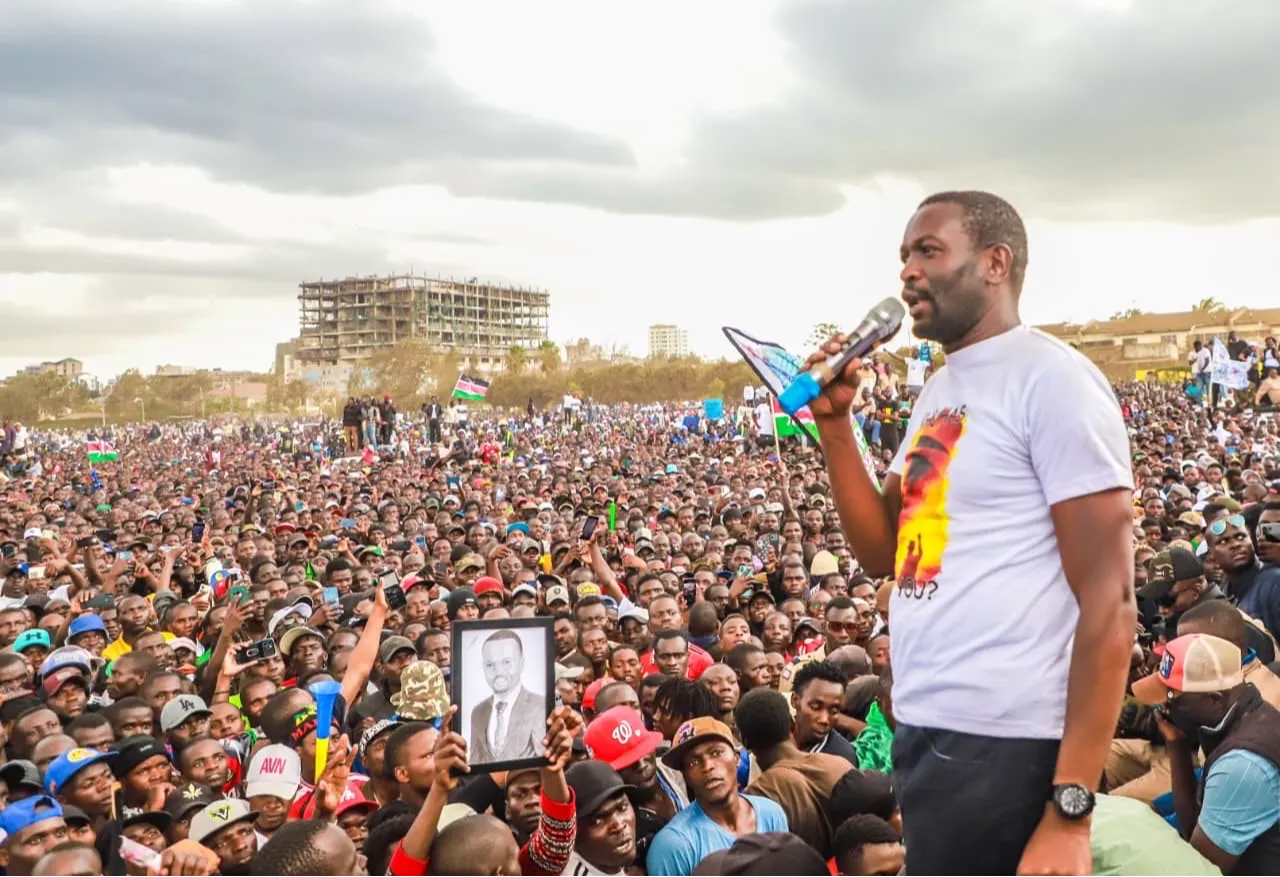
Sifuna’s political profile has grown significantly in recent months, with his public messaging around governance and constitutionalism resonating with sections of the younger electorate.
His supporters see him as part of a generation of politicians seeking to challenge Kenya’s established political order.
But political commentator Javas Bigambo told Citizen Digital that Sifuna’s rapid rise could create its own challenges.
“This could be an accidental part he is finding himself in and presents the evident reality of unpreparedness,” Mr Bigambo said.
He argued that Sifuna would need to develop a broader political strategy if he is to turn his growing profile into a national presidential campaign.
Mr Bigambo also warned about the possibility of competing interests entering any political vehicle built around Sifuna.
“What are the risks of infiltration from those not related to him in the opposition or the government?” he asked.
Such concerns reflect a familiar challenge in Kenyan opposition politics: movements can attract broad support while remaining vulnerable to disagreements over leadership, party structures and the distribution of political positions.
Age becomes part of the debate
Sifuna’s potential candidacy has also attracted criticism from veteran political figures.
Central Organisation of Trade Unions (COTU) Secretary-General Francis Atwoli has argued that the senator is too young to seek the presidency and should first gain more political experience.
“Sifuna, one-term Senator you want to become a president? Not in Africa,” Mr Atwoli said in an interview with Citizen TV.
He argued that political leadership should come after years of experience and involvement in community and national affairs.
The criticism has not, however, been universally shared within the opposition.
Former Deputy President Rigathi Gachagua has publicly acknowledged Sifuna as a possible presidential contender and said he would support him if an opposition coalition ultimately selected him as its candidate.
“If we do our arithmetic and we find Sifuna, so be it. Even I, Riggy G, I can deputise Sifuna,” Mr Gachagua said during a visit to the United States.
His remarks illustrate the uncertainty surrounding the opposition’s eventual ticket. While individual politicians have floated possible combinations, no single presidential formula has been settled.
Mr Gachagua has previously suggested that the opposition could settle on a single presidential candidate by April 2027.
Party registration adds another complication
Political manoeuvring is also taking place at the party level.
Sifuna and other politicians have faced difficulties over the political vehicle they could use in the 2027 election.
The proposed rebranding of the United Democratic Party (UDP) to a party using the name Ukombozi encountered objections from the Office of the Registrar of Political Parties (ORPP), amid the emergence of The Ukombozi Alliance.
The dispute illustrates the importance of party registration and compliance as political parties prepare for the election.
The Independent Electoral and Boundaries Commission (IEBC) has set deadlines requiring parties intending to participate in the 2027 election to submit key documents, including certified nomination rules and details of authorised officials.
That leaves opposition politicians with limited time to settle questions over party structures, coalition arrangements and nomination procedures.
A familiar problem in Kenyan politics
Kenya’s political history contains several examples of alliances that appeared united until competing ambitions emerged.
The opposition has often faced the challenge of balancing the influence of established politicians with demands for generational change.
The current contest is no different.
Sifuna’s supporters see an opportunity to build a political movement around younger leadership, while veteran politicians retain established networks, regional influence and political experience.
Governor Orengo’s engagement with the Ukombozi Alliance is one indication of how quickly those calculations can change.
For Linda Mwananchi and the wider opposition, the challenge will be to accommodate competing ambitions without allowing disagreements over leadership to overwhelm their broader political objectives.
Political organiser Pauline Njoroge has called for a coalition structure that allows more parties to participate without becoming so cumbersome that decision-making is weakened.
Also Read: Gachagua says he is ready to deputise Sifuna in 2027 election
“As the opposition builds a broad and inclusive coalition around the WANTAM movement, it must design a framework that encourages more political parties to join without creating a structure so heavy that it complicates decision-making and weakens political agility,” she said.
The coming months are therefore likely to be less about choosing a presidential candidate and more about building the political machinery that could eventually produce one.
For Sifuna, the question is whether his growing public profile can be converted into a sufficiently broad political coalition.
For the wider opposition, the bigger test is whether politicians with competing ambitions can agree on a structure capable of carrying a single campaign into 2027.
The answer may not emerge until the alliances, parties and nomination arrangements begin to crystallise.
But with key electoral deadlines already approaching, the negotiations have moved beyond political rhetoric and into the practical business of preparing for Kenya’s next presidential contest.