




NAIROBI, Kenya — Burundi’s Foreign Minister, Édouard Bizimana, has issued a sharp warning to Kenyan authorities, saying continued hate speech and hostility directed at Burundian nationals could strain relations between the two East African neighbours unless the Kenyan government acts to protect them.
“Kenyans live peacefully in Burundi. But if this hate speech against Burundi continues, things will certainly change. Kenya’s government is responsible for the lives of Burundians living in Kenya,” Bizimana wrote in a post on X, tagging Kenya’s Parliament.
He added that allowing ordinary citizens to take enforcement into their own hands “gives the impression of a failed state,” warning it risked opening the door to violence, looting and xenophobia.
Relations between the two countries came under strain after President William Ruto, on 2 September, directed a nationwide crackdown on foreign nationals operating small-scale businesses and hawking without proper licences, declaring that petty trade should be strictly reserved for Kenyan citizens.
Traders affected by the directive were initially given until 7 September to shut down unlicensed operations.
The order triggered alarm among East African migrants, particularly Burundian nationals, many of whom rely on small-scale trade for their livelihoods.
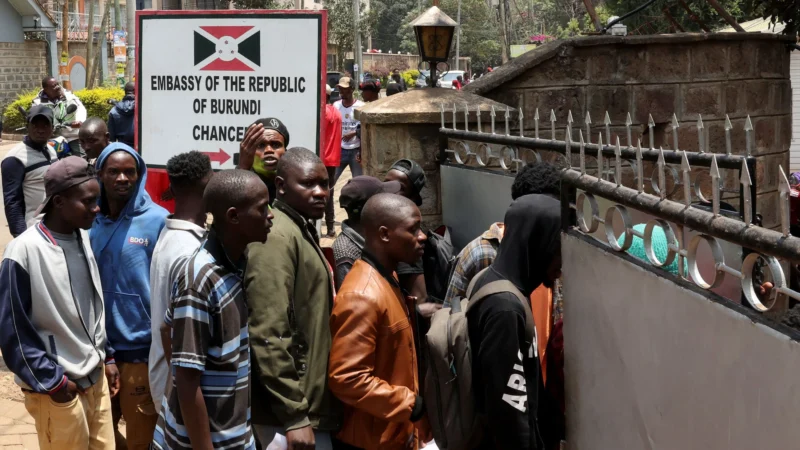
Hundreds queued outside the Burundian embassy in Nairobi in the days that followed, seeking emergency travel documents amid fears of harassment, violence or forced displacement, with some reports of vigilante threats circulating online.
The United Nations refugee agency estimates that around 16,000 Burundian refugees and asylum seekers live in Kenya, though it remains unclear how many are engaged in small-scale trade.
Facing mounting criticism, the Kenyan government subsequently announced a 90-day grace period to allow foreign nationals engaged in small-scale trade time to regularise their documentation, and stressed that the directive was administrative in nature rather than targeted at any nationality.
Kenya’s Foreign Affairs Principal Secretary, Korir Sing’oei, visited Burundian nationals at their embassy in Nairobi and apologised for what he described as a misunderstanding surrounding the directive.
Sing’oei said the government’s aim was to establish the identities, locations and activities of foreign nationals in the interest of their own security, while insisting that those legally residing and working in Kenya would continue to be protected.
Kenya’s Ambassador to Burundi, Henry Wambuma, separately moved to reassure Kenyans living in Burundi, saying bilateral relations between the two countries remained cordial despite the crackdown, while urging Kenyans abroad to fully comply with local legal and administrative requirements to avoid similar friction.
Bizimana’s warning places additional pressure on Kenya-Burundi relations at a time when both countries are members of the East African Community (EAC) and maintain extensive economic and regional ties, including commitments under the EAC’s Common Market Protocol on the free movement of people, goods and labour.
Also Read: Ruto says foreigners are free to work and invest in Kenya, condemns attacks on traders
Burundi’s foreign ministry has also held discussions with EAC officials over the treatment of its nationals in Kenya, and Burundian lawmakers have raised the possibility of reciprocal measures affecting Kenyans living and working in Burundi.
Kenya’s directive has also drawn scrutiny from regional observers who note it mirrors a similar policy adopted by Tanzania last year reserving small-scale trade for its own citizens, a move critics argue conflicts with the EAC treaty’s provisions on regional labour mobility.
Kenyan and Burundian officials are now engaged in talks aimed at resolving the tension surrounding the status of Burundian traders and the wider question of foreign nationals’ business activities in Kenya.
How the two governments manage the dispute is likely to determine whether it remains a largely administrative disagreement over permits and licensing, or develops into a more significant regional diplomatic concern involving other EAC member states whose citizens face similar circumstances in Kenya.