



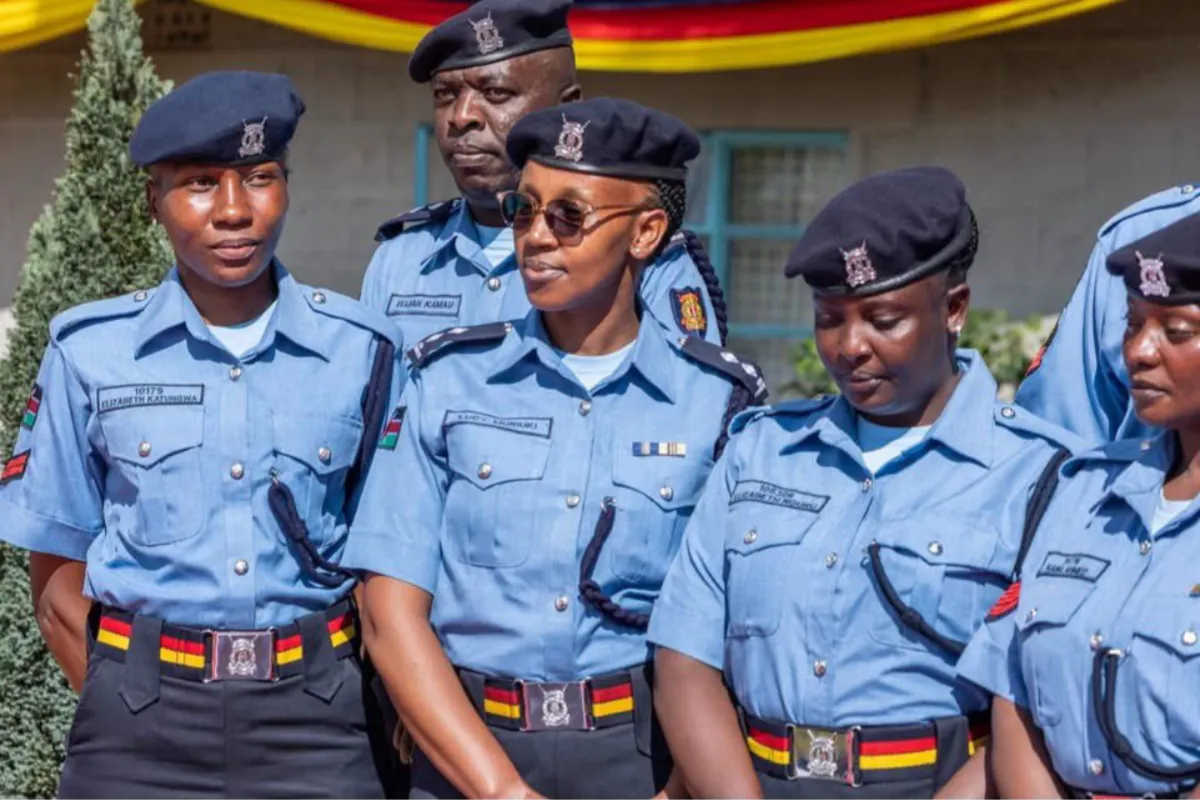
NYERI, Kenya — The launch of new uniforms for the Kenya Police Service is part of wider reforms aimed at improving the welfare, morale and professionalism of officers, Inspector General of Police Douglas Kanja has said.
Kanja said the new attire would help restore pride and confidence among officers while strengthening the image of the police as the National Police Service continues with efforts to modernise its operations.
He spoke on Friday, August 28, 2026, during the passing-out parade for newly trained police recruits at the National Police College Main Campus in Kiganjo, Nyeri County.
“The new uniforms for the Kenya Police Service that we have just launched will bring pride, confidence, and morale to police officers as they discharge their duties,” Kanja said.
The new uniform was unveiled during the ceremony presided over by President William Ruto and is being introduced as part of changes arising from an earlier public participation process on police attire.
Uniform change linked to broader police reforms
Kanja said the uniform was only one element of a broader programme to improve conditions within the National Police Service.
The reforms include investment in police equipment, vehicles, housing and remuneration, as well as efforts to increase the number of officers available to serve the public.
The Inspector General said the service had received an enhanced fleet of vehicles and other equipment, while the government was also implementing a housing programme for police officers.
He added that improvements in officers’ salaries and the police-to-population ratio were also part of efforts to strengthen the country’s policing capacity.
The reforms are intended to give officers better working conditions and the resources required to respond effectively to security challenges.
For police leadership, the change in uniform is therefore expected to have an institutional effect beyond appearance, helping to strengthen the identity and morale of officers while they interact with members of the public.
Police services go digital
The modernisation programme is also changing how members of the public access some police services.
Kanja said the Directorate of Criminal Investigations had operationalised a biometric identification system that has significantly reduced the time required to process police clearance certificates.
According to the Inspector General, the system has cut processing time from 14 days to one day, allowing applicants to obtain the certificates more quickly.
The move is part of a wider shift towards digital systems within the security sector, with technology being used to improve efficiency and reduce delays in public services.
The adoption of biometric identification is expected to strengthen the identification process while making it easier for members of the public to access police clearance services.
New recruits urged to uphold professionalism
The reforms come as more than 6,000 newly trained police constables complete their training at Kiganjo and prepare to begin duty across the country.
The new officers join the service at a time when the National Police Service is under pressure to improve public confidence, professionalism and accountability.
Kanja has previously warned officers against engaging in criminal activities or acting at the direction of political and other individuals, particularly as Kenya approaches the 2027 General Election.
Also Read: DCI busts Al-Shabaab network in Eastleigh, seizes suspected uniforms
The leadership has emphasised the need for officers to remain professional and serve within the law regardless of political pressure.
The government has also linked investments in police welfare and equipment to the broader objective of improving security and service delivery.
A visible face of police transformation
The new Kenya Police Service uniform will be one of the most visible signs of the reforms because officers interact directly with millions of Kenyans every day.
For Kanja, the change is intended to give officers greater pride in their work while reinforcing confidence and professionalism.
But the success of the broader reforms will ultimately depend on more than uniforms and equipment.
Improved welfare, adequate staffing, modern technology, professional conduct and public confidence will all determine whether the changes translate into better policing.
The launch at Kiganjo therefore marks the beginning of another phase in the government’s efforts to modernise the National Police Service, with the new attire serving as a visible symbol of a wider transformation.