



WASHINGTON, D.C., United States — US President Donald Trump has signed an executive order seeking to narrow federal recommendations for routine childhood vaccinations and encouraging the separation of the measles, mumps and rubella (MMR) vaccine into individual shots, despite a lack of scientific evidence that splitting the vaccine provides a health benefit.
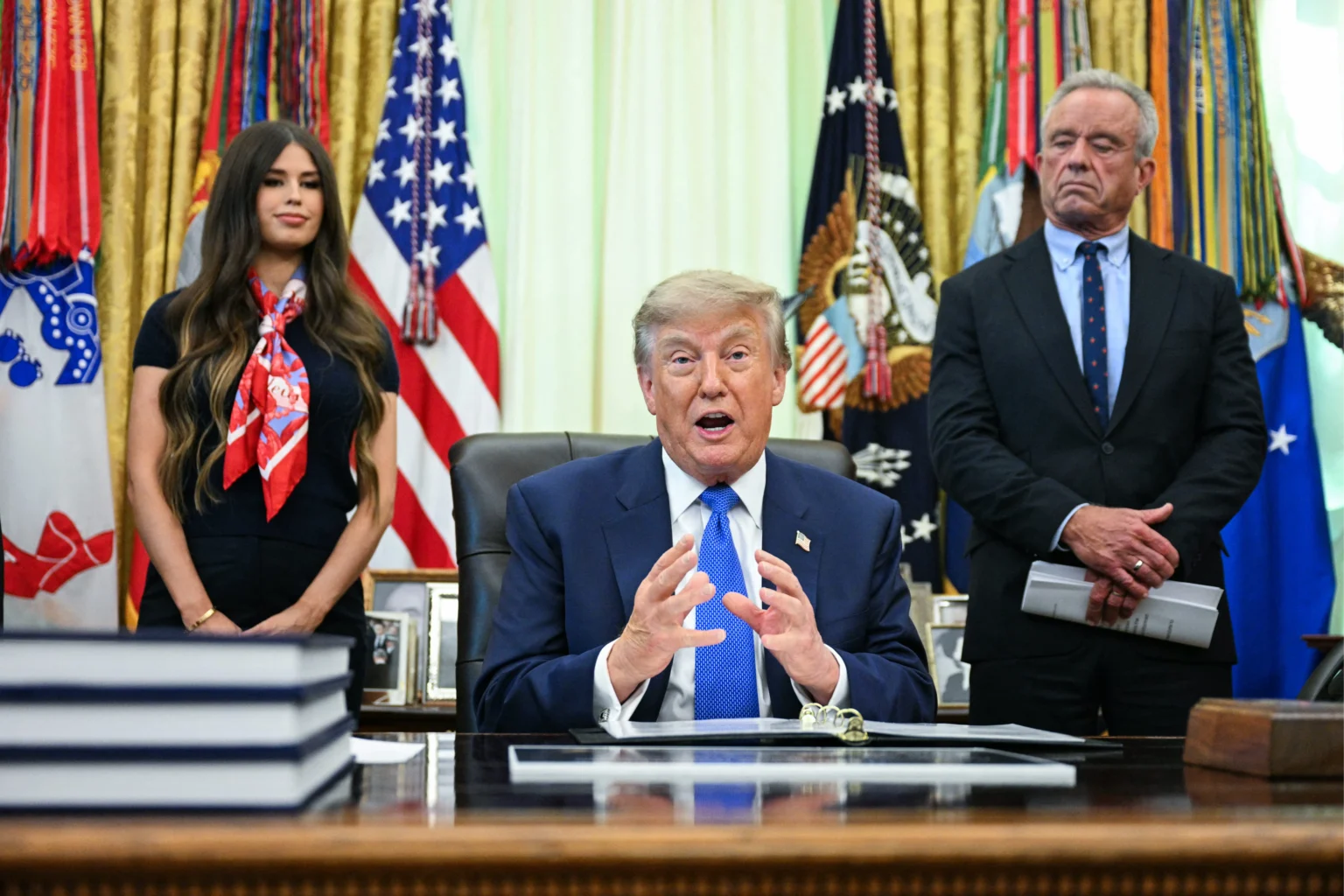
The order, signed on August 10, 2026, directs the US Department of Health and Human Services (HHS) and other federal agencies to reshape childhood vaccine recommendations around what the administration describes as a “gold standard” schedule.
Trump said the changes would reduce the number of vaccines routinely recommended for children and require them to be administered over a series of separate visits.
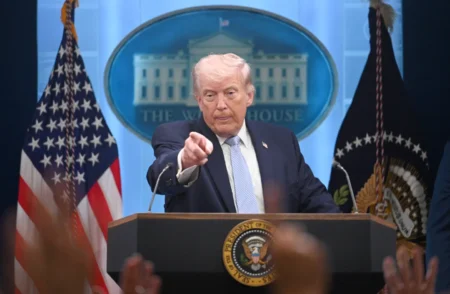
“Decades ago, children received only a small fraction of the vaccines required today,” Trump said while signing the order at the White House.
He also linked the increase in childhood vaccinations to the rise in autism, although extensive research has found no evidence that the MMR vaccine causes autism.
The American Academy of Pediatrics (AAP), which maintains its own 2026 childhood immunisation schedule, continues to recommend routine vaccination against 18 diseases. The AAP has said its recommendations are based on evidence and are intended to protect children at the ages when they are most vulnerable to vaccine-preventable diseases.
MMR vaccine at centre of changes
One of the most controversial elements of Trump’s policy is the administration’s push to separate the combined MMR vaccine into three individual injections for measles, mumps and rubella.
Trump has repeatedly questioned whether children should receive the three vaccines together and suggested that giving them separately would be safer.
However, the US Centers for Disease Control and Prevention (CDC) says there is no published scientific evidence that separating the MMR vaccine into three individual shots provides any benefit.
The CDC also says the MMR vaccine is safe and effective. Two doses provide about 97 per cent protection against measles and 86 per cent protection against mumps, while one dose is about 97 per cent effective against rubella.
The agency acknowledges that MMR vaccination can cause side effects, most commonly pain at the injection site, fever, mild rash and swollen glands. There is also a small increased risk of febrile seizures in young children, occurring at a rate of about one case for every 3,000 to 4,000 children vaccinated.
The CDC nevertheless says vaccination is considerably safer than contracting measles, mumps or rubella.
No established link between MMR and autism
Trump again referred to autism while defending the changes, echoing a claim he has made repeatedly.
The claim that MMR vaccination causes autism has been extensively investigated and has not been supported by high-quality epidemiological research.
The original 1998 paper that helped fuel the controversy was subsequently retracted. Multiple studies conducted since then have found no association between MMR vaccination and autism, including research involving children considered to be at higher risk because they had siblings with autism.
The CDC’s current MMR safety guidance states that scientists in the United States and other countries have found no link between MMR vaccination and autism.
A large Danish study published in 2019, involving 657,461 children, also found no evidence that MMR vaccination increased the risk of autism.
What the new schedule means
The administration says the revised framework will focus routine vaccination recommendations on 11 core diseases.
The vaccines identified for universal childhood protection include those against measles, mumps, rubella, diphtheria, tetanus, pertussis, polio, Haemophilus influenzae type B, pneumococcal disease, human papillomavirus and chickenpox.
Other vaccines would be placed into different recommendation categories, with eligibility in some cases depending on a child’s risk factors rather than being recommended universally.
The administration has argued that the approach gives parents greater choice over which vaccines their children receive and when they receive them.
Health Secretary Robert F. Kennedy Jr has defended the changes as an effort to increase parental choice rather than eliminate access to vaccines.
But paediatricians and public-health experts have warned that separating vaccines into more appointments could make it harder for some families to complete recommended immunisations on time.
Additional appointments can increase the likelihood of delays or missed doses, potentially leaving children vulnerable to preventable diseases during the gaps between vaccinations.
States still control school vaccination requirements
The executive order does not automatically rewrite every vaccination requirement in the United States.
School-entry vaccination requirements are largely established by individual states, meaning state governments retain significant authority over which vaccines children must receive to attend school.
The administration has nevertheless sought to influence those policies by encouraging states to reconsider their vaccination requirements and by directing federal agencies to develop a revised framework.
That distinction is important because the order changes federal policy and guidance, but does not by itself create a single nationwide school-vaccination mandate.
Paediatricians push back
The American Academy of Pediatrics has strongly criticised the administration’s approach.
AAP President Dr Andrew Racine said the changes were not supported by “gold-standard science” and warned that delaying or skipping vaccinations could expose children to preventable illnesses.
The AAP’s 2026 schedule continues to recommend routine immunisation against 18 diseases and says the schedule is grounded in scientific evidence.
The criticism has also crossed party lines.
Republican Senator Bill Cassidy, a physician who played a decisive role in Kennedy’s confirmation as health secretary, criticised Trump’s order and said vaccines are overwhelmingly safe and effective.
“The President does not have the expertise to make these changes,” Cassidy said.
Measles risk adds urgency
The policy shift comes as public-health authorities remain concerned about measles outbreaks and declining confidence in some childhood vaccines.
Measles is highly contagious and can cause serious complications, particularly among young children and people who are not vaccinated.
The CDC says maintaining high MMR vaccination coverage is necessary to limit the spread of measles and prevent outbreaks.
That has made the administration’s decision to encourage separate MMR shots particularly contentious.
Critics argue that breaking up the combination vaccine could create additional barriers to timely vaccination without providing a demonstrated medical benefit.
A wider fight over vaccine policy
The latest order is part of a broader transformation of US vaccine policy under the Trump administration.
In May, Trump signed an executive order directing federal health agencies to review childhood vaccine recommendations against practices in other developed countries. The administration has framed the process as an effort to align the US schedule with international practices and give parents and doctors greater flexibility.
The debate has since expanded beyond the number of vaccines children receive to questions about vaccine ingredients, timing, mandates and the role of federal health agencies in setting immunisation policy.
Trump’s latest order also calls for the development and testing of alternatives to aluminium-containing vaccine adjuvants.
Also Read: Ministry of Health: All newborns in Uganda to get Hepatitis B vaccine at birth
Aluminium salts have been used in some vaccines for decades to strengthen immune responses. The AAP says the small quantities used in vaccines have not been shown to pose significant health risks.
The policy therefore marks more than a change to the childhood vaccination schedule. It represents a broader challenge to the way vaccine recommendations have traditionally been developed and communicated in the United States.
For parents, the immediate issue is likely to be confusion over which recommendations apply to their children, particularly as federal guidance, state school requirements and professional medical recommendations may no longer align.
For public-health officials, the central concern is whether changes to the schedule will preserve high vaccination coverage and prevent the return of diseases that have been controlled for decades.
The administration says its approach will give families greater choice.
Medical organisations argue that vaccination schedules should remain guided by evidence rather than political preference.
That debate is now at the centre of one of the most consequential public-health policy shifts of Trump’s presidency.