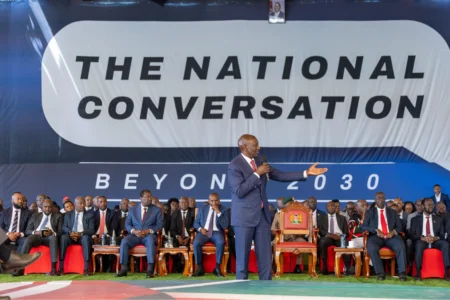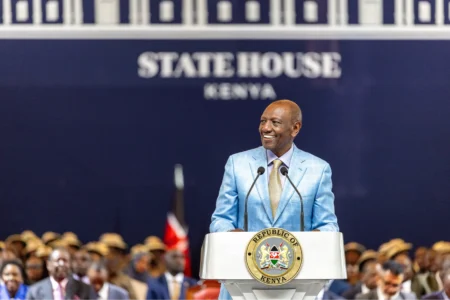



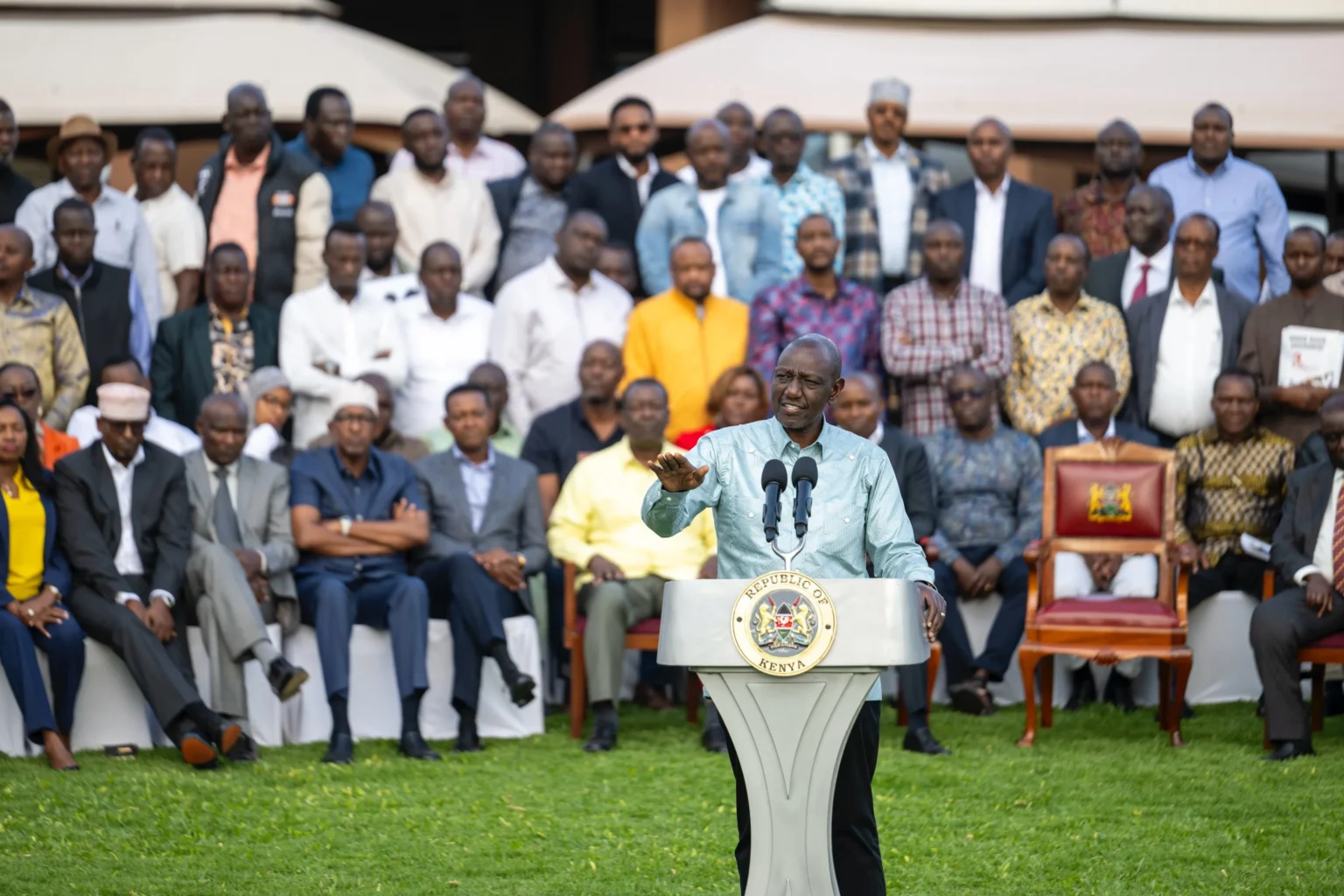
NAIROBI, Kenya — President William Ruto will on Wednesday 12, August 2026 lead the Executive in presenting proposals for Kenya’s proposed Vision 2060 economic transformation plan as the country begins a national dialogue on its long-term development agenda.
The dialogue, scheduled to take place at the Kenyatta International Convention Centre (KICC) in Nairobi, will bring together about 5,000 Kenyans drawn from all 47 counties to discuss and submit proposals on the proposed roadmap for transforming Kenya into a first-world economy.
The National Treasury was finalising preparations for the convention on Tuesday evening, with Treasury Cabinet Secretary John Mbadi and Kisumu Governor Anyang’ Nyong’o among those expected to lead the discussions.
Mbadi described the event as the beginning of a constitutional public participation process intended to give Kenyans a direct role in shaping the country’s long-term development priorities.
“Tomorrow is the beginning of public engagement in the form of public participation as enshrined in the Constitution, and this is what will inform Kenyans towards Vision 2060,” Mbadi said.
Representatives from the Executive, Legislature and Judiciary are expected to participate alongside members of the public, with memoranda and proposals from the counties forming part of the deliberations.
Mbadi: Vision 2060 is not Ruto’s plan
Mbadi sought to distance the proposed long-term plan from President Ruto personally, arguing that the initiative should be viewed as a national project rather than an administration-specific programme.
“This vision is not Ruto’s vision,” Mbadi said, urging Kenyans who have alternative proposals to present them during the dialogue.
“If you have better ideas, come with them tomorrow and present the better opinions so that we converse together,” he added.
The Treasury Cabinet secretary also questioned whether Kenya should discard the progress made under Vision 2030 as it develops a new long-term economic framework.
“Why dismiss the efforts made so far towards the realisation of Vision 2030?” Mbadi asked.
His remarks point to an attempt to position Vision 2060 as a continuation and expansion of Kenya’s existing development planning rather than a complete break from the Vision 2030 framework.
From Vision 2030 to Vision 2060
The proposed Vision 2060 agenda is expected to shape Kenya’s development priorities beyond the expiry of Vision 2030, with discussions focusing on economic transformation, strong institutions, human capital and inclusive development.
The conveners say the national dialogue is intended to provide a platform for Kenyans to examine the country’s long-term priorities and identify the policy foundations needed to sustain economic growth and improve living standards.
Mbadi said the ambition was to position Kenya as a first-world economy within 25 years under the proposed framework.
“We should realise our first-world economic status in 25 years within that vision. That is why it is important for all of us to sit down and formulate,” he said.
The proposal therefore sets an ambitious long-term horizon, with the public participation process expected to determine the priorities, targets and policy interventions that will ultimately form the Vision 2060 framework.
Proposal must go through Parliament
Vision 2060 is not yet a binding national development law.
According to the proposed process, once the national dialogue and public participation exercise are completed, the resulting development charter will be formulated and presented to Parliament in the form of a Bill.
The proposed legislation would then have to pass through both Houses of Parliament before being presented to President Ruto for assent.
Also Read: President Ruto rejects ‘failed state’ label, says Kenya on sound economic footing
If enacted, the legislation would provide a statutory policy framework for the long-term development priorities emerging from the Vision 2060 process.
This means Wednesday’s meeting is an important starting point, rather than the final adoption of the proposed vision.
5,000 Kenyans expected at KICC
The participation of about 5,000 people from across the country is intended to broaden the debate beyond national government institutions and political leaders.
The inclusion of representatives from the 47 counties is expected to provide an opportunity for local priorities to feed into the proposed national framework.
The Judiciary and Parliament are also expected to be represented, reflecting the government’s intention to make the process broader than an Executive-led policy exercise.
The central question will be whether the dialogue can produce a long-term development blueprint that commands sufficient public and political support to survive changes in government.
For the Ruto administration, the exercise also offers an opportunity to define the country’s economic priorities beyond the remaining years of its current term.
For the public, however, the effectiveness of Vision 2060 will ultimately depend on whether the ambitious targets are translated into policies, investments and measurable improvements in jobs, incomes, public services and living standards.
Wednesday’s dialogue at KICC therefore marks the beginning of what could become one of Kenya’s most consequential long-term policy debates: how the country moves from the Vision 2030 era towards a proposed 2060 framework and whether that transition can deliver the first-world economy envisaged by its proponents.