




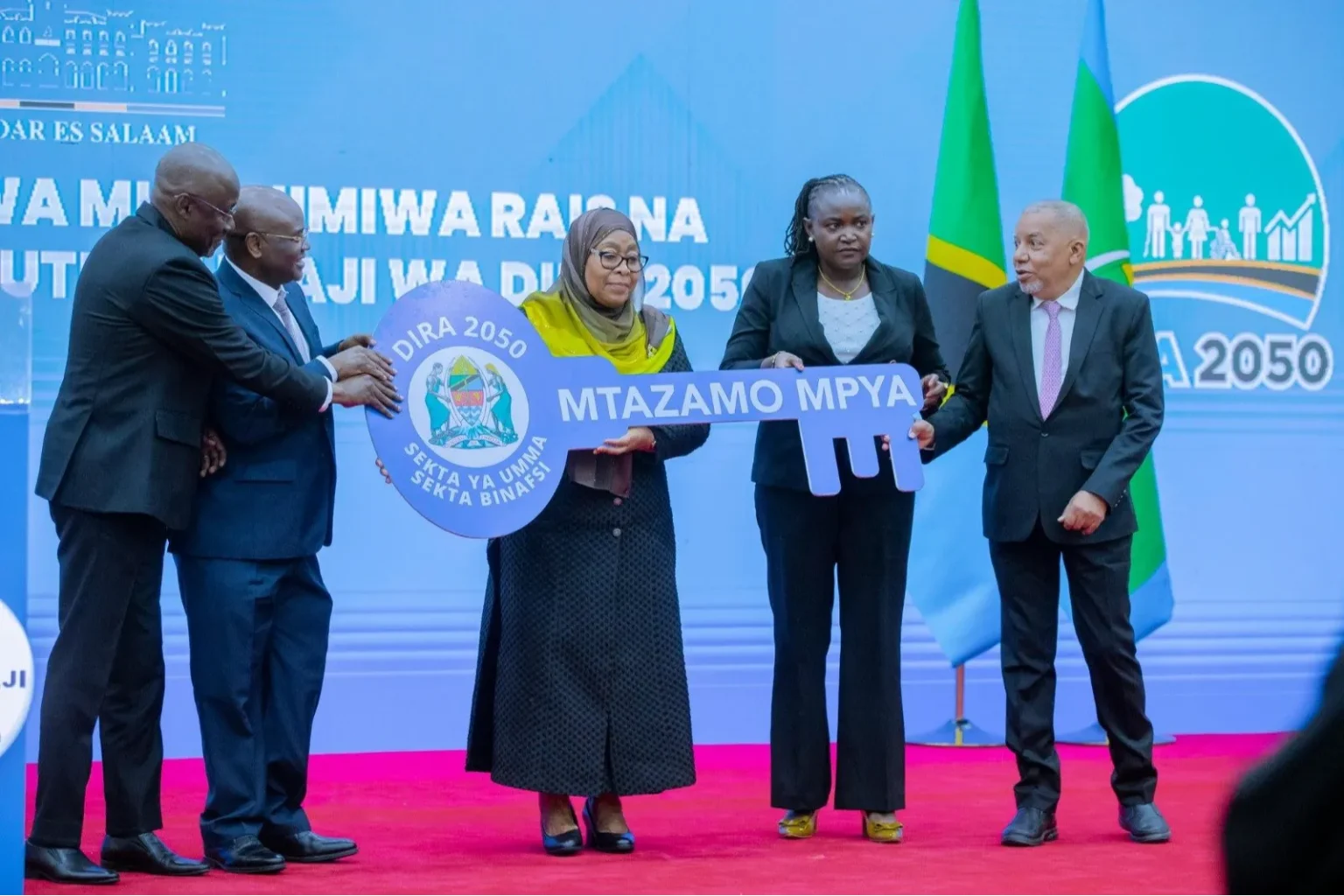
DAR ES SALAAM, Tanzania — Tanzanian President Samia Suluhu Hassan has officially launched the implementation framework for the country’s National Development Vision 2050, positioning the private sector as the principal driver of the country’s long-term economic transformation.
The launch marks a significant milestone in Tanzania’s development strategy, with the government pledging to create a business-friendly environment while relying on private investment to deliver the ambitious goals outlined in the national blueprint.
Speaking after presiding over a high-level dialogue with business leaders in Dodoma on Monday, August 3, 2026, Samia unveiled a set of implementation, monitoring and acceleration mechanisms designed to guide the execution of Vision 2050 and strengthen accountability between the government and the private sector.
The event also saw government officials and private sector representatives sign a Joint Declaration committing both sides to work together in implementing Tanzania’s long-term development agenda.
President Samia said the success of Vision 2050 will largely depend on private sector participation, noting that businesses are expected to implement approximately 70 per cent of the development programme.
She said the government’s responsibility would be to remove obstacles to investment, improve the business environment and ensure that economic growth translates into tangible benefits for ordinary Tanzanians.
“Since the private sector bears approximately 70 per cent of Vision implementation, the government will continue to create an enabling environment, address existing challenges, and ensure that Vision goals are translated into tangible outcomes that touch the lives of citizens,” she said.
She further directed the President’s Office responsible for Planning and Investment, together with relevant government agencies, to intensify nationwide public awareness campaigns so that citizens understand the objectives and implementation of Vision 2050.
Also Read: President Ruto rejects ‘failed state’ label, says Kenya on sound economic footing
The Tanzanian leader also emphasised that political stability, national unity and peace remain essential for achieving the country’s long-term economic ambitions.
She urged Tanzanians to support the implementation process by preserving the country’s stability.
“I urge Tanzanians to continue maintaining peace, unity and stability so that together we ensure this Vision does not remain mere aspirations or a policy document, but is implemented with great success for the benefit of our nation,” Samia said.
East Africa embraces long-term development planning
The launch comes as East Africa’s two largest economies pursue new long-term development strategies aimed at sustaining economic growth beyond their existing national plans.
Last week, Kenyan President William Ruto announced the beginning of a nationwide consultation process to formulate Vision 2060, which will replace Kenya’s current Vision 2030 development blueprint.
In a special national address delivered from State House, Nairobi, on July 30, 2026, Ruto acknowledged that Kenya remains off track to achieve upper-middle-income status by 2030 under the current framework.
He announced that a nationwide National Conversation would begin on August 12, 2026, to gather public views on Kenya’s next long-term development strategy.
Ruto said although Vision 2030 had guided Kenya’s development for nearly two decades, the country needed a new framework capable of responding to changing global economic realities while positioning Kenya as a competitive first-world economy.
The parallel initiatives highlight a growing regional emphasis on long-term economic planning as governments seek to attract investment, expand industrialisation and create sustainable economic growth.
While Tanzania has now entered the implementation phase of Vision 2050, Kenya is beginning consultations that will shape its post-Vision 2030 agenda.
The two initiatives are expected to influence regional integration, infrastructure development, industrial competitiveness and private sector investment across the East African Community in the coming decades.