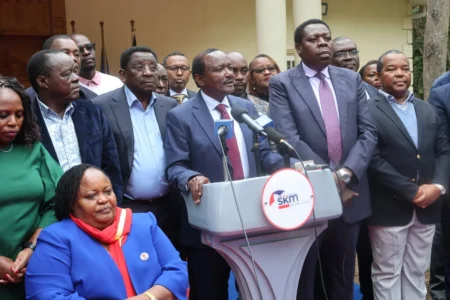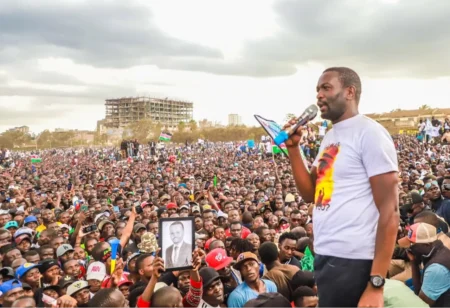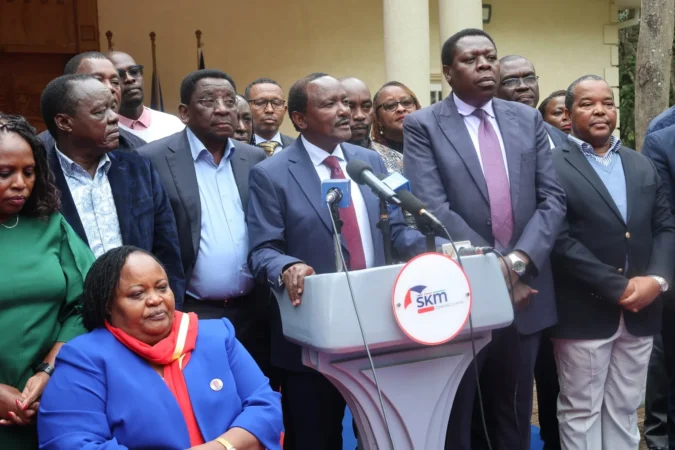


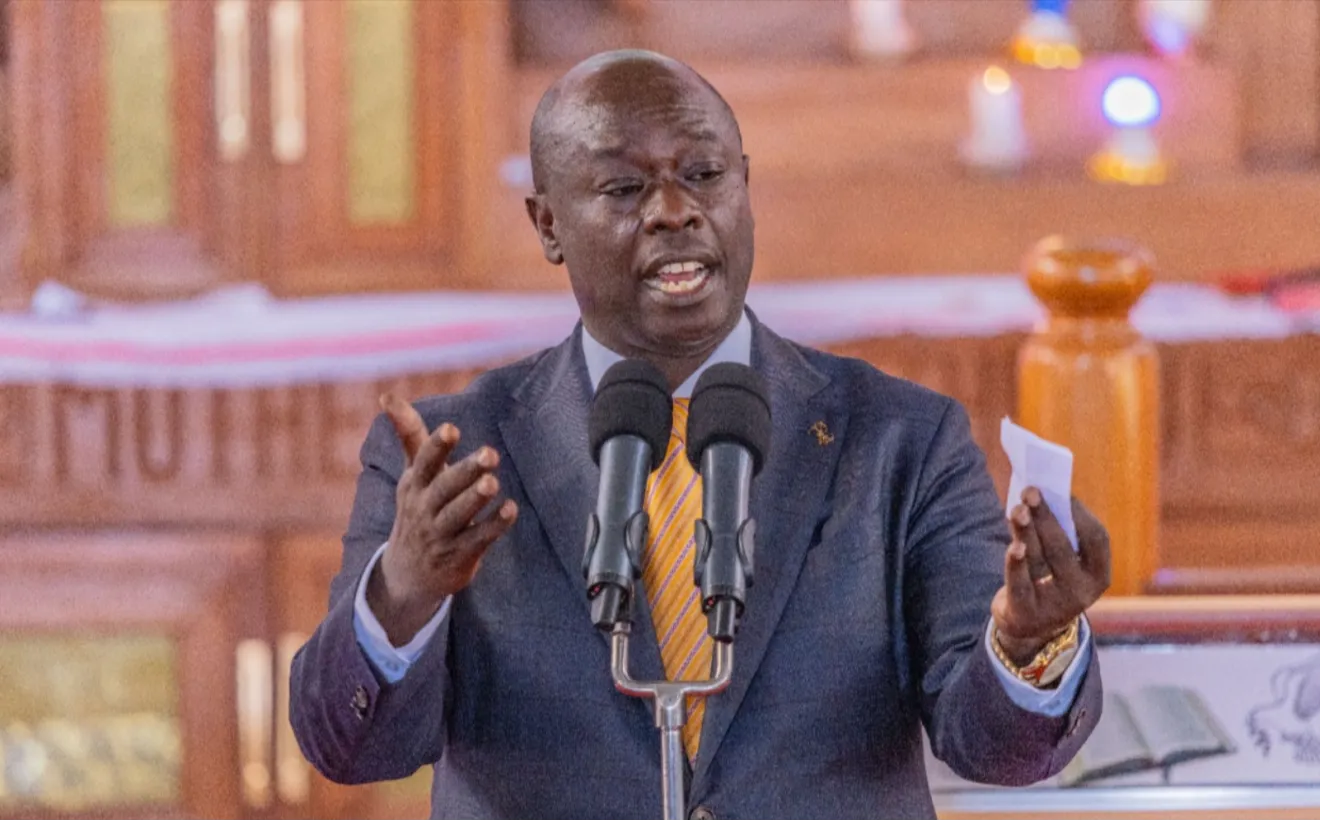
NAIROBI, Kenya — Former Deputy President Rigathi Gachagua has called for greater clarity over the circumstances surrounding the death of former Prime Minister Raila Odinga, questioning the events leading up to his final hours in India.
Speaking during a media briefing on Tuesday, August 11, Gachagua said Kenyans deserved answers about the circumstances surrounding the deaths of prominent political figures, including Raila, who died in India in October 2025.
“Kenyans want to know what happened to Raila Odinga,” Gachagua said.
The former deputy president questioned claims that some members of Raila’s personal medical team were denied access to him shortly before his death and that medical advice against travelling had allegedly been disregarded.
“Why were the doctors of the late Prime Minister denied access to him in the last hours?,” Gachagua asked.
“Why were instructions of Raila’s doctors ignored that Raila shouldn’t travel?,” he added.
Gachagua also questioned the circumstances surrounding Raila’s journey to India, including the aircraft used and the medical personnel who accompanied him.
“Why was a post-mortem not done on Raila? Why was he forced to go to India on a private jet?” he asked.
He further questioned the identities and roles of the doctors who travelled with Raila, alleging that they did so contrary to instructions from his personal physician.
“Who are these doctors who accompanied Raila to India against the instructions of Raila’s personal doctor?” Gachagua said.
The claims have not been independently substantiated in the public record reviewed for this report.
What is known about Raila’s death
Raila died on October 15, 2025, aged 80, while receiving treatment in India’s Kerala state.
Contemporary reports from Indian hospital and police authorities said he collapsed during a morning walk at the Sreedhareeyam Ayurvedic Eye Hospital and Research Centre in Koothattukulam and was subsequently taken to Devamatha Hospital, where efforts to resuscitate him were unsuccessful. His death was reported as resulting from cardiac arrest.
Kenya’s official presidential proclamation also confirmed that Raila died in India while receiving medical treatment.
Raila had a documented history of several health conditions, including diabetes, hypertension and chronic kidney disease, according to reports on his final medical history.
Gachagua’s questions therefore seek information beyond the publicly reported account of the final medical emergency.
Questions over the journey to India
The former deputy president’s comments place renewed attention on the circumstances surrounding Raila’s treatment in India and the people responsible for his care.
However, claims that Raila was “forced” to travel to India or that his doctors were prevented from accessing him would require documentary or eyewitness evidence to establish.
Likewise, the allegation that medical advice against travel was ignored has not been independently established by the sources reviewed.
These questions could potentially be addressed through medical records, travel documentation, statements from Raila’s family and personal physicians, and any official reports relating to his treatment and death.
Gachagua questions burial arrangements
Gachagua also questioned the decision to bury Raila within 72 hours, arguing that it appeared inconsistent with Luo cultural practices.
“Raila Odinga respected Luo traditions and customs; how could he indicate that he should be buried in 72 hours against all Luo traditions?” he asked.
Raila’s family and the national funeral committee, however, publicly stated after his death that he had expressed a wish to be buried within 72 hours.
Also Read: Fresh details emerge on Raila Odinga’s final moments before his death in India
The official programme scheduled his burial in Bondo for Sunday, October 19, 2025, four days after his death.
The 72-hour preference was therefore publicly presented as Raila’s own wish rather than a requirement imposed after his death.
Political questions around Raila’s legacy
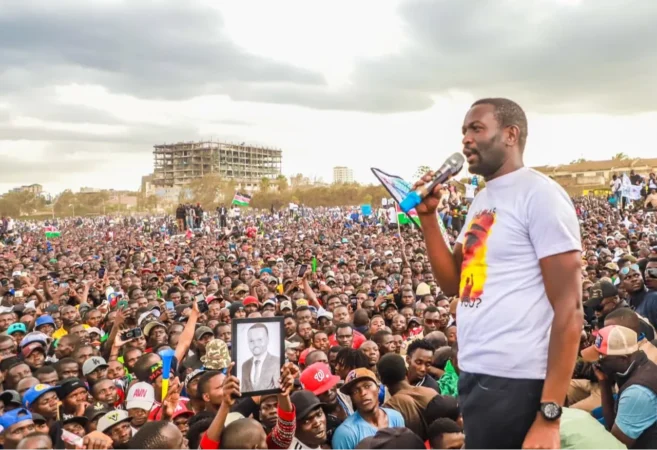
Gachagua’s intervention comes amid a broader political contest over the legacy of Raila, whose death significantly altered Kenya’s political landscape.
The former prime minister was one of Kenya’s most influential opposition leaders and served as prime minister between 2008 and 2013. His death triggered a state funeral and widespread national mourning.
His final journey also drew enormous crowds, with public mourning ceremonies held in Nairobi and Kisumu before his burial in Bondo.
Gachagua’s latest remarks are therefore likely to generate renewed public debate over Raila’s treatment, final journey and death.
But while the questions raised by the former deputy president may warrant scrutiny, they should not be treated as established facts without supporting evidence.
For now, the documented account remains that Raila collapsed during a morning walk in Kerala on October 15, 2025, was taken to Devamatha Hospital, and died after unsuccessful resuscitation efforts following cardiac arrest.