

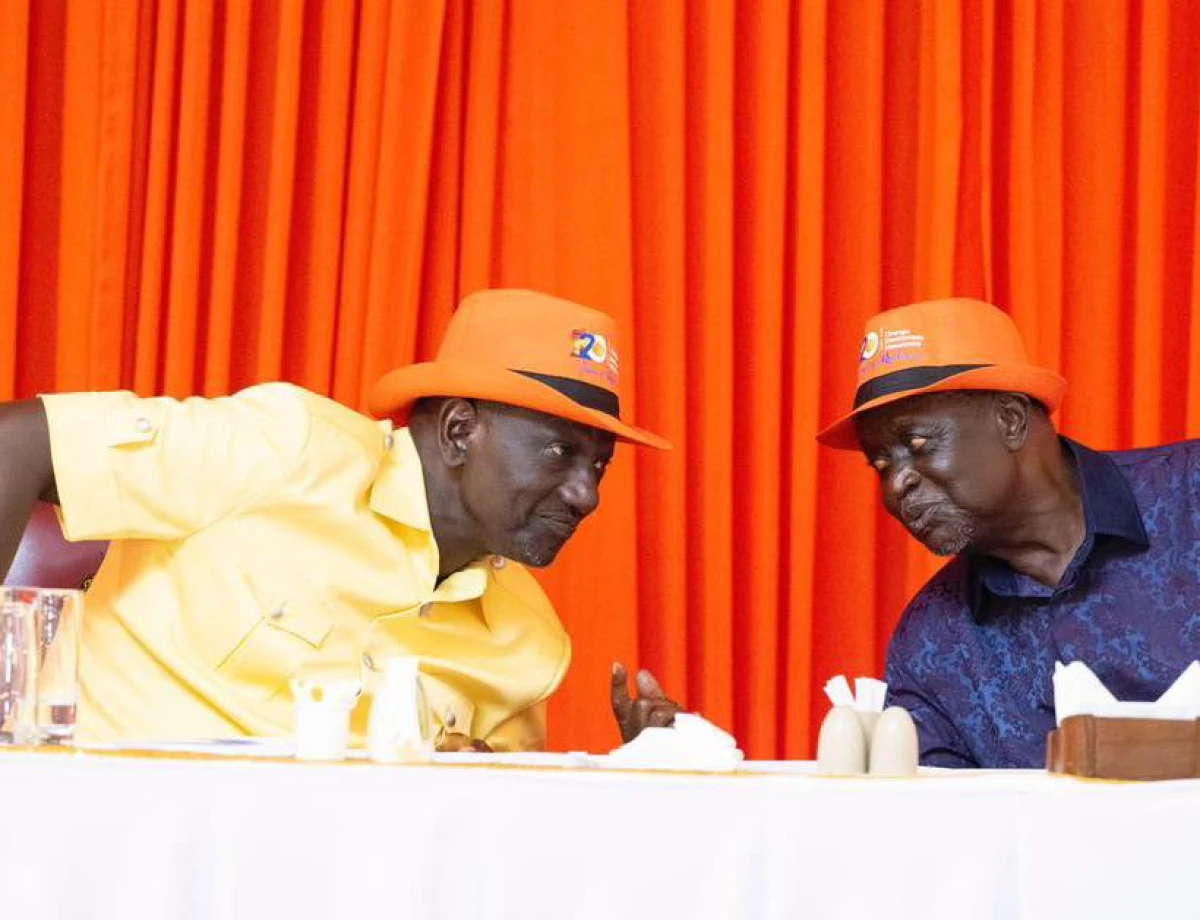
NAIVASHA, Kenya — President William Ruto has declared that the emerging UDA-ODM alliance must win the 2027 General Election, warning that handing power to an opposition coalition without what he described as a clear governing agenda would be “dangerous” for Kenya.
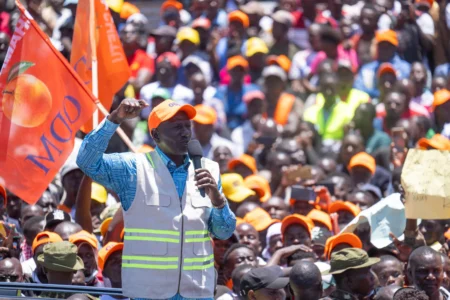
Ruto made the remarks in Naivasha on Monday, August 10, during a three-day retreat bringing together leaders from the United Democratic Alliance (UDA) and Orange Democratic Movement (ODM).
“The next election… we must win. By God’s grace, we must win the next election,” Ruto said.
The President portrayed the election as a choice between his administration and an opposition whose governing programme, he claimed, remains unclear.
“The alternative is difficult to fathom. A group of people who have no plan, no agenda, no policy, no vision, is too dangerous for Kenya,” he said.
The declaration marks one of Ruto’s clearest statements yet about the electoral objective of the UDA-ODM partnership as political parties position themselves for the 2027 contest.
Ruto’s criticism of opposition leaders without what he considers a clear development agenda is not new.
He used a similar argument during his campaign for the presidency, when he urged voters to reject political leaders and parties that could not demonstrate a record or programme for development.
In October 2021, while campaigning in Ukambani, Ruto challenged voters in Makueni to scrutinise the development records of politicians seeking their support.
“If you have been a Prime Minister or a Deputy Prime Minister and even a Deputy President like me and you have no single development record to show, you do not have any business asking for their vote,” he said at the time.
His latest remarks revive that argument at a point when the political landscape is undergoing significant realignment.
The UDA-ODM arrangement has brought together two parties that were on opposite sides of the political divide during the 2022 election, creating a new governing alliance with ambitions of retaining power in 2027.
The political environment outside the alliance remains fluid.
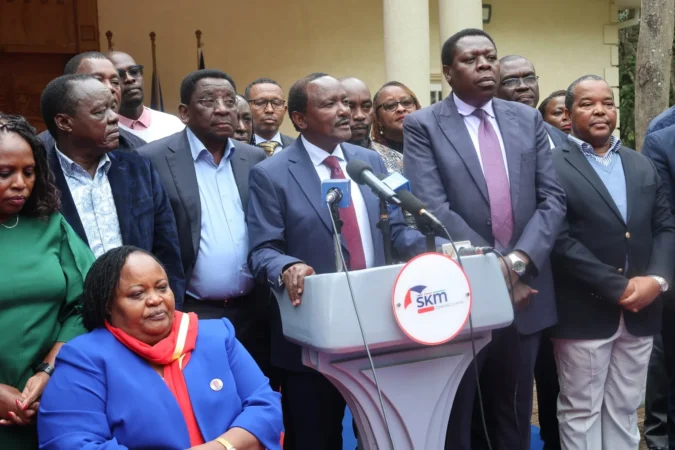
Opposition parties and political figures are exploring their own coalition arrangements, with former Deputy President Rigathi Gachagua, Wiper leader Kalonzo Musyoka, DAP-Kenya leader Eugene Wamalwa and other politicians seeking to consolidate an alternative political force.
The emergence of multiple competing formations means the 2027 election is likely to be shaped as much by coalition-building as by individual party strength.
For Ruto, the Naivasha retreat provides an opportunity to strengthen cooperation between UDA and ODM while beginning to define the political message with which the alliance intends to approach voters.
The President’s emphasis on winning also signals a shift from the language of broad-based government cooperation towards an explicitly electoral objective.
Ruto’s call for victory comes as electoral authorities prepare for an increasingly competitive campaign.
Independent Electoral and Boundaries Commission (IEBC) Chairperson Erastus Ethekon has warned that the commission cannot conduct credible elections in an environment marked by ethnic incitement, hate speech, violence and political intimidation.
“IEBC cannot hold elections in a toxic environment. IEBC cannot hold elections in an environment that’s full of incitement, division, violence, chaos and anarchy,” Ethekon said.
The warning comes as political parties and potential presidential contenders intensify mobilisation ahead of the polls.
The IEBC, National Cohesion and Integration Commission (NCIC), Directorate of Criminal Investigations (DCI) and Office of the Registrar of Political Parties (ORPP) have also established a multi-agency framework aimed at addressing hate speech and electoral violence.
Politicians found culpable of incitement could face legal consequences, including restrictions on their eligibility to contest, depending on the applicable laws and findings of the relevant institutions.
Also Read: Ruto calls broad-based government Kenya’s biggest political coalition since 2008
Ruto’s declaration in Naivasha is likely to further sharpen the political battle over the next election.
For the President, the immediate challenge is to convert the UDA-ODM partnership into a coherent electoral machine capable of defending the administration’s record and expanding its support beyond the traditional bases of the two parties.
For the opposition, the task is to demonstrate that its competing coalitions can offer voters a credible alternative rather than simply an anti-Ruto platform.
That contest will increasingly revolve around the economy, cost of living, development, governance, constitutionalism and the credibility of the competing political alliances.
With just over a year before the 2027 election, Ruto’s message is already clear: he sees retaining power as the central objective of the UDA-ODM alliance.
The question now is whether the alliance can translate its parliamentary and political numbers into a winning national coalition — and whether the opposition can build a sufficiently coherent alternative to challenge it.