


NAIROBI, Kenya — Kenya’s tourism industry has weathered political crises, global pandemics, terrorist attacks and economic shocks.
What it rarely faces is a call from a prominent national political figure urging visitors and investors to stay away.
That is why remarks by former Deputy President Rigathi Gachagua advising tourists and foreign investors to postpone travel and investment plans until after the next general election have triggered an unusually strong backlash from political leaders, business groups and tourism stakeholders.
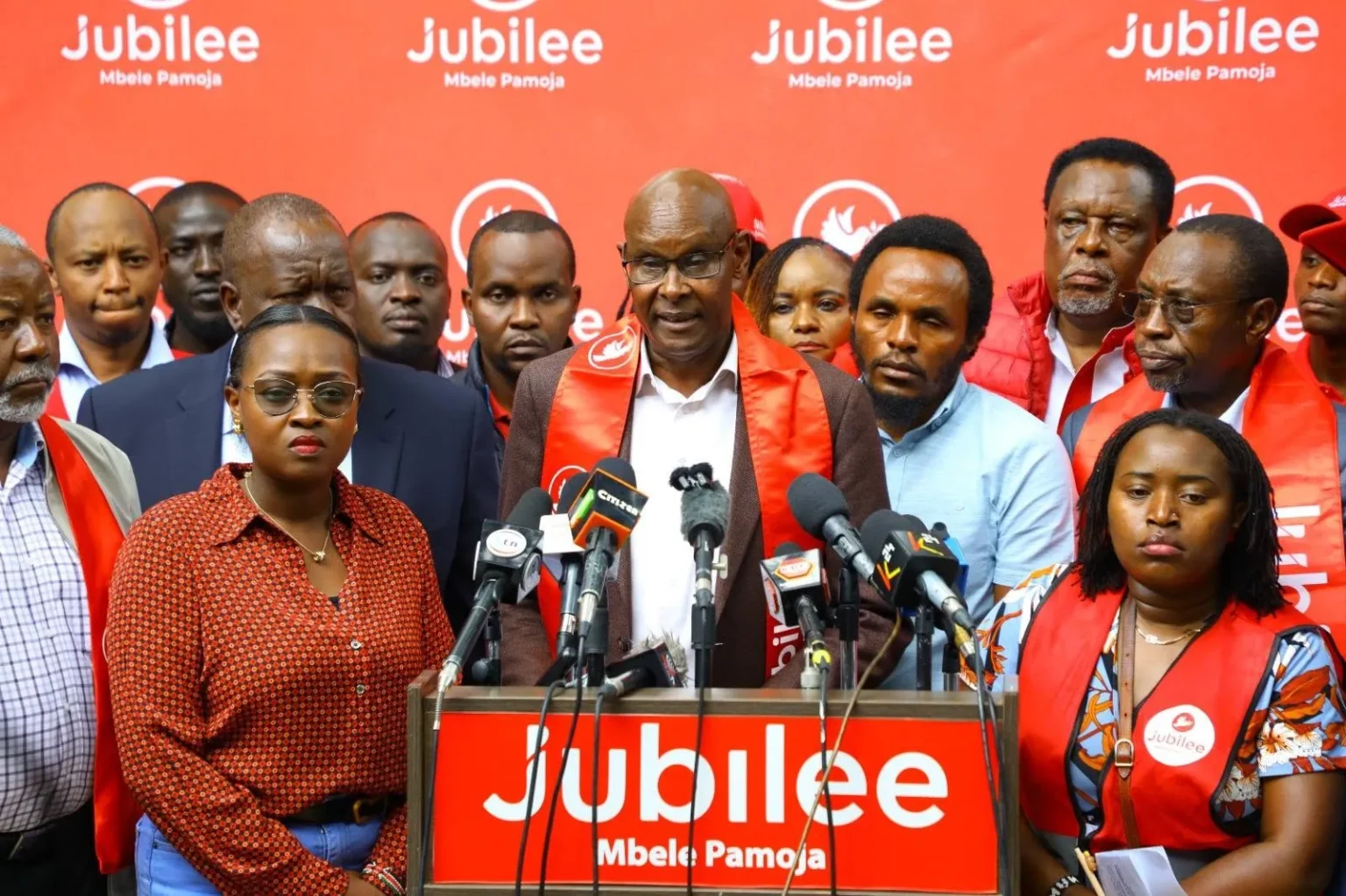
The latest response came from the Jubilee Party, which on Monday 20, July 2026 accused Gachagua of crossing a dangerous line by turning one of Kenya’s most important economic sectors into a political weapon.
In a sharply worded statement, the party warned that calls discouraging tourism and investment may be intended as political criticism of the government but ultimately risk hurting ordinary Kenyans far more than political leaders.
“The people who bear the greatest cost of declining tourist arrivals or reduced investments are not those in positions of political authority,” the statement said.
“It is the hotel worker in Diani, the tour guide in Maasai Mara, the artisan in Mombasa, the farmer supplying fresh produce to hospitality establishments, the taxi operator, the young entrepreneur and thousands of families whose daily incomes depend on a vibrant economy.”
The response reflects a growing debate about where political opposition ends and economic responsibility begins.
When politics meets the economy
Kenya’s political landscape has become increasingly polarised ahead of the next electoral cycle.
Opposition leaders have intensified criticism of President William Ruto’s administration, particularly over governance, security and economic management.
Gachagua’s comments emerged from that broader confrontation.
Speaking on Sunday, the Democracy for Citizens Party (DCP) leader urged international visitors and investors to delay their engagement with Kenya, arguing that rising insecurity had made the country unsafe.
According to Gachagua, conditions would improve after political change occurs.
His remarks immediately attracted attention because they touched on two sectors that remain critical to Kenya’s economic stability.
Tourism is one of the country’s largest foreign exchange earners, while foreign direct investment continues to play a significant role in infrastructure development, job creation and economic growth.
Critics argue that questioning government performance is legitimate political discourse.
Discouraging economic activity, however, enters more complicated territory.
The invisible people behind tourism numbers
Political arguments often revolve around institutions, leaders and policies.
Economic consequences are usually experienced by individuals.
That distinction sits at the centre of Jubilee’s criticism.
When tourist arrivals decline, the impact is rarely felt first in boardrooms or government offices.
It appears in hotel payrolls.
It appears in reduced bookings for safari operators.
It appears in cancelled excursions, lower demand for local produce and fewer customers for transport providers.
Tourism economist Dr Samuel Ndegwa says the industry’s interconnected nature means disruptions travel quickly through the economy.
“Tourism supports an extensive value chain,” he explains.
“When visitor numbers fall, the effects extend far beyond hotels and airlines. Entire communities can experience reduced income.”
Kenya’s tourism sector directly and indirectly supports hundreds of thousands of livelihoods, particularly in coastal regions, wildlife conservancies and urban hospitality centres.
For those workers, confidence matters almost as much as visitor numbers themselves.
Why confidence is so valuable
The strongest reaction to Gachagua’s remarks came not from politicians but from industry stakeholders.
The Kenya Tourism Federation (KTF) warned that public statements questioning Kenya’s safety risk damaging something far more difficult to restore than visitor arrivals.
Trust.
“Once confidence is damaged, rebuilding it can take years, sometimes even longer, regardless of how quickly political circumstances change,” the federation said.
That concern reflects a long-standing reality within global tourism.
Travellers often make decisions based on perception as much as reality.
A destination perceived as unstable can lose visitors even when actual risks remain limited.
Tourism experts point to numerous international examples where political unrest, security concerns or negative publicity produced lasting economic consequences despite relatively short-lived crises.
The concern is not merely whether visitors cancel trips today.
It is whether potential visitors begin considering alternative destinations tomorrow.
The politics of national image
The controversy also raises broader questions about how political leaders balance criticism of government with protection of national interests.
Jubilee’s statement acknowledged the importance of democratic debate and political competition.
At the same time, the party argued that such debates should not undermine sectors upon which millions of livelihoods depend.
“Any communication made in pursuit of political change must equally safeguard national interest,” the party said.
That position highlights a dilemma faced by opposition figures worldwide.
Political leaders often seek to draw attention to governance failures, insecurity or economic challenges.
Yet countries simultaneously compete for tourism, investment and international partnerships.
The line between highlighting problems and discouraging engagement can sometimes become blurred.
Political analyst Prof Gitile Naituli argues that mature democracies often distinguish between criticism of governments and criticism of countries themselves.
“Opposition politics is essential in a democracy,” he says.
“The challenge is ensuring that criticism strengthens accountability without unintentionally weakening economic confidence.”
A sector built on stability
Kenya’s tourism industry has spent decades cultivating a global reputation around wildlife, beaches, culture, conferences and sporting events.
That brand has survived multiple challenges.
The federation emphasised that tourists visiting Kenya are not participants in domestic political contests.
“They come to experience Magical Kenya’s wildlife, beaches, culture, hospitality, conferences and sporting events,” KTF said.
Also Read: Moses Kuria responds after Gachagua labels him a Kikuyu outcast
“They are neither involved in nor targeted by the political rivalries that occasionally play out within our country.”
The statement reflects an effort to separate political competition from the country’s broader international image.
Industry leaders fear that failing to make that distinction could create uncertainty at a time when tourism has been recovering strongly from the disruptions of recent years.
A debate that is unlikely to disappear
The dispute between Jubilee and Gachagua is ultimately about more than tourism.
It reflects competing views about how political leaders should communicate during periods of national tension.
For Gachagua and his supporters, highlighting insecurity may be necessary to pressure the government into action.
For his critics, urging tourists and investors to stay away risks punishing ordinary citizens more than political opponents.
The disagreement is unlikely to be resolved quickly.
What remains clear is that the debate has touched a sensitive nerve in a country where tourism and investment are not abstract economic indicators but sources of daily income for millions of people.
As Kenya moves closer to another election cycle, political competition will almost certainly intensify.
The question now is whether economic confidence can remain insulated from that contest.
For workers in hotels, game reserves, restaurants, transport businesses and countless small enterprises connected to tourism, the answer matters far more than any political argument.