


NAIROBI, Kenya — Former Deputy President Rigathi Gachagua has raised fresh allegations over the Independent Electoral and Boundaries Commission’s (IEBC) procurement of election technology, claiming the outcome of a tender has already been predetermined in favour of a South Korean company.
Gachagua made the allegations on Wednesday, August 26, 2026, as political scrutiny intensifies over preparations for the 2027 General Election.
The former Deputy President claimed the ongoing procurement process for an Integrated Elections Management System (IEMS) and related equipment was merely being conducted to give the appearance of competition, despite an alleged decision having already been made.
“Kenyans do not know that the tender process and the result have already been preconceived and are awaiting rubber-stamping to a firm from South Korea,” Gachagua alleged.
He was speaking during a press briefing in Karen, Nairobi.
Gachagua questions IEBC tender
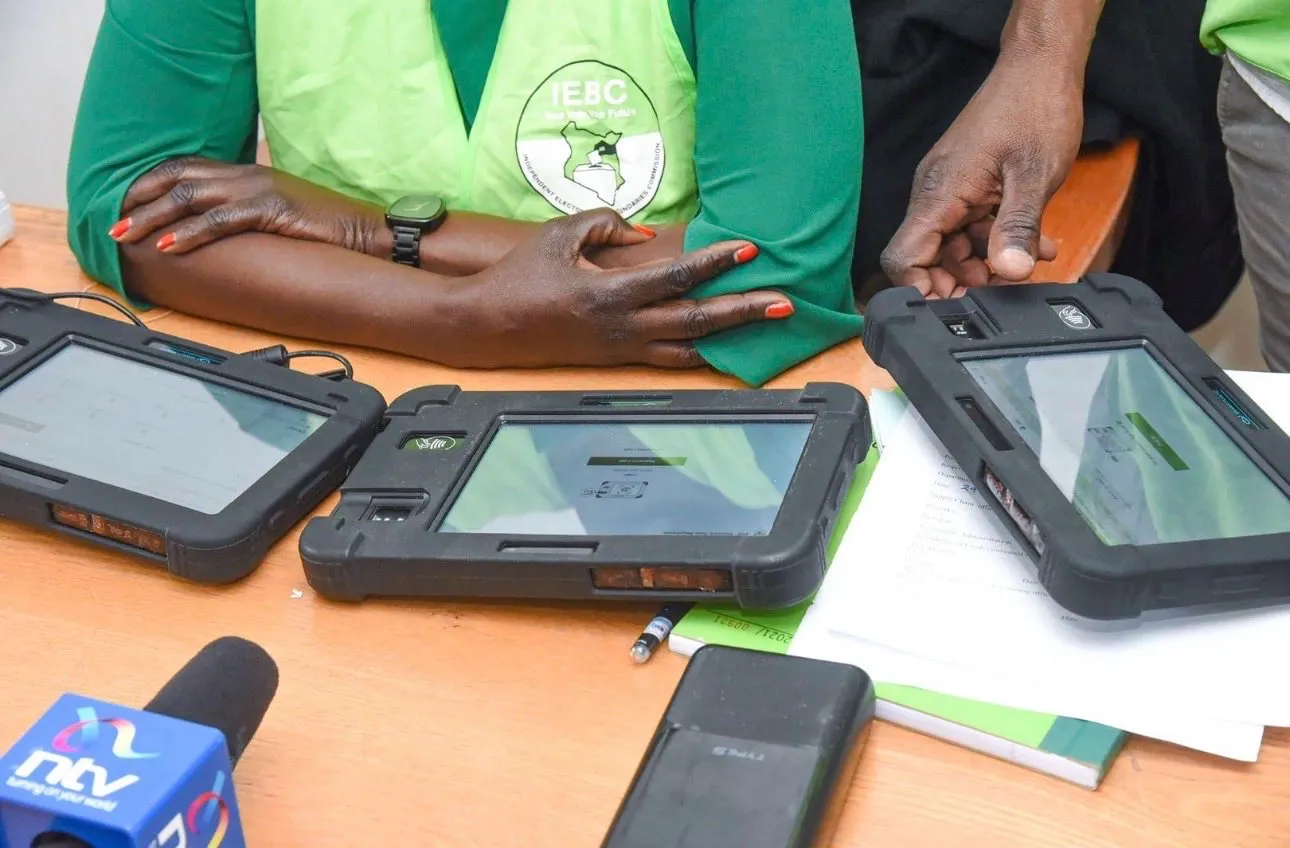
The IEBC advertised the tender on August 11, seeking a contractor to supply, deliver, install, test, commission, support and maintain the Integrated Elections Management System, hardware and accessories ahead of the 2027 polls. The tender is scheduled to close on September 1, 2026.
The procurement is part of the commission’s preparations for the August 10, 2027 General Election and has been opened to qualified local and international bidders through an international competitive procurement process.
Gachagua, however, questioned the integrity of the process, claiming the tender had been designed to favour a particular South Korean company.
“Mr Ethekon, what is actually happening is a mundane public relations exercise to manage the other bidders and 55 million Kenyans,” he said, referring to IEBC Chairman Erastus Ethekon.
The former Deputy President also alleged that changes had been made within the commission’s procurement department, including the replacement of its procurement manager.
He further accused Ethekon and the IEBC vice-chairperson of pushing the tender process despite what he claimed was opposition from other commissioners.
The allegations had not been independently substantiated by the time of publication.
Concerns over election data
Gachagua also alleged that senior government officials had held meetings with representatives of the South Korean company as part of efforts to integrate its technology into Kenya’s electoral system.
He claimed the proposed arrangements could give the company access to sensitive voter-registration information, raising concerns over the security and integrity of electoral data.
The former Deputy President also questioned the company’s alleged track record in other countries, citing the Democratic Republic of Congo (DRC), the Philippines and Iraq.
“This is a South Korean company with a very bad history of rigging elections across the world,” Gachagua alleged.
He further claimed that equipment supplied by the company in the Democratic Republic of Congo had experienced delays and technical problems that affected elections.
Those claims have not been independently established in relation to the company involved in the current IEBC tender.
Fears over voter register
Gachagua alleged that the proposed election-management system could potentially be used to manipulate the voter register or disenfranchise voters in areas perceived to be hostile to President William Ruto’s administration.
He named parts of Western Kenya, Nyanza, the Mount Kenya region, Lower Eastern and Nairobi, as well as Taveta, Lamu, Nakuru, Naivasha, Kajiado and Narok.
He did not provide evidence showing that the system was designed for such a purpose.
Also Read: Gachagua challenges IEBC to explain preparedness for 2027 election
The allegations come at a particularly sensitive stage of Kenya’s election preparations, with the IEBC undertaking major technology and election-material procurements less than a year before the polls.
The commission’s IEMS tender carries a Sh30 million tender-security requirement, while a separate procurement for ballot papers, tactile folders, the Register of Voters and statutory result-declaration forms carries a Sh40 million security requirement.
IEBC under pressure over election preparations
The technology procurement has already attracted political attention, with the IEBC facing pressure to demonstrate that the process is transparent, competitive and capable of delivering reliable election technology before polling day.
The commission has maintained that it is undertaking preparations for the 2027 election in accordance with its mandate. Its official website lists procurement and election-preparedness activities among its ongoing work ahead of the polls.
Gachagua’s latest claims therefore put the procurement process at the centre of the wider political contest over the credibility of the 2027 election.
The IEBC had not issued a response to the allegations by the time of publication.