

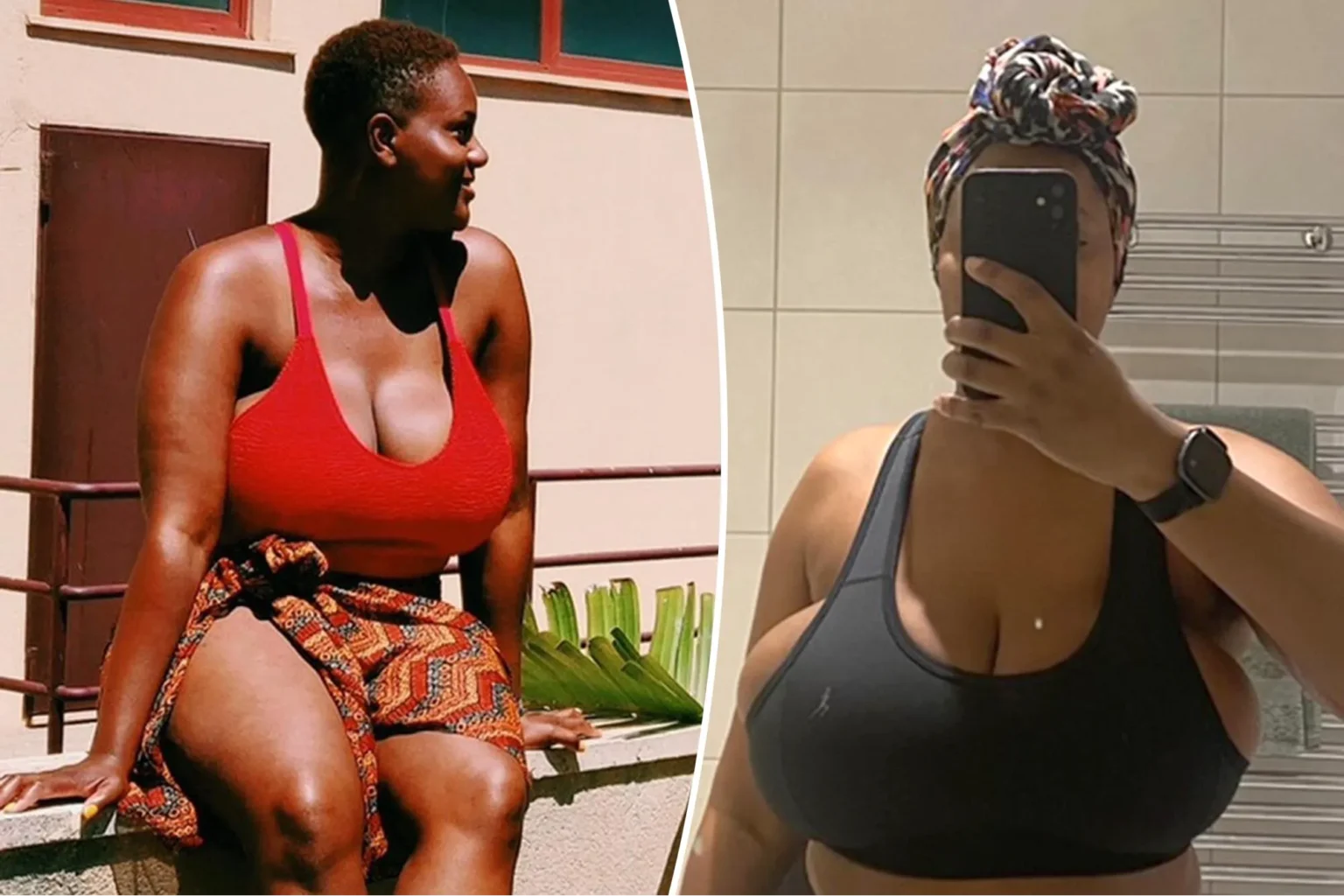
NAIROBI, Kenya — Susan Njeri remembers a time when her breasts were simply part of growing up.
Like many girls, she watched her body change during adolescence without much concern. But while her friends’ bodies settled into adulthood, hers continued changing. Her breasts kept growing.
At first, the attention felt harmless. Then came the discomfort.
The weight on her chest became difficult to ignore. Long periods of standing left her with persistent back pain. Physical activities she once enjoyed became increasingly difficult. Sleep, something most people take for granted, turned into a nightly struggle requiring pillows carefully positioned to support her body.
What began as a normal stage of development gradually evolved into a condition that affected nearly every aspect of her life.
Years later, the physical burden would be accompanied by something equally difficult to carry: the emotional weight of living in a society that often misunderstood what she was going through.
“It has taken a significant toll on my mental health, contributing to persistent feelings of sadness, anxiety and low self-worth,” she told researchers.
Njeri’s experience is not unique.
It forms part of a growing body of evidence highlighting the reality faced by women living with gigantomastia, a rare medical condition characterised by excessive breast growth that can lead to severe physical, psychological and social challenges.
For years, discussions around women’s health in Kenya have focused on reproductive health, maternal care, cervical cancer and breast cancer. Far less attention has been paid to conditions that may not be life-threatening but nevertheless profoundly affect quality of life.
Gigantomastia is one of them.
A recent study published in the African Journal of Emerging Issues has brought the condition into sharper focus, revealing a hidden struggle experienced by women whose lives are shaped not only by physical pain but also by stigma, misunderstanding and isolation.
More than a physical condition
In popular culture, large breasts are often portrayed as desirable.
Fashion, advertising and entertainment frequently reinforce the idea that bigger breasts are associated with attractiveness and femininity.
But for women living with gigantomastia, reality is far more complicated.
The condition involves abnormal and excessive breast growth that can significantly impair daily functioning. Women may experience chronic back, neck and shoulder pain, difficulty exercising, breathing problems, skin complications and limitations in mobility.
Researchers from Tangaza University sought to understand these experiences from the perspective of the women themselves.
Their study, led by Lucinda Gitura alongside Dr Sahaya Selvam and Dr Phyllis Muraya, explored the lived experiences of 30 women aged between 18 and 35 years in Nairobi County.
Rather than focusing solely on medical symptoms, the researchers examined how the condition shapes daily life, mental health and social interactions.
What emerged was a picture of suffering that extends far beyond physical discomfort.
Many participants described feeling trapped in bodies that attracted constant attention while simultaneously limiting their freedom.
Some struggled to walk long distances.
Others abandoned sports and physical activities entirely.
Several reported chronic exhaustion caused by the effort required to carry the weight of their breasts throughout the day.
One participant recalled how persistent back pain eventually spread into her leg.
“I was diagnosed with back pain, which later migrated and affected my right leg, making it so painful and at times I experienced numbness,” she told researchers.
For many women, the body becomes something they must continuously manage rather than simply inhabit.
The cost of looking different
Physical pain is only part of the story.
The study suggests that one of the most profound impacts of gigantomastia may be psychological.
Living in a body perceived as different often subjects women to scrutiny, judgment and unwanted attention.
Many participants reported struggling with self-esteem and body image.
Some described feeling disproportionate, with breast size dominating their appearance and altering how they viewed themselves.
Others spoke about avoiding social situations altogether.
The constant visibility of the condition can create a sense of vulnerability.
People stare.
They ask intrusive questions.
They make assumptions.
Sometimes they laugh.
Sometimes they gossip.
And sometimes the comments become deeply cruel.
One participant recalled hearing rumours that her condition was linked to abortion.
Another said people assumed she was sexually promiscuous because of her appearance.
“You have aborted, that’s why your boobs are like that,” one woman remembered being told.
Others reported accusations that men must have somehow caused their condition through excessive physical contact.
Such comments reveal how quickly medical realities can become distorted by cultural myths and misinformation.
Mental health experts note that chronic stigma often compounds physical suffering.
A person may be able to cope with pain.
Coping with pain while simultaneously facing ridicule, shame and social exclusion is far more difficult.
The result can be anxiety, depression, social withdrawal and diminished self-worth.
Perhaps the most heartbreaking testimony in the study came from a woman who described wishing for breast cancer simply so that her breasts could be removed.
“I remember there was a time I even said I would want to have cancer, and they cut off my breasts because I did not like them.”
The statement is striking not because it reflects a desire for illness but because it reveals the depth of emotional distress some women experience.
The financial burden few people see
The consequences of gigantomastia also extend into personal finances.
For many women, finding supportive clothing becomes an ongoing challenge.
Standard bras often fail to provide adequate support or are unavailable in the sizes required.
Specialised garments can be expensive and difficult to source locally.
One participant reported spending nearly Sh100,000 annually importing supportive bras from abroad.
For households already facing economic pressures, these additional costs can become overwhelming.
Healthcare expenses may further increase the burden.
Consultations, diagnostic assessments, physiotherapy and potential surgical interventions are often inaccessible or unaffordable for many patients.
Unlike conditions that receive widespread public attention, gigantomastia remains largely absent from healthcare policy discussions.
As a result, many women navigate the condition with limited support.
A condition few understand
Despite the challenges associated with gigantomastia, public awareness remains remarkably low.
There is currently no comprehensive national data showing how many Kenyan women are affected.
Medical experts acknowledge that reliable prevalence figures are lacking.
Globally, the condition is considered rare.
Gestational gigantomastia, which develops during pregnancy, is estimated to occur in roughly one out of every 28,000 to 100,000 pregnancies.
Cases occurring outside pregnancy appear even less common.
Researchers believe the condition may be linked to abnormal sensitivity to hormones such as estrogen, progesterone and prolactin, though its precise cause remains unclear.
What is clear, however, is that women living with the condition often face delayed diagnosis and limited access to specialised care.
According to lead researcher Lucinda Gitura, the absence of awareness contributes significantly to psychological distress.
“The absence of awareness and specialised support services in Kenya exacerbates the mental health impact,” she noted.
Her observation points to a broader problem within healthcare systems worldwide.
Conditions that are rare often struggle to attract public attention, research funding and policy focus.
Yet for those affected, rarity does not lessen suffering.
Why this matters beyond medicine
The findings of the Kenyan study raise important questions about how society understands women’s health.
Too often, health discussions focus narrowly on diseases that threaten life while overlooking conditions that diminish its quality.
Gigantomastia may not receive the same attention as cancer or infectious diseases, but its effects can still be profound.
The women interviewed described lives shaped by pain, embarrassment, anxiety and social isolation.
They spoke about abandoning activities they loved.
They described struggling with confidence.
They revealed how comments from strangers and even family members could leave lasting emotional scars.
Their experiences suggest that health is not merely the absence of disease.
It is the ability to move freely, participate fully in society and live without unnecessary physical or psychological suffering.
The search for solutions
Medical treatment remains an important part of addressing gigantomastia.
Globally, breast reduction surgery is widely regarded as the most effective intervention for women experiencing severe symptoms.
In certain pregnancy-related cases, medications may be used to manage symptoms before surgery becomes necessary.
Yet the authors of the Kenyan study argue that medical intervention alone is not enough.
They are calling for a broader response that includes public education, mental health support and improved healthcare access.
Among their recommendations are awareness campaigns to reduce stigma, specialised counselling services for affected women and greater training for healthcare professionals on the psychological dimensions of the condition.
The researchers also urge policymakers to consider including surgical and supportive treatment within Social Health Authority coverage to improve affordability.
Such measures would recognise an important reality: the burden of gigantomastia is not only physical.
It is emotional, social and economic as well.
Beyond size
Perhaps the most important message emerging from the research is that breast health cannot be measured by size alone.
There is no universally “correct” breast size.
Women’s bodies vary naturally according to genetics, age, hormonal factors and individual physiology.
A healthy breast size is not determined by appearance or societal expectations.
Also Read: Anyang’ Nyong’o opens up about 15-year battle with prostate cancer
It is determined by whether it allows a woman to live comfortably, confidently and without unnecessary pain.
For Mary and many others, that distinction matters.
Their struggle is not about aesthetics.
It is about quality of life.
It is about being able to sleep without pain, exercise without discomfort and move through society without judgment.
Most importantly, it is about being seen not as curiosities or objects of speculation but as women living with a legitimate medical condition that deserves understanding, support and care.
The new Kenyan research has provided an important first step by bringing their voices into the public conversation.
The challenge now is whether society is willing to listen.