


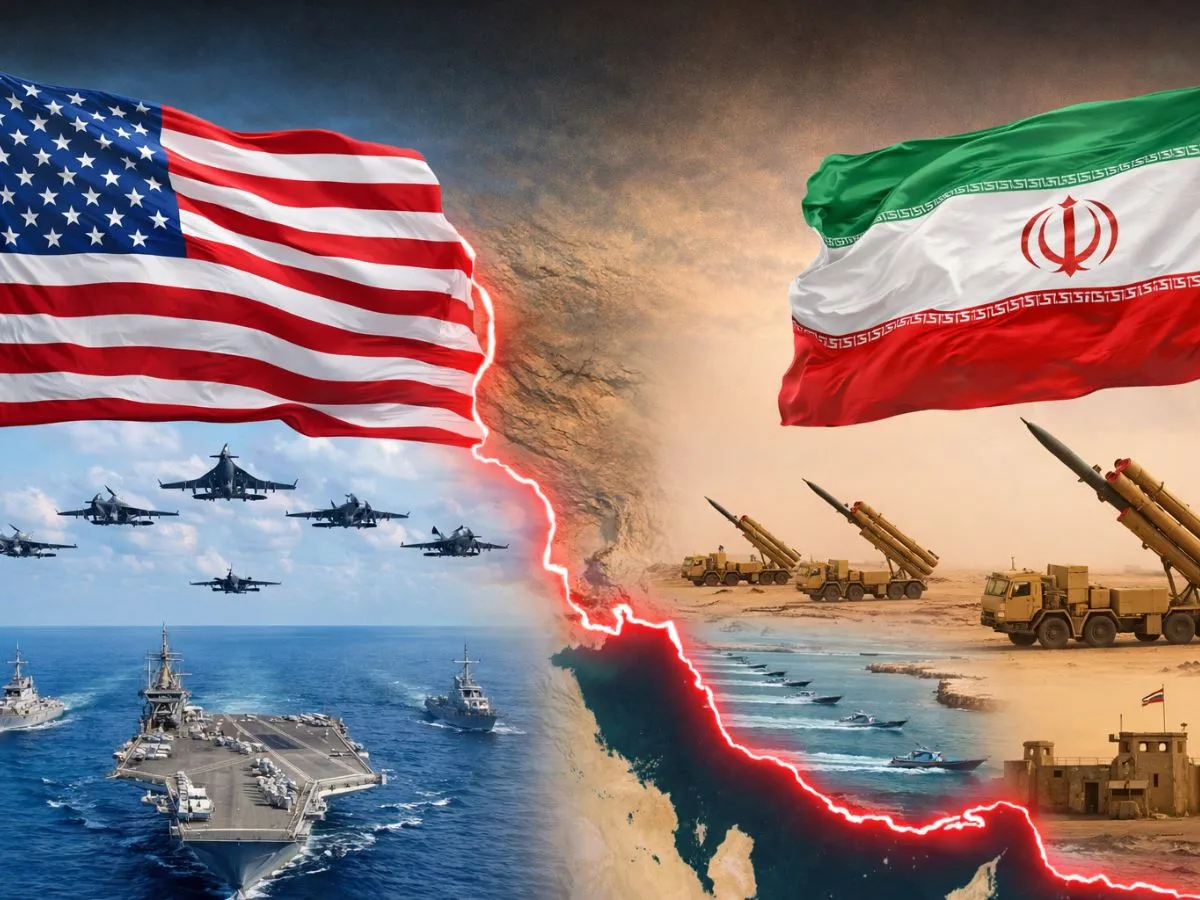
The United States and Iran exchanged fresh military strikes for a second consecutive day on Thursday, intensifying fears of a wider regional conflict as commercial shipping through the strategically vital Strait of Hormuz fell sharply, raising concerns over global energy supplies and international trade.
The latest escalation followed renewed US airstrikes targeting Iranian military infrastructure after Washington accused Tehran of attacking commercial vessels navigating the Strait of Hormuz, one of the world’s most important maritime energy corridors.
Iran retaliated with missile and drone strikes targeting US military assets across several Gulf states while warning that further attacks would draw additional responses.
US expands military campaign
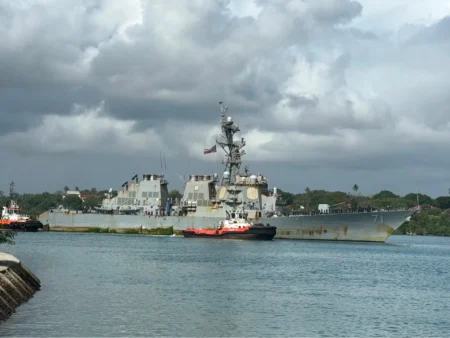
The US Central Command (CENTCOM) said it struck approximately 90 Iranian military targets, including coastal surveillance systems, air defence installations, missile and drone storage sites, naval facilities and logistics infrastructure along Iran’s southern coastline.
Washington said the strikes were intended to reduce Iran’s capability to attack commercial shipping and ensure freedom of navigation through the Strait of Hormuz after what it described as repeated violations of the ceasefire framework agreed last month.
The latest operation followed an earlier wave of strikes in which CENTCOM reported hitting more than 80 military targets, including dozens of Islamic Revolutionary Guard Corps (IRGC) fast attack boats allegedly linked to attacks on commercial vessels.
Iran vows retaliation
Iran condemned the American strikes as a “grave war crime” and accused Washington of violating the memorandum of understanding signed between the two countries only weeks earlier.
Tehran said it launched retaliatory attacks against US military facilities in Kuwait, Bahrain, Qatar, Jordan and Iraq while warning that any further military action would be met with additional force.
Parliament Speaker Mohammad Bagher Ghalibaf declared that the Strait of Hormuz would only operate “under Iranian arrangements” rather than what he described as “American threats,” reinforcing Tehran’s long-standing position that it controls security around the strategic waterway.
Shipping through Hormuz drops sharply
The renewed fighting has had an immediate impact on commercial shipping.
According to tanker industry officials, vessel movements through the Strait of Hormuz have fallen dramatically as shipping companies reassess security risks.
Industry estimates indicate daily transits have dropped to roughly 25-30 vessels, well below recent averages and significantly lower than normal pre-conflict traffic levels.
The Strait of Hormuz carries around one-fifth of the world’s internationally traded crude oil, making any prolonged disruption a major concern for global energy markets.
Phil Belcher, Marine Director at tanker association Intertanko, described the reduction as an unprecedented slowdown driven by uncertainty over continued military exchanges.
Oil prices climb
Oil prices rose again on Friday, with Brent crude and West Texas Intermediate (WTI) both heading for strong weekly gains as markets priced in the risk of prolonged supply disruption.
Energy analysts say the conflict has introduced a fresh geopolitical risk premium into global oil markets, although expectations that neither side currently intends to target oil production infrastructure have helped prevent even sharper price increases.
Funeral of Iran’s late supreme leader
The latest exchanges coincided with the burial of Iran’s late Supreme Leader, Ayatollah Ali Khamenei, who was killed during the opening phase of the conflict earlier this year.
State media reported that his body was laid to rest at the Imam Reza shrine in Mashhad after several days of nationwide mourning ceremonies attended by thousands of supporters.
Images broadcast by Iranian television showed crowds carrying national flags and chanting anti-American slogans while senior officials pledged to continue resisting foreign intervention.
Diplomacy in doubt
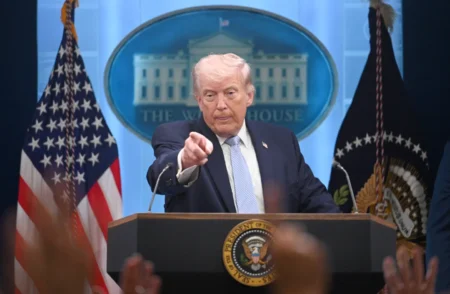
US President Donald Trump suggested Iran had approached Washington seeking renewed negotiations but questioned whether Tehran could be trusted to honour any future agreement.
“I just don’t know if they’re worthy of making a deal,” Trump told reporters.
Also Read: US and Iran sign deal to end war: What’s inside the agreement?
Iranian Foreign Minister Abbas Araghchi dismissed the remarks, insisting Tehran would respond to American actions “with action” rather than rhetoric.
The latest exchanges have effectively ended hopes that the June memorandum of understanding would produce a lasting ceasefire, leaving diplomats scrambling to prevent the conflict from expanding further across the Gulf.
Global implications
The renewed confrontation has heightened concerns among governments and financial markets that prolonged instability around the Strait of Hormuz could disrupt global oil exports, increase fuel prices and place further pressure on an already fragile global economy.
Maritime security analysts warn that continued attacks on commercial shipping could force more shipping companies to reroute or suspend voyages through the region, significantly increasing transport costs for energy imports across Europe, Asia and Africa.