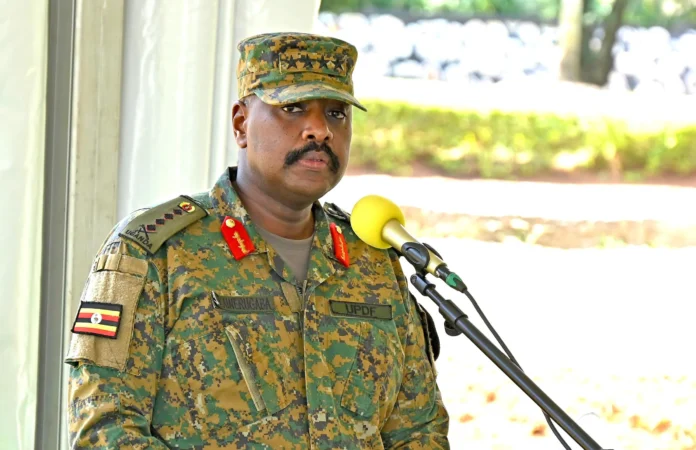


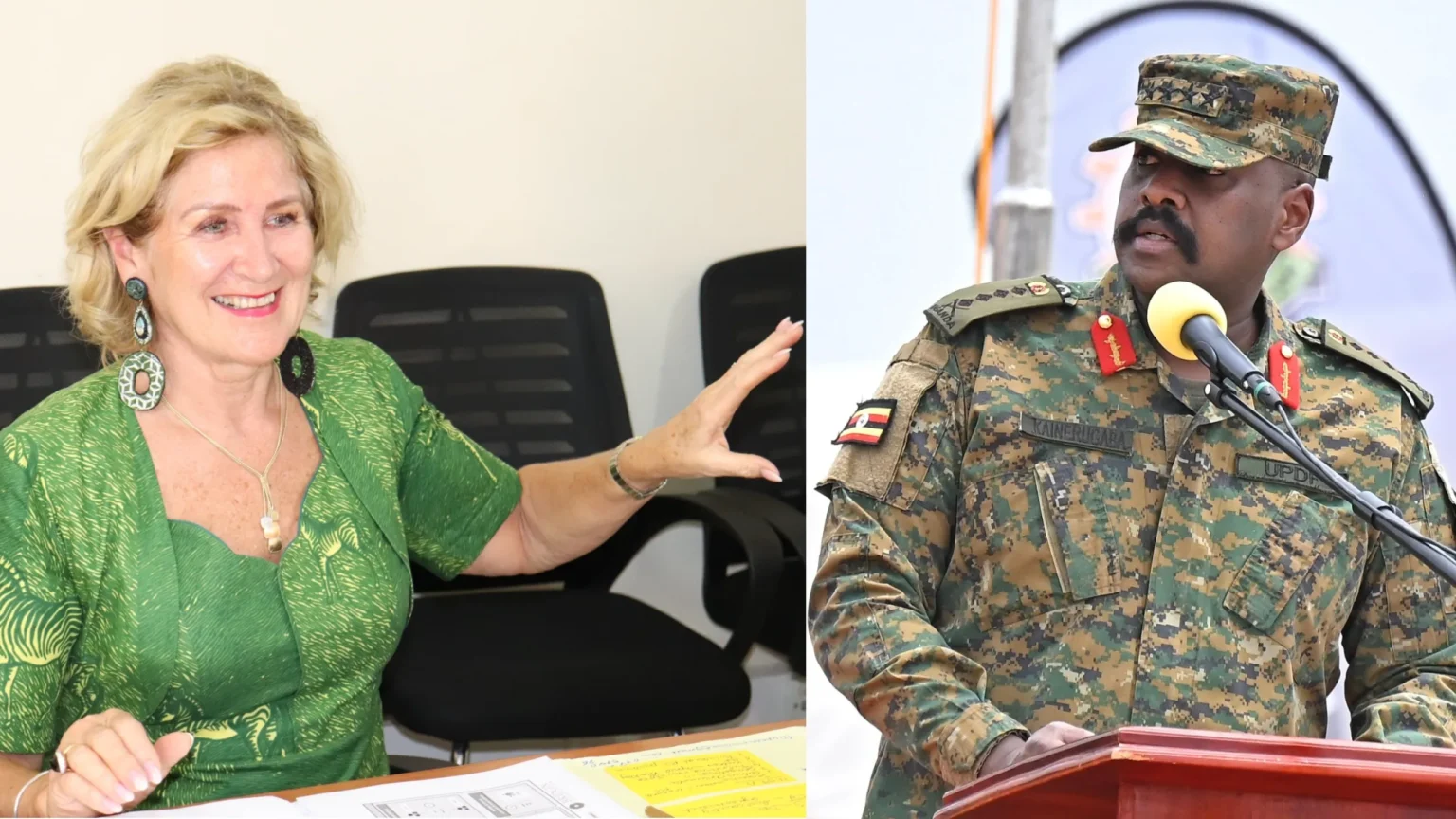
KAMPALA, Uganda — A purported leaked phone call between retired Major General Kahinda Otafiire and Uganda’s Ambassador to the European Union, Mirjam Blaak, has highlighted diplomatic strain following Uganda’s disputed 2026 elections, with Gen. Muhoozi Kainerugaba’s social media posts emerging as a key concern.
The alleged transcript, which could not be independently authenticated, appears to capture an exchange between the two senior officials at a time when Uganda was facing intense international scrutiny over allegations of political repression, arbitrary arrests and the treatment of opposition supporters after the elections.
If genuine, the conversation offers a rare glimpse into the often unseen diplomatic efforts undertaken by Ugandan officials to counter growing criticism from European institutions while simultaneously managing the political fallout from statements made by one of the country’s most influential military figures.
Diplomatic pressure after contested polls
The period following the 2026 elections was marked by heightened tensions between Kampala and several Western partners, particularly members of the European Parliament, who raised concerns over reports of arrests, disappearances and restrictions on opposition activities.
Central to those concerns was the status of National Unity Platform (NUP) leader Robert Kyagulanyi, popularly known as Bobi Wine, whose whereabouts became a subject of speculation amid reports that security agencies were pursuing opposition leaders and supporters.
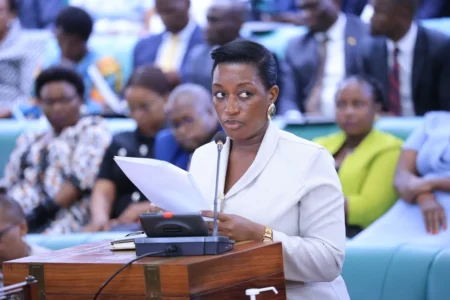
According to the purported transcript, Ambassador Blaak informed Otafiire that European lawmakers were pressing Ugandan diplomats for clarity regarding Bobi Wine’s legal status.
“We are trying to defend our country, hand, tooth, nails, whatever it is at our disposal in regard to the European Parliament resolution,” Blaak reportedly says in the conversation.
She further indicates that European parliamentarians were particularly interested in whether Bobi Wine was officially being sought by authorities.
“The problem is, of course, Bobi Wine mostly. Is he a wanted man?” she asks.
Otafiire reportedly responds: “Not a wanted man.”
The exchange appears to show Ugandan diplomats attempting to reassure European lawmakers that no official warrant or legal process had been initiated against the opposition leader.
Muhoozi’s posts emerge as diplomatic concern
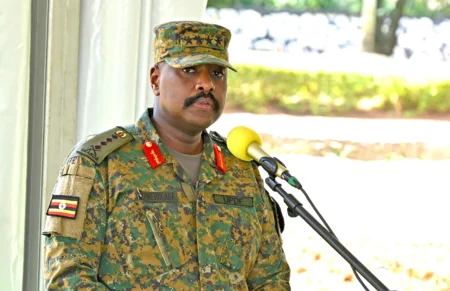
However, the transcript suggests that statements made on social media by Gen. Muhoozi Kainerugaba may have undermined those assurances.
Although Blaak does not directly identify specific posts, she reportedly refers to social media messages that contradicted the government’s position.
“She wants my quote, and I had already stated it, but I said, ‘Let me be sure, because you know there are certain tweets that have said differently,’” she says.
The apparent reference points to a series of highly publicised posts by Muhoozi during the post-election period in which he described Bobi Wine as a “terrorist,” warned him to surrender and suggested he could face severe consequences if he failed to do so.
Some of the posts attracted international attention and criticism, particularly among opposition supporters and human rights advocates, who argued that such statements risked escalating political tensions.
If the leaked transcript is authentic, it indicates that diplomats tasked with defending Uganda’s position abroad found themselves having to explain or contextualise comments made by the country’s top military officer.
At one point, Otafiire reportedly acknowledges the challenge directly.
“It’s the tweets causing us problems,” he says.
He is also quoted as saying: “The tweets confirm what Bobi is saying.”
The remarks, if accurately reflected, suggest that some government officials viewed the posts as reinforcing opposition claims that Bobi Wine faced political targeting.
A widening gap between official diplomacy and digital politics
The alleged conversation highlights an increasingly important feature of modern governance: the tension between formal diplomatic messaging and the influence of social media.
In Uganda, Gen. Muhoozi’s social media presence has become a major political force in its own right. His posts routinely attract national and international attention, often generating headlines that shape public debate far beyond official government communication channels.
Supporters argue that his online activity reflects transparency and direct engagement with the public. Critics, however, contend that some of his statements have complicated diplomatic relations and created uncertainty about official government positions.
The leaked exchange appears to reinforce the latter concern, suggesting that diplomats working to reassure international partners were sometimes forced to respond to narratives emerging from social media rather than official policy statements.
European Parliament as a battleground
The transcript also points to the growing significance of international institutions in Uganda’s domestic political contest.
According to the conversation, Blaak expresses concern about Bobi Wine’s influence among European lawmakers.
“We are doing well, I think, with the European Parliament. It’s always causing us a lot of problems, because he has a lot of influence around the European Parliament,” she reportedly says.
The remark reflects a broader struggle for international legitimacy that has increasingly accompanied Uganda’s internal political disputes.
Also Read: Gen Muhoozi apologises to US after tweets trigger diplomatic and security tensions
Over recent years, opposition figures have actively engaged foreign governments, international organisations and rights groups to highlight concerns about governance and human rights. Government officials, meanwhile, have sought to counter what they describe as one-sided portrayals of Uganda’s political environment.
The result has been a parallel political contest fought not only in Kampala but also in international forums such as the European Parliament.
Questions remain over authenticity
Despite the significance of the claims contained in the transcript, important questions remain unanswered.
Neither Otafiire nor Ambassador Blaak had publicly confirmed the authenticity of the alleged conversation by press time. Independent verification of the recording and transcript has also not been possible.
Without such verification, the contents should be treated as allegations rather than established fact.
Nonetheless, the leaked exchange has generated renewed debate about the role of social media in statecraft, the challenges facing Uganda’s diplomatic corps, and the increasingly complex relationship between domestic politics and international perception.
If authenticated, the conversation would provide one of the clearest indications yet that statements made on social media by senior political and military figures can carry significant consequences far beyond national borders, shaping diplomatic engagements and influencing how countries are perceived on the global stage.