



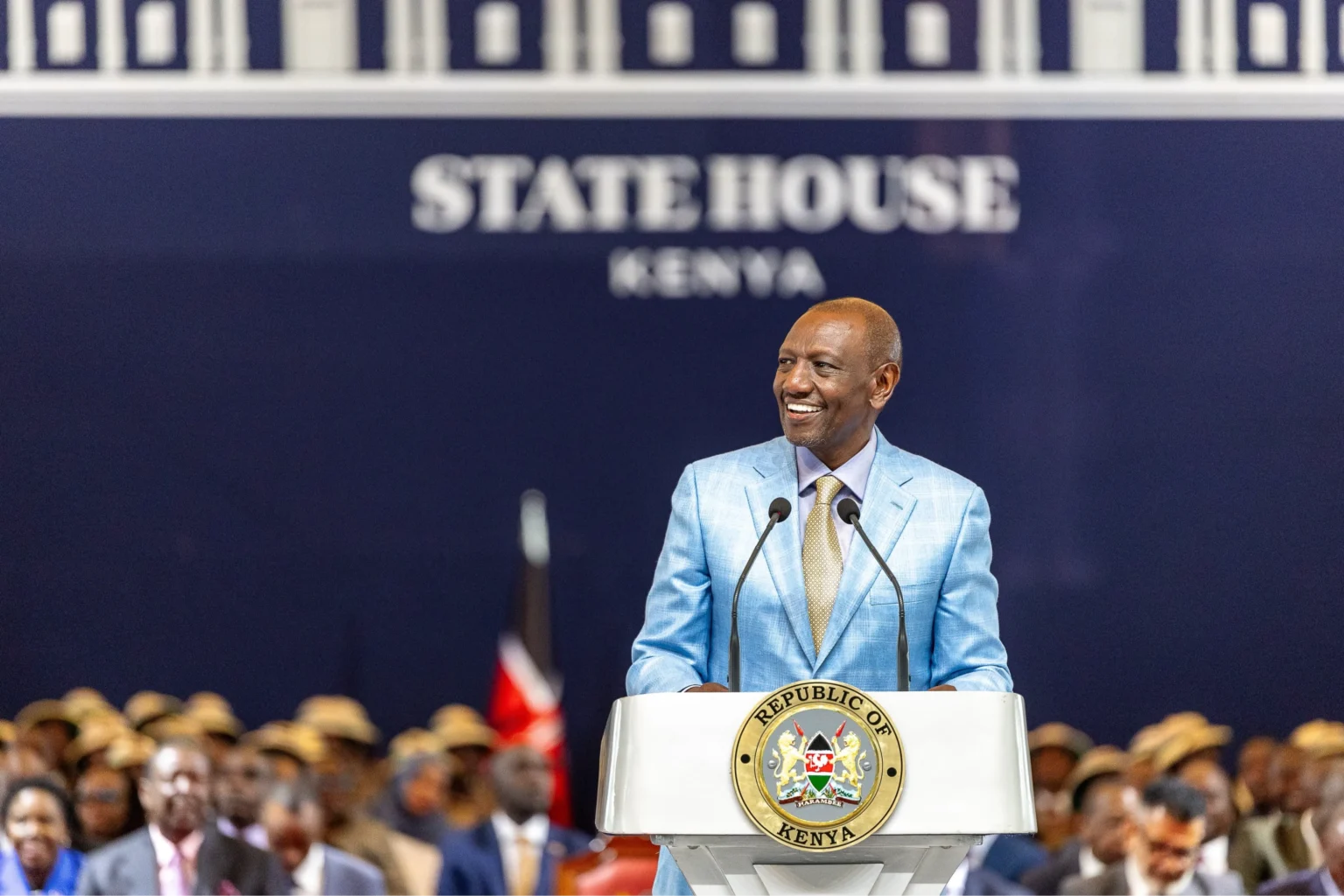
NAIROBI, Kenya — President William Ruto has defended his decision to host village elders from across Kenya at State House, insisting that opening the presidential residence to ordinary citizens enhances rather than diminishes its dignity.
Speaking on Tuesday 4, August 2026 at State House, Nairobi, where he welcomed village elders from different parts of the country, Ruto said the official residence belongs to all Kenyans and should not be viewed as an exclusive preserve for political elites and foreign dignitaries.
“Inviting you to State House is not undervaluing it as critics say; it is basically upholding your dignity as humans and leaders in this nation,” the President said.
“I want to welcome all of you at State House, Nairobi. I know some of you are here for the first time. I welcome you here. I am very happy to welcome you.”
Ruto said State House has received a broad spectrum of visitors during his presidency, ranging from heads of state and monarchs to grassroots leaders drawn from across the country.
“At State House, I have received so many guests. I have hosted kings, presidents and leaders of all cadres. Today, I am happy to have village elders,” he said.
Responding to criticism
The President acknowledged that his decision to regularly invite community groups to State House has attracted criticism from some quarters, with opponents arguing that the practice lowers the stature of the country’s highest office.
He recalled earlier criticism accusing him of turning State House into a venue for ordinary citizens instead of reserving it for official state functions.
“Sometimes back, there were those who told me that I have downgraded the status of State House, that even common people have access,” Ruto said.
According to the President, critics argued that the residence should primarily host Presidents, Kings, Cabinet ministers and diplomats.
“They said State House should be a place for kings, Presidents, ministers and diplomats,” he noted.
Also Read: Ruto pledges free and fair 2027 election, warns against tribal politics
Ruto rejected that view, saying the presidency derives its legitimacy from the people and that citizens should have the opportunity to visit the institution that represents them.
“I answered them and said I did not lower the status of State House but uplifted the respect of the Kenyan people. They too should be given the opportunity to visit State House and understand it is their home,” he said.
Debate over State House engagements
The remarks come as State House continues to host an increasing number of delegations representing various sectors of society, including religious leaders, professionals, youth groups, business representatives and community organisations.
Supporters of the initiative argue that the engagements have strengthened public participation by giving grassroots leaders direct access to the Presidency and providing an opportunity for communities to present their concerns.
However, critics have questioned whether some of the meetings blur the line between official government business and political mobilisation, particularly when delegations later publicly endorse the President or his administration.
Opposition figures have argued that State House should primarily remain a venue for official presidential duties and engagements centred on matters of national governance rather than political outreach.
Despite the criticism, Ruto has maintained that expanding access to State House reflects his administration’s commitment to bringing government closer to citizens and reinforcing the principle that public institutions exist to serve the people.