

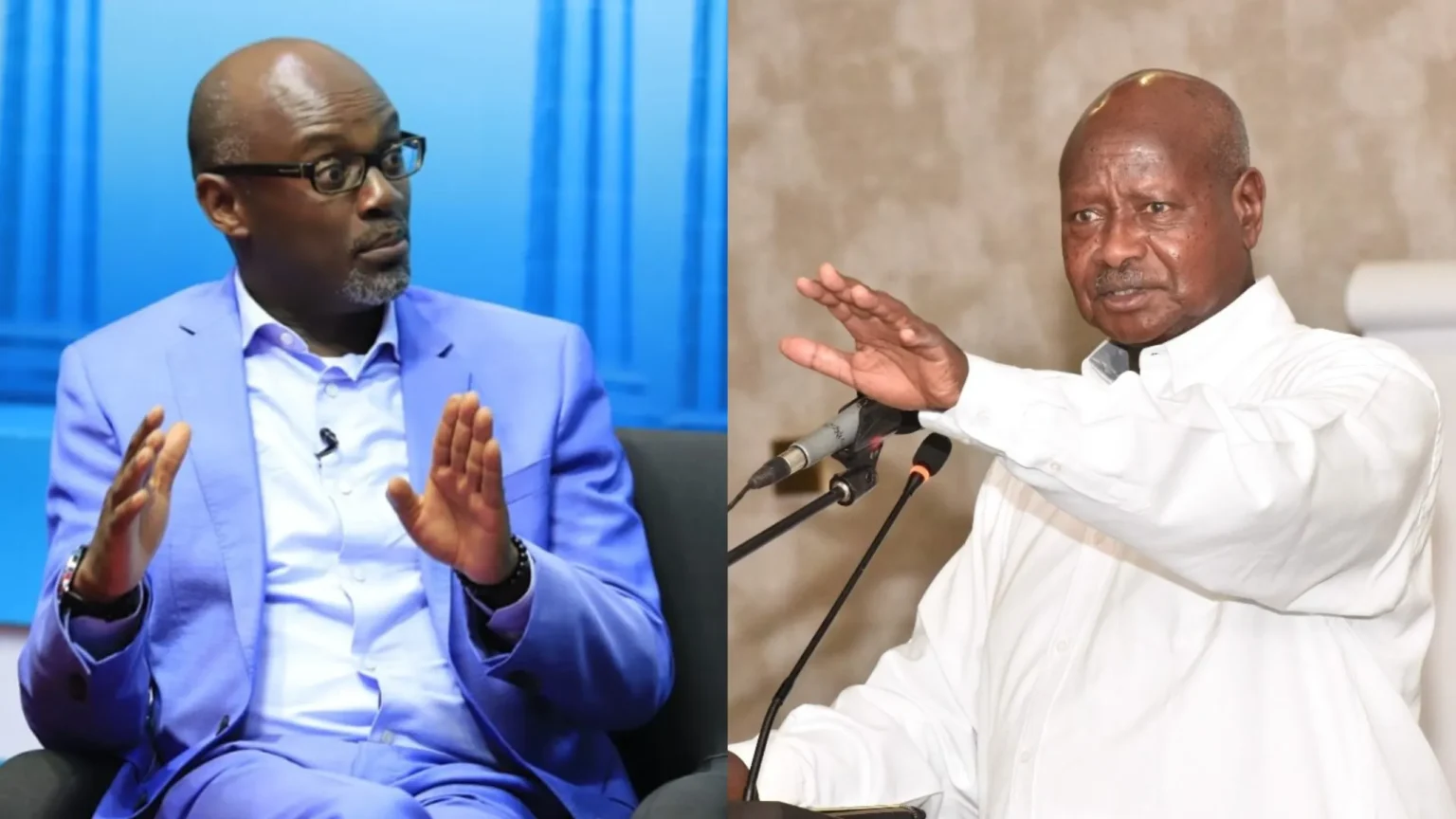
KAMPALA, Uganda — The dispute between veteran journalist Andrew Mwenda and President Yoweri Museveni over State House aide Stephen Nuwagaba has deepened, with Mwenda publishing fresh allegations accusing the young man of deceiving the President, manipulating senior security officials and attempting to influence investigations involving high-ranking military officers.
The latest claims come just a day after President Museveni issued a lengthy public statement defending Nuwagaba, describing him as a torture victim who sought refuge under his protection after allegedly being abused by rogue elements within Uganda’s security services.
While Museveni maintains that Nuwagaba is the victim of criminal conduct by some security operatives, Mwenda argues that the State House staffer built his influence through fabricated intelligence claims and manipulated some of the country’s most senior officials.
Neither account has been independently verified by Vivid Voice News.
Museveni: Nuwagaba came as a torture victim
In his statement released on Monday 3, August 2026, Museveni said Nuwagaba approached him as “a fugitive, a victim of torture and maiming” after allegedly suffering abuse at the hands of members of the security services.
The President said he personally facilitated medical treatment for the young man both inside Uganda and abroad after receiving reports that his life was in danger.
Museveni disclosed that investigations into the alleged torture had already been initiated and said some suspects were facing criminal proceedings.
He also criticised torture, extrajudicial violence and abuse of power, describing them as incompatible with the values of Uganda’s liberation struggle.
The President accused Mwenda of attempting to divert public attention away from alleged criminal elements within state institutions.
“Why the desperation, if the boy is a liar?” Museveni asked. “Could it be a cover-up of crimes and treachery committed by these people the great Mwenda is now defending?”
Mwenda rejects Museveni’s account
In a detailed article published on Tuesday 4, August 2026, Mwenda challenged the President’s version of events, alleging that Nuwagaba fabricated claims of torture to gain access to State House before reinventing himself as a cyber-security expert and intelligence operative.
According to Mwenda, Nuwagaba initially approached government officials seeking medical assistance after claiming he had been tortured by operatives of the former Chieftaincy of Military Intelligence (CMI).
Mwenda alleges that the narrative later evolved into intelligence briefings involving senior military officers, internal security matters and alleged regional threats.
He further claims that officials who interacted with Nuwagaba increasingly questioned his academic qualifications, intelligence background and technical expertise.
Among the allegations is that Nuwagaba claimed to have studied at King’s College London before serving with the Israeli Defence Forces and later Israel’s intelligence agency, Mossad.
Mwenda argues that timelines contained in documents presented to State House appeared inconsistent and raised doubts among officials.
These claims have not been independently verified.
Alleged pressure on Nabasa’s wife
One of the most serious allegations published by Mwenda involves Erina Kagisha, a legal officer in the Office of the President and wife of former Special Forces Command (SFC) commander Maj. Gen. Don Nabasa.
Mwenda alleges that shortly before Nabasa’s arrest in March 2026, Kagisha was summoned to SFC headquarters by then SFC commander Maj. Gen. David Mugisha and Nuwagaba.
According to the article, the two allegedly asked her to record a statement implicating her husband in wrongdoing in exchange for financial reward.
Mwenda further alleges that after Kagisha declined, she was subjected to intimidation and later received repeated telephone calls encouraging her to abandon her husband and cooperate with investigators.
The article also claims she later briefed Nabasa about the encounter after his return from China.
None of these allegations has been independently verified by Vivid Voice News, and neither Nuwagaba nor Mugisha has publicly responded to the claims.
Allegations of surveillance
Mwenda also alleges that Kagisha was contacted while travelling abroad and that Nuwagaba appeared to possess detailed knowledge of her movements.
According to the publication, she later interpreted the communications as evidence she was being monitored.
Again, these allegations remain unverified.
State House dismissals
Mwenda’s article also revisits the removal of former State House officials Susan Kasigye and Lt. Col. Betty Agaba.
According to his account, the two officials were accused by President Museveni of leaking sensitive information from State House after Nuwagaba allegedly presented intelligence reports implicating them.
Mwenda claims both officials denied wrongdoing and questioned Nuwagaba’s credibility during a meeting attended by senior Special Forces Command officers.
He alleges they argued that Nuwagaba had originally approached State House seeking treatment for alleged torture before later portraying himself as an international cyber-intelligence specialist.
The article further claims that despite their explanations, both officials were eventually removed from their positions.
Vivid Voice News has not independently confirmed the circumstances surrounding their departures.
Competing narratives
The contrasting accounts illustrate two sharply different narratives surrounding Stephen Nuwagaba.
President Museveni portrays him as a young Ugandan who survived torture, required extensive medical care and became the target of individuals seeking to silence him because of alleged wrongdoing within sections of the security services.
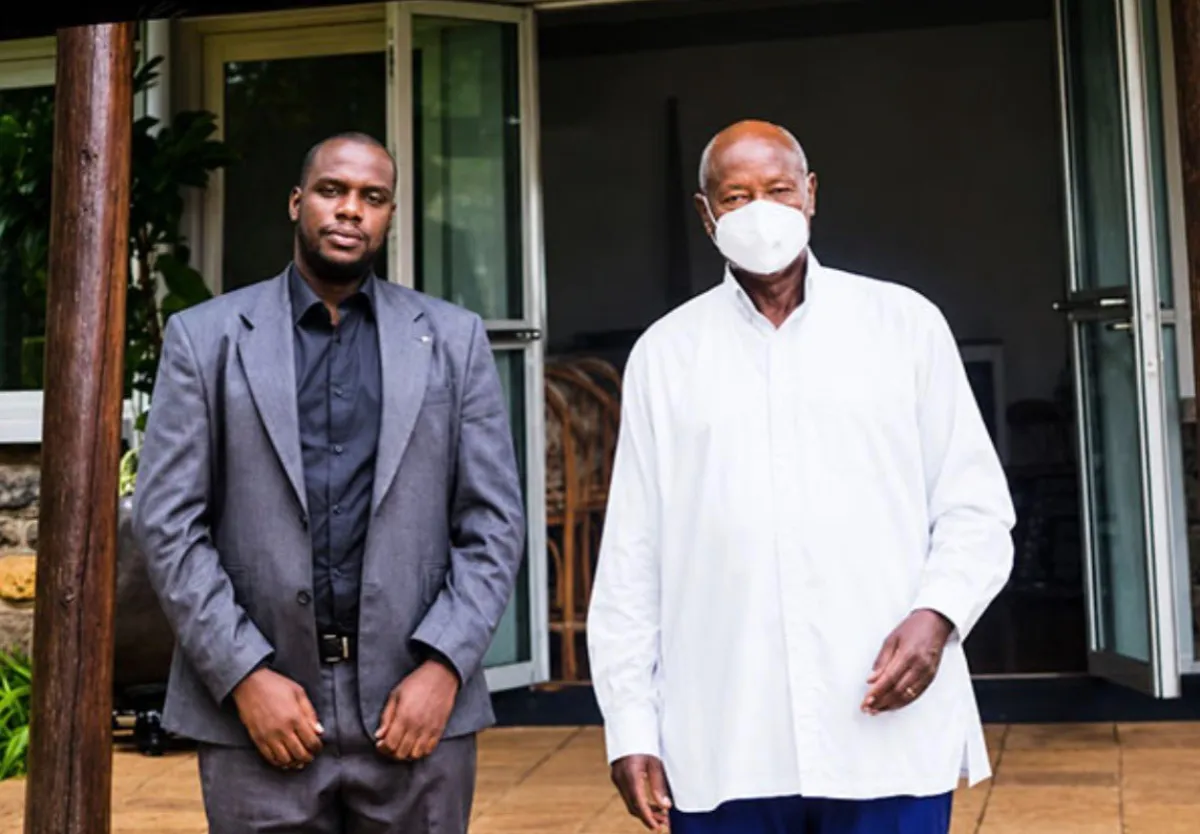
Mwenda, by contrast, depicts him as an individual who exploited claims of torture to gain the President’s confidence before allegedly influencing decisions affecting senior government and military officials.
Neither version has been conclusively established through court proceedings or independent investigations.
Questions remain unanswered
The competing accounts leave several critical questions unresolved:
- Was Nuwagaba subjected to torture as described by President Museveni?
- If so, who was responsible?
- Were the alleged perpetrators prosecuted?
- Did Nuwagaba genuinely possess the cyber-security credentials he reportedly presented to State House?
- Were senior officials misled by fabricated intelligence?
- What role, if any, did State House officials play in validating his claims?
For now, those questions remain unanswered.
As the public dispute between the President and one of Uganda’s most influential journalists intensifies, attention is likely to shift toward investigators and the courts to determine which version of events is supported by evidence.
The controversy has become one of the most politically sensitive disputes involving Uganda’s security establishment, raising broader questions about accountability, intelligence vetting and access to the country’s highest office.