




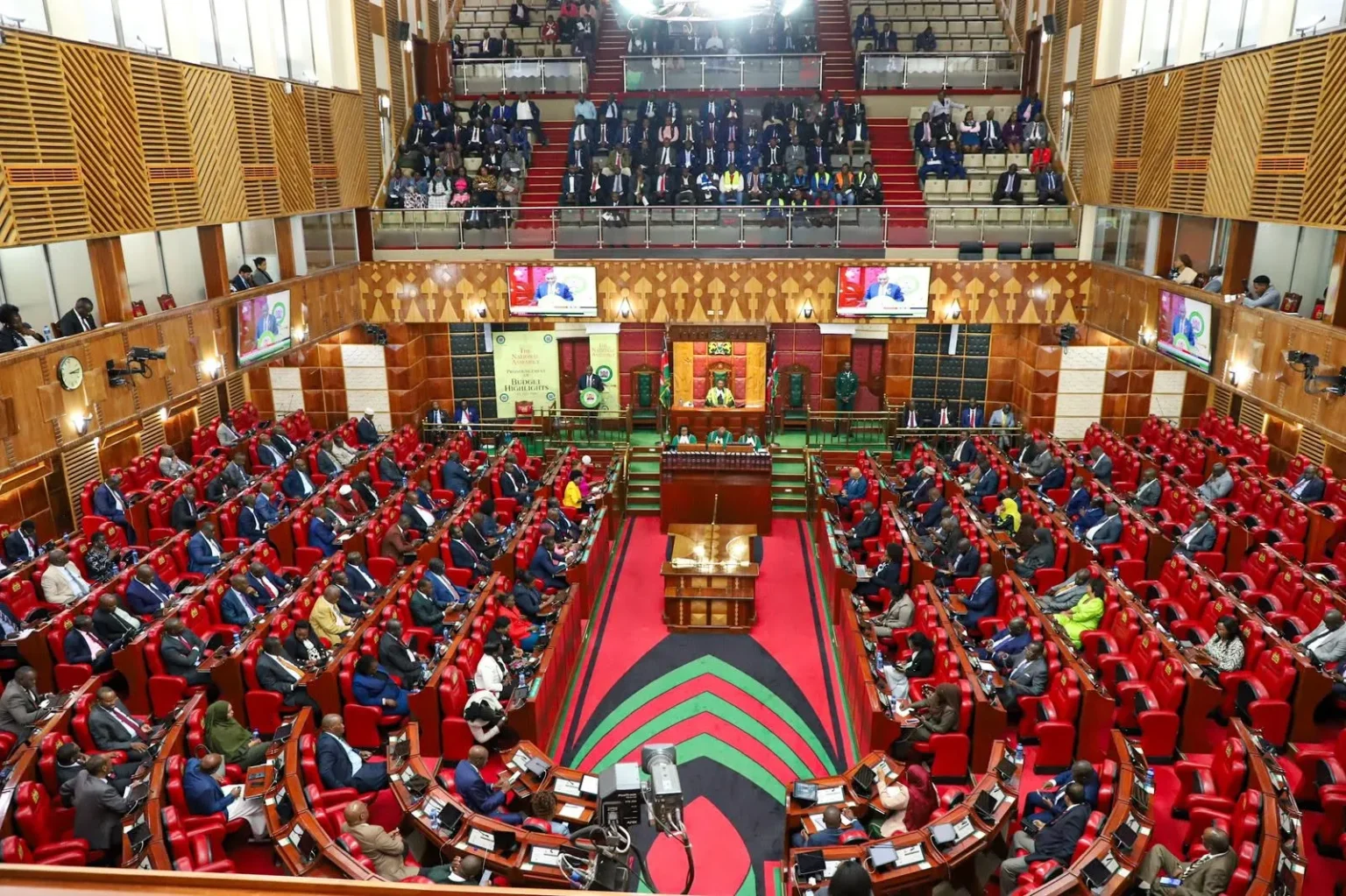
NAIROBI, Kenya — Kenya’s National Assembly has passed the Finance Bill 2026 after adopting a series of amendments, clearing the way for its transmission to President William Ruto for assent before it becomes law.
The legislation was approved on Thursday evening following an electronic vote in which 122 Members of Parliament supported the Bill while 40 voted against it. No legislator abstained.
The vote marked the culmination of weeks of parliamentary debate over proposed tax and revenue measures intended to fund government programmes in the 2026/27 financial year.
Lawmakers approve Amended Bill
The Bill sailed through after MPs adopted all amendments proposed by the Departmental Committee on Finance and National Planning during the committee stage.
Although the House initially approved the legislation by acclamation, several lawmakers demanded a formal division. After the threshold required under parliamentary rules was met, the Speaker directed that an electronic vote be conducted.
The final tally confirmed majority support for the amended Bill, allowing it to proceed to the next stage of the legislative process.
Once signed by President Ruto, the Finance Bill 2026 will become law and provide the legal framework for implementing a range of tax and revenue measures contained in the government’s fiscal agenda.
What the Finance Bill 2026 seeks to change
The Finance Bill proposes amendments to several key tax statutes that govern revenue collection in Kenya.
Among the laws targeted for amendment are:
- The Income Tax Act
- The Value Added Tax (VAT) Act
- The Excise Duty Act
- The Tax Procedures Act
- The Miscellaneous Fees and Levies Act
- The Stamp Duty Act
According to the government, the proposed changes are designed to broaden the tax base, improve tax compliance and strengthen revenue mobilisation to support public expenditure and development programmes.
The measures form part of broader efforts by the Treasury to increase domestic revenue collection while reducing reliance on borrowing to finance government operations.
Amendments reflect public concerns
The Bill underwent significant revisions during parliamentary scrutiny, with legislators responding to concerns raised by citizens, businesses and industry groups.
Lawmakers removed or modified several contentious proposals that had attracted public criticism during the consultation process.
Also Read: Kenya opens public participation on controversial Finance Bill 2026 amid tax uproar
Parliament also retained tax reliefs and exemptions on selected essential goods in an effort to cushion households from additional financial pressure amid ongoing concerns about the cost of living.
The amendments were widely seen as an attempt to strike a balance between the government’s revenue targets and the need to protect consumers and businesses from excessive taxation.
Political and economic significance
The passage of the Finance Bill comes nearly two years after the widespread public backlash against the Finance Bill 2024, which triggered nationwide protests and forced the government to withdraw several proposed tax measures.
Since then, the Treasury has adopted a more cautious approach to introducing new taxes, placing greater emphasis on compliance, enforcement and targeted tax reforms.
The Finance Bill 2026 is expected to play a central role in financing the government’s priorities for the coming financial year, including infrastructure development, education, healthcare and social protection programmes.
Attention will now shift to State House, where President Ruto is expected to review and sign the legislation into law.