

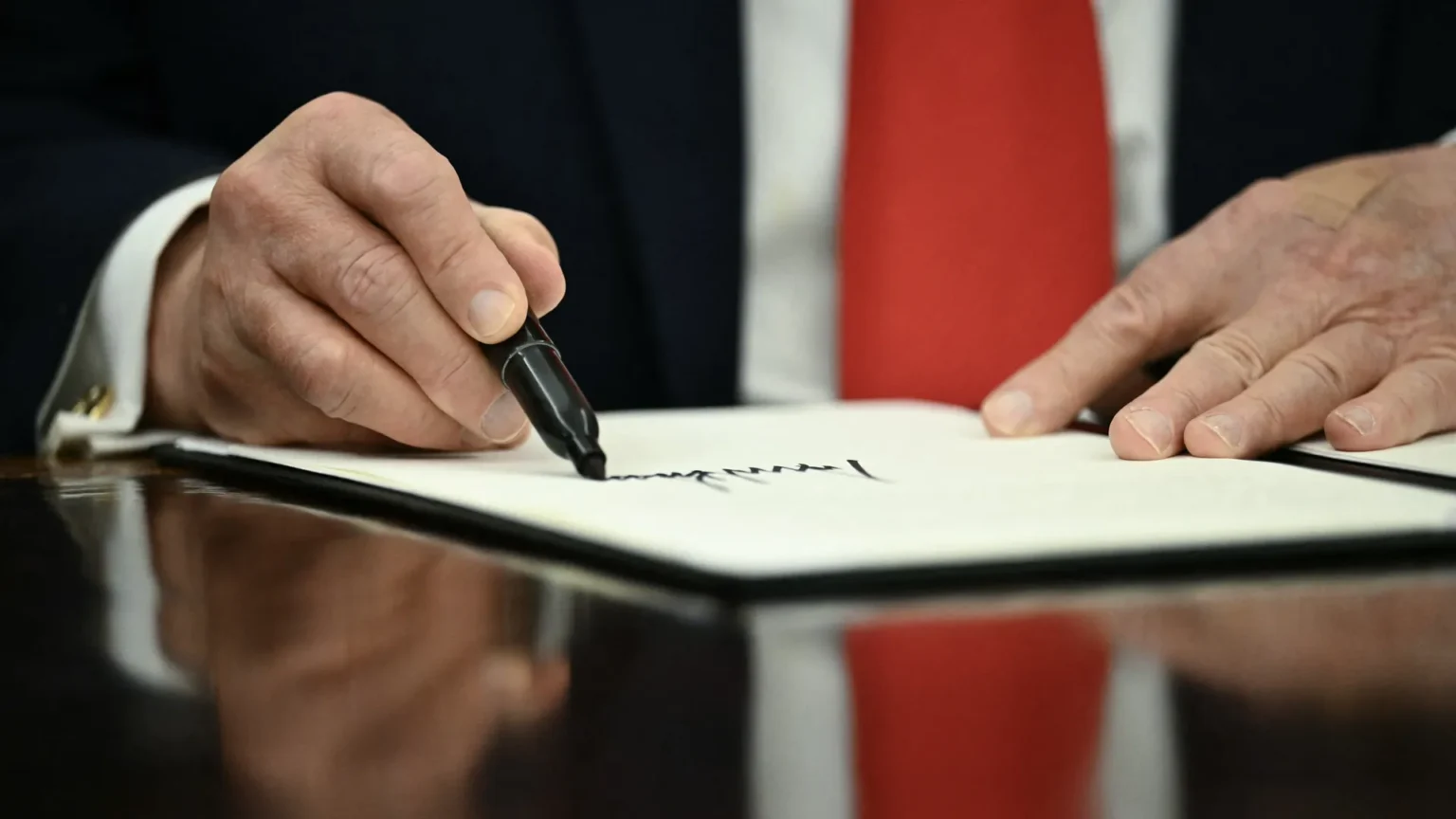
WASHINGTON, D.C., United States — The presidents of the United States and Iran have signed an initial peace agreement aimed at ending hostilities between the two countries, with the deal taking immediate effect, according to officials.
The agreement includes the reopening of the Strait of Hormuz, a $300 billion (£224 billion) reconstruction package for Iran, and a commitment by the United States to lift “all types of sanctions” on Tehran.
However, the central dispute over Iran’s nuclear programme—the original justification cited by Washington for the conflict—has not been resolved and will be negotiated over an extendable 60-day period.
Trump signs deal in France, warns of renewed strikes
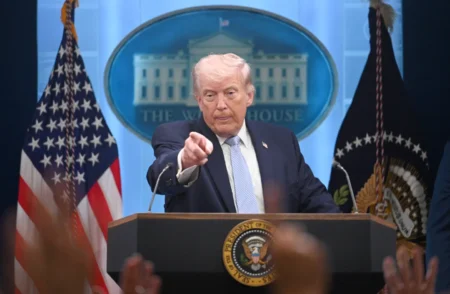
US President Donald Trump signed the agreement in France during the G7 summit, describing it as necessary to avert what he called an “economic catastrophe”.
He warned that the United States could still “bomb the hell” out of Iran if a final agreement is not reached within the negotiating window.
Iranian President Masoud Pezeshkian also signed the document on Wednesday, according to Tehran.
Iran’s parliamentary speaker and chief negotiator Mohammad Bagher Ghalibaf, however, expressed deep mistrust of Washington, warning that Iran remained on high alert.
“Our finger is on the trigger,” he said, adding: “If the enemy does not understand the language of logic, we will enter again with the language of power,” according to state media.
Strait of Hormuz reopened under temporary terms
The agreement provides for the reopening of the Strait of Hormuz, a critical global energy route through which roughly 20% of the world’s oil and liquefied natural gas passes.
Under the deal, ships will not be charged for passage for the next 60 days, although the memorandum leaves open the possibility of future fees.
Iran’s parliament speaker indicated that the waterway would “not return to pre-war conditions” and suggested charges could be introduced after the 60-day period.
Nuclear programme remains key sticking point
The memorandum states that Iran “reaffirms that it shall not procure or develop nuclear weapons”, while also providing for the down-blending of enriched uranium under supervision of the International Atomic Energy Agency (IAEA).
Earlier US demands reportedly called for the removal of enriched uranium from Iran entirely, but the final text allows it to remain under controlled conditions inside the country.
The agreement commits both sides to a final deal within 60 days, extendable by mutual consent.
War, oil disruption and global economic impact
The conflict, which began on 28 February according to officials cited, has severely disrupted global energy markets and raised inflationary pressures.
Iran’s partial closure of the Strait of Hormuz triggered sharp fluctuations in oil prices, with Brent crude previously rising about $8 above pre-conflict levels.
Following the announcement of the deal, oil prices dipped slightly, with Brent crude trading around 1% lower at $78.79 (£59.21) per barrel in early Asian trading.
Political backlash in Washington
Trump defended the agreement during the G7 summit in Evian-les-Bains, France, saying markets responded positively to signals of peace.
“Every time we talked about the possibility of peace, the stock market shot up like a rocket ship,” he said.
However, the deal has drawn criticism from both Republican and Democratic lawmakers.
Republican Senator Ted Cruz questioned provisions related to Iran’s reconstruction package, while Senator Jeanne Shaheen described the deal as “a very bad agreement” that failed to address Iran’s regional influence and missile programme.
Regional tensions remain high
Despite the agreement, tensions remain between Iran, Israel, and allied forces in the region. Israel has not indicated any commitment to withdrawal from operations in Lebanon, where strikes against Hezbollah have continued.
Also Read: US House votes to limit Trump’s military action in Iran
Trump, speaking at the summit, urged a softer approach from Israeli Prime Minister Benjamin Netanyahu, saying: “You don’t have to knock down a building every time someone walks into it that’s from Hezbollah.”
Uncertain path ahead
While the memorandum marks a rare diplomatic breakthrough, key issues—including Iran’s nuclear programme, regional security dynamics, and sanctions enforcement—remain unresolved.
Negotiators are expected to continue talks over the next 60 days, with the possibility of extension if progress is made.
For now, the agreement represents a fragile pause in a conflict that has reshaped global energy markets and heightened geopolitical tensions across the Middle East.