


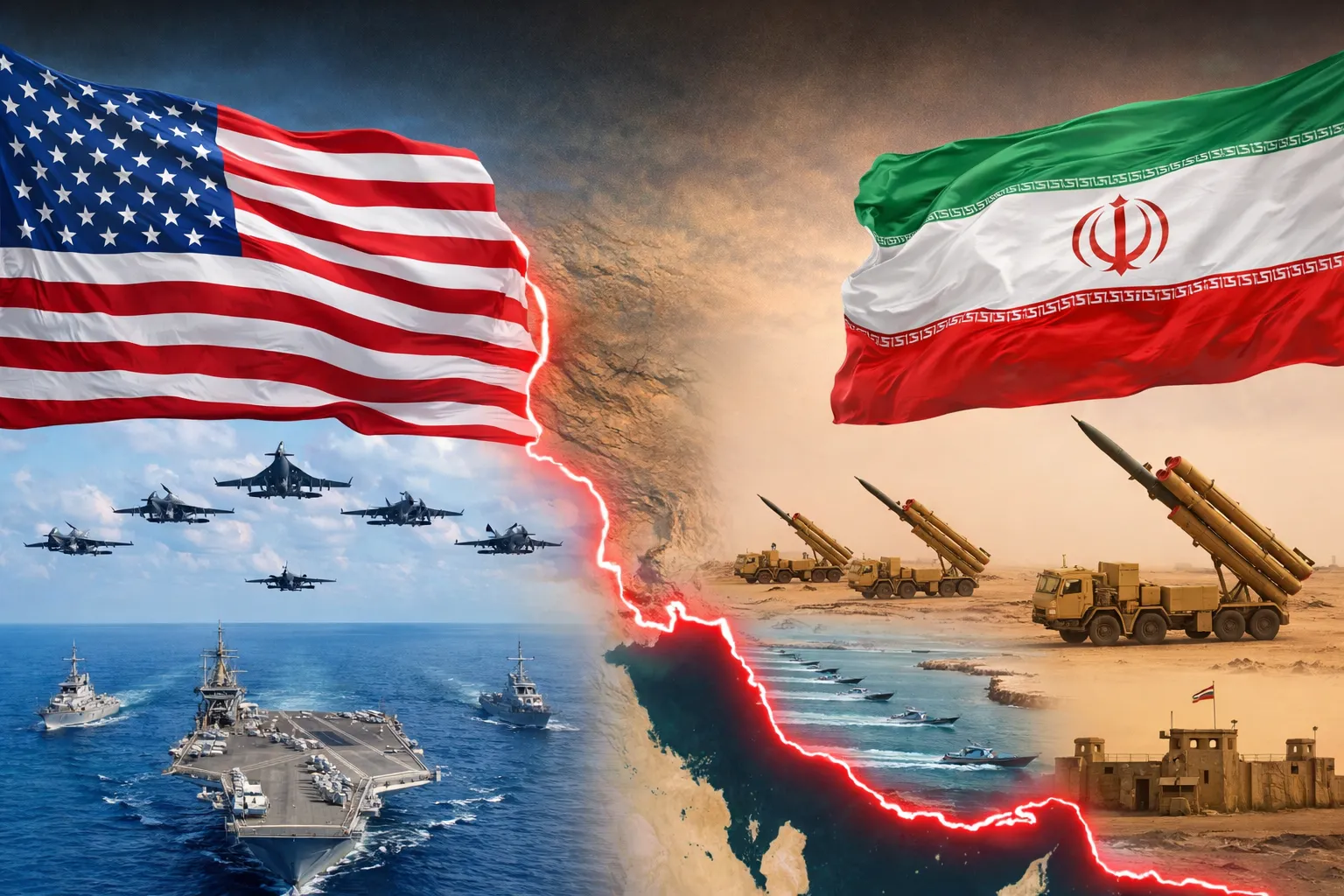
WASHINGTON, D.C., United States — The United States has carried out what it described as a “heavy wave” of military strikes against Iran, marking another sharp escalation in the growing confrontation between Washington and Tehran after Iran allegedly attempted to target American forces in the Middle East.
The strikes, conducted overnight, targeted dozens of sites linked to the Islamic Revolutionary Guard Corps (IRGC), according to the United States Central Command (CENTCOM).
CENTCOM said the operation was launched in retaliation for Tuesday’s attempted ballistic missile attacks against US military installations in Jordan and against American naval assets operating in the strategically vital Strait of Hormuz.
It said all Iranian missiles directed at US forces had been intercepted.
“The operation targeted military command centres, missile and drone facilities, coastal surveillance and defence sites, and maritime capabilities,” CENTCOM said.
Iranian state media confirmed the strikes but reported civilian casualties, saying three members of the same family—including a two-year-old child—were killed after a residential building was hit on Qeshm Island.
State media also reported explosions in several locations across southern and western Iran, including areas connected to the country’s energy infrastructure.
The BBC has not independently verified the casualty figures or the precise locations targeted.
Residents in southern Iran described hearing repeated explosions during the early hours of Thursday.
One resident of Qeshm Island told BBC Persian he was leaving for Tehran because the security situation had deteriorated.
“Our internet situation has been a mess. The electricity has been cutting out several times since this morning,” he said.
“There have been loud bangs since 03:40 this morning. We are helpless.”
The latest exchange comes during one of the most volatile periods in the US-Iran confrontation, with military operations increasingly spilling across the wider Middle East.
Jordan’s armed forces said its air defence systems intercepted five Iranian missiles that entered the kingdom’s airspace on Thursday.
Earlier this week, the IRGC claimed responsibility for attacks targeting a US airbase and command centre in Jordan, describing them as retaliation against what it called American aggression.
Iran also claimed its naval forces targeted three oil tankers navigating the Strait of Hormuz, accusing the vessels of ignoring security warnings while sailing through the critical shipping corridor.
The Strait of Hormuz remains one of the world’s most strategically important maritime routes, handling a significant share of global oil exports.
The renewed military exchanges follow several days of relative calm that had raised hopes of renewed diplomacy.
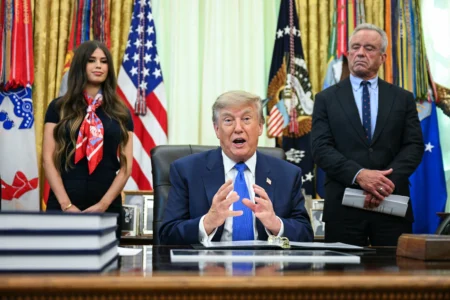
US President Donald Trump had previously described contacts with Iran as “very friendly negotiations,” although Tehran publicly denied that formal talks were taking place.
According to Axios, citing an unnamed US official, Saudi Defence Minister Khalid bin Salman Al Saud recently met President Trump and conveyed Saudi Arabia’s preference for de-escalation.
The White House had not publicly commented on the report at the time of publication.
The confrontation has increasingly drawn in neighbouring countries and allied groups.
On Tuesday, CENTCOM announced that joint US-Saudi operations had struck what it described as terrorist logistics and weapons facilities used by Iran-backed groups in eastern Iraq following a series of drone attacks against American positions.
Iraq’s Popular Mobilisation Forces (PMF), an umbrella organisation dominated by Iran-backed militias, said at least 20 of its members were killed.
Also Read: As ceasefire collapses, US-Iran conflict risks pulling the entire Gulf into war
The Iraqi presidency condemned the strikes, describing them as a violation of the country’s sovereignty.
President Trump, however, maintained that the operations had been coordinated with the Iraqi government.
The latest military escalation underscores the deep-rooted geopolitical rivalry between the United States and Iran, a relationship that has shaped security dynamics across the Middle East for decades.
It also reflects the broader regional competition between Saudi Arabia, the leading Sunni Muslim power, and Iran, the region’s largest Shia-majority state, whose competing interests continue to influence conflicts across the Gulf and neighbouring countries.
With both sides continuing to exchange military strikes and neither signalling an immediate willingness to step back, fears are growing that the confrontation could draw additional regional actors into an already volatile conflict.