


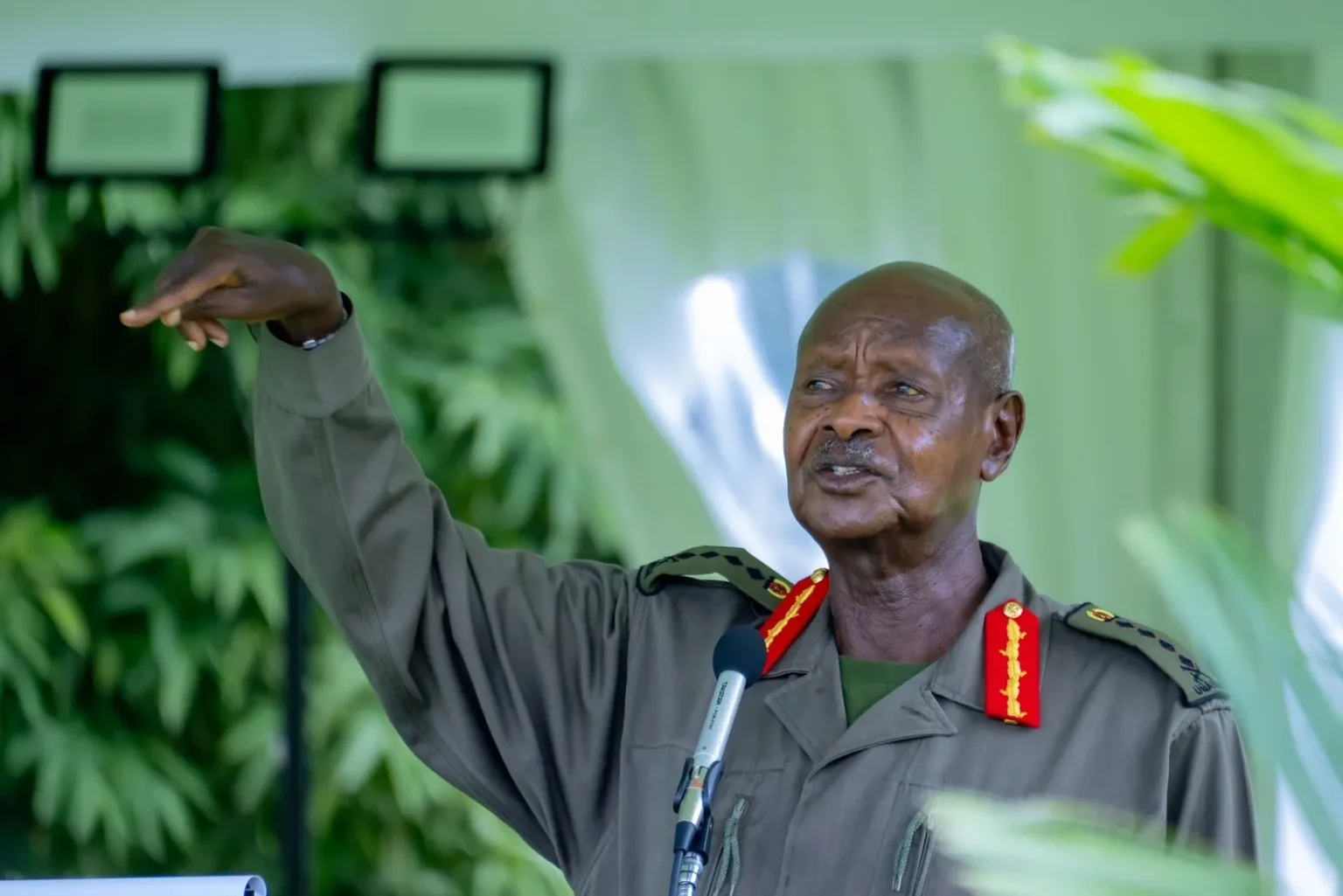
JINJA, Uganda — Ugandan President Yoweri Museveni has renewed his long-standing call for deeper regional integration, arguing that East African countries should move towards political federation and establish shared defence capabilities, including a common navy and advanced strategic programmes.
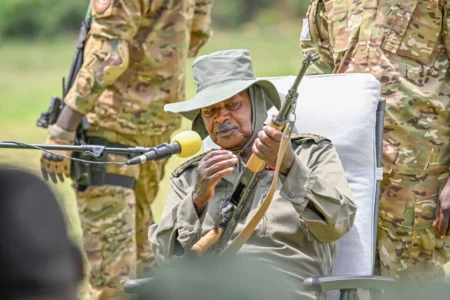
Speaking to senior military officers undertaking a course at the Senior Command and Staff College in Kimaka, Jinja District, Museveni said political integration remains critical to strengthening regional security, economic prosperity and Africa’s ability to compete globally.
The President argued that many of Africa’s modern borders were products of colonial decisions rather than historical realities, contending that countries in East Africa share deep cultural, historical and social ties that could support greater political unity.
“On the side of defence and strategic security, you must have political integration where possible,” Museveni said. “What are Uganda and Kenya? It is what the British said: this is Uganda, this is Kenya, this is Rwanda, this is Burundi.”
Case for a united East Africa
Museveni pointed to the formation of Tanzania through the union of Tanganyika and Zanzibar as an example of successful political integration in Africa.
He praised the late Tanzanian leaders Julius Nyerere and Abeid Karume for creating a unified state, arguing that their decision demonstrated the strategic advantages of regional cooperation.
According to Museveni, fragmented political structures continue to limit Africa’s economic and military potential.
He said deeper integration would allow East African countries to pool resources and develop capabilities that would be difficult for individual states to finance independently.
Call for common defence capabilities
Museveni said an eventual East African Federation could establish joint military institutions capable of defending the region across multiple domains.
“If we have the East African Federation, we shall be able to have a navy which can defend us in the oceans, and we can be able to have a space programme,” he said.
“In that case, we shall be able to defend ourselves on land, in the air, at sea and in space.”
The President argued that collective defence arrangements would strengthen the region’s strategic position and reduce dependence on external powers.
Lessons from global conflicts
Museveni also referenced recent international conflicts, saying they demonstrate the challenges faced by countries that lack advanced military capabilities.
Without naming specific nations, he suggested that smaller countries often find themselves at a disadvantage when confronting more technologically advanced adversaries.
Also Read: Museveni now proposes unified East African ‘Super Army’ after Indian Ocean war threats
“We can fight, like the Iranians we have seen, but at a disadvantage because the other side has capabilities that we do not have,” he said.
“Yet these are capabilities we could have if we only organised ourselves better.”
Pan-Africanism and economic integration
The Ugandan leader reiterated his belief that Africa’s long-term future depends on both economic and political integration, guided by the principles of patriotism and Pan-Africanism.
He told the officers that regional unity would not only strengthen security but also create larger markets, attract investment and generate opportunities for citizens across the continent.
Museveni said his discussions with the military officers also focused on wealth creation, information and communication technology, population growth, strategic security and the dangers posed by sectarian politics.
The remarks are the latest in a series of calls by Museveni for accelerated East African integration, a goal that has been debated within the East African Community (EAC) for decades but has faced political, economic and sovereignty-related challenges among member states.