

WASHINGTON, D.C., United States — US President Donald Trump has said he “loves the inflation,” even as new government data showed American prices rising at their fastest pace in three years, driven largely by surging energy costs linked to the ongoing US–Iran conflict.
Figures released by the US Bureau of Labor Statistics (BLS) on Wednesday showed that inflation climbed to 4.2% in May, up from 3.8% in April, marking the third consecutive monthly increase in the Consumer Price Index (CPI).
The spike has intensified political and economic debate in Washington, with households already feeling the pressure from higher fuel and energy bills.
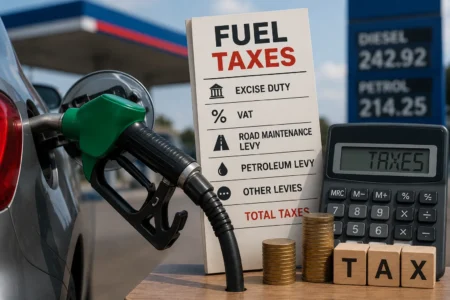
According to the BLS data, the sharp increase was largely fuelled by higher energy prices, including petrol and electricity costs, which rose significantly in the wake of disruptions in global oil supply chains.
Overall energy bills were nearly a quarter higher in May compared to the same period last year, with petrol prices accounting for a large share of the increase.
Separate data from the American Automobile Association (AAA) shows the average price of regular petrol in the United States currently stands at $4.15 per gallon, up sharply from $2.98 recorded in late February.
The increase has been linked to heightened geopolitical tensions in the Middle East, particularly disruptions affecting global oil flows through the Strait of Hormuz, a critical route for global energy shipments.
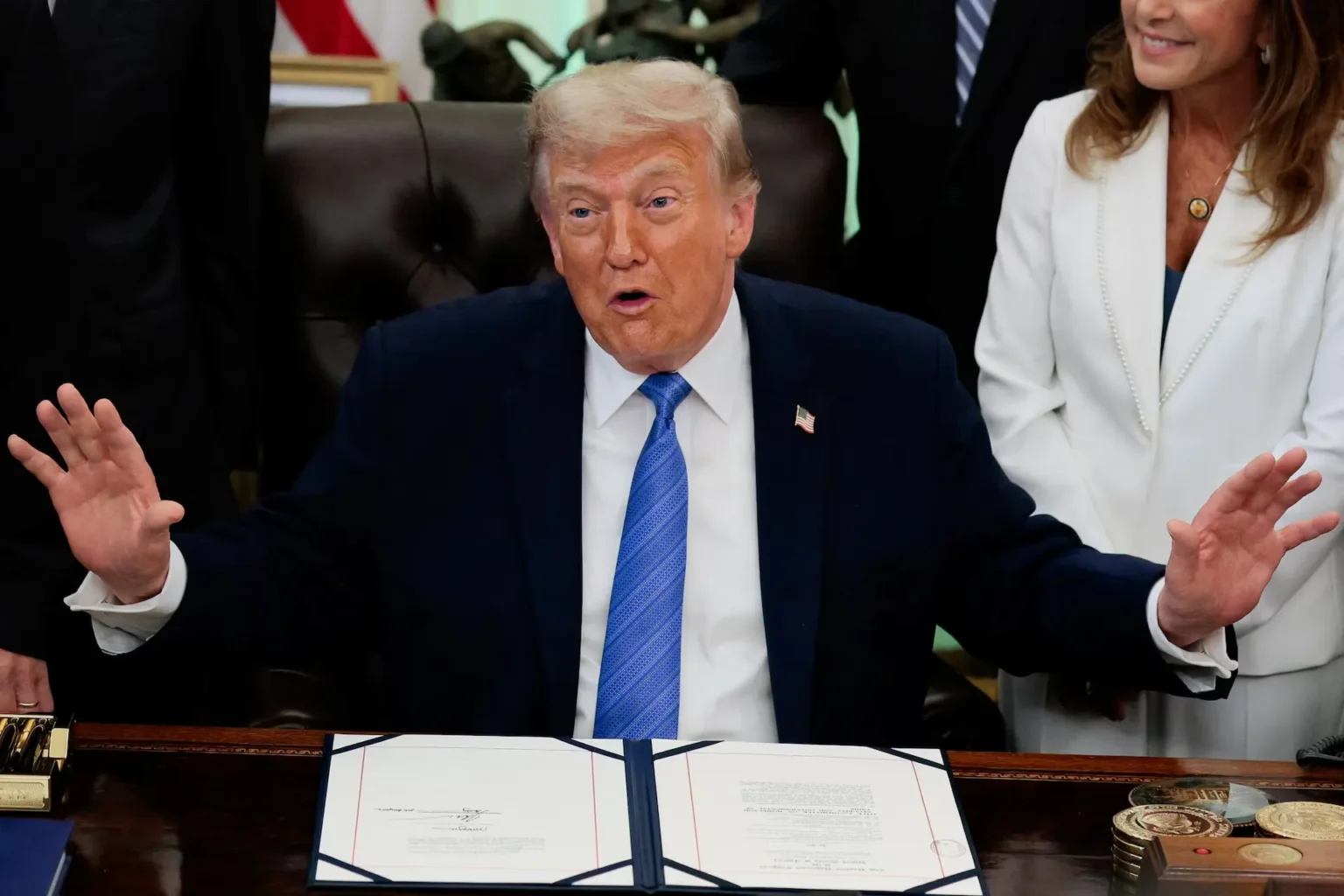
Speaking at the White House, President Trump acknowledged the rising inflation figures but appeared to downplay concerns, describing the economic data in unusually positive terms.
“I love it. The numbers were great. You know what I really love? I love the inflation,” he said.
He insisted, however, that prices would “come down like a rock” once the conflict involving Iran stabilises.
Trump also suggested that recent US military actions had influenced oil supply dynamics, claiming operations had affected “millions of barrels” of oil flow and contributed to fluctuations in global prices.
“When this conflict is over… you will see oil drop to where it was before,” he told reporters.
The remarks came shortly before reports of additional US military strikes in Iran, underscoring the volatility of the conflict, which has already disrupted global energy markets.
The global benchmark Brent crude remains elevated compared to pre-conflict levels, reflecting continued uncertainty over supply stability.
Iran’s partial shutdown of key maritime routes, including disruptions around the Strait of Hormuz, has added further strain to global oil flows. Analysts estimate that nearly one-fifth of the world’s oil and gas shipments pass through the corridor.
Economists warn that even if tensions ease, full stabilisation of supply chains could take years.
Trump’s remarks have triggered criticism from political opponents, who argue that rising inflation is eroding household incomes and undermining economic stability.
Senate Democratic Leader Chuck Schumer accused the president of being detached from everyday financial struggles, posting on social media that his comments reflected “contempt” for ordinary Americans.
Inflation remains well below the 9.1% peak recorded in mid-2022 under former President Joe Biden, but the recent upward trend is raising concerns ahead of the November midterm elections.
Economic conditions remain a central political issue, with voters consistently ranking cost-of-living pressures among their top concerns.
The inflation spike also adds pressure on the US Federal Reserve, which is tasked with maintaining price stability through monetary policy.
When inflation rises above the Fed’s 2% target, policymakers typically respond by increasing interest rates to reduce spending and slow price growth.
Economists now expect the Fed to hold rates steady at between 3.5% and 3.75% in the near term, though further inflationary pressure could force a policy shift.
Also Read: Tomato prices soar in US as tariffs, inflation drive food costs higher
Stephen Brown, chief North America economist at Capital Economics, said the latest data alone was unlikely to prompt immediate action, but warned that sustained inflation combined with strong labour data could shift the outlook.
Meanwhile, investment manager Isaac Stell noted that persistent inflation could eventually push the Fed toward tightening policy further.
Despite Trump’s confidence that prices will stabilise once the conflict ends, economists caution that global energy markets remain highly volatile, with supply disruptions and geopolitical tensions continuing to shape inflation trends.
For now, American households are facing higher costs across energy, transport, healthcare, and services, signalling that the inflation debate is likely to remain at the centre of US politics in the months ahead.