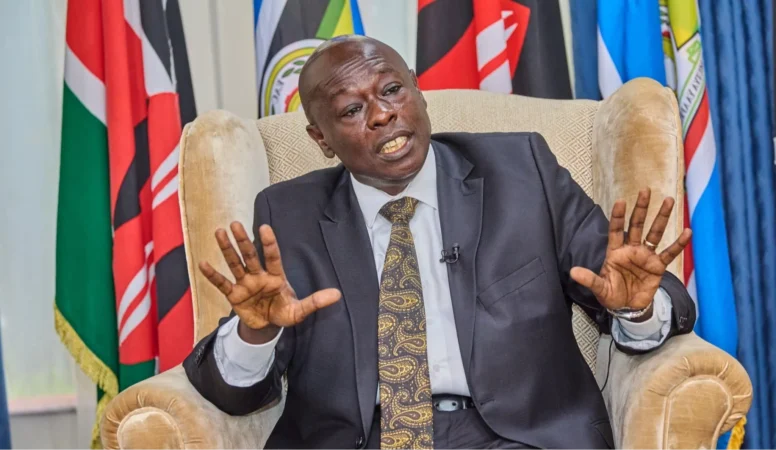

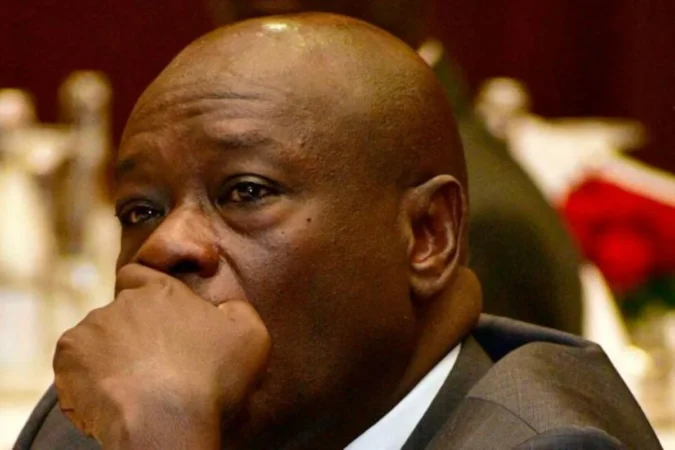


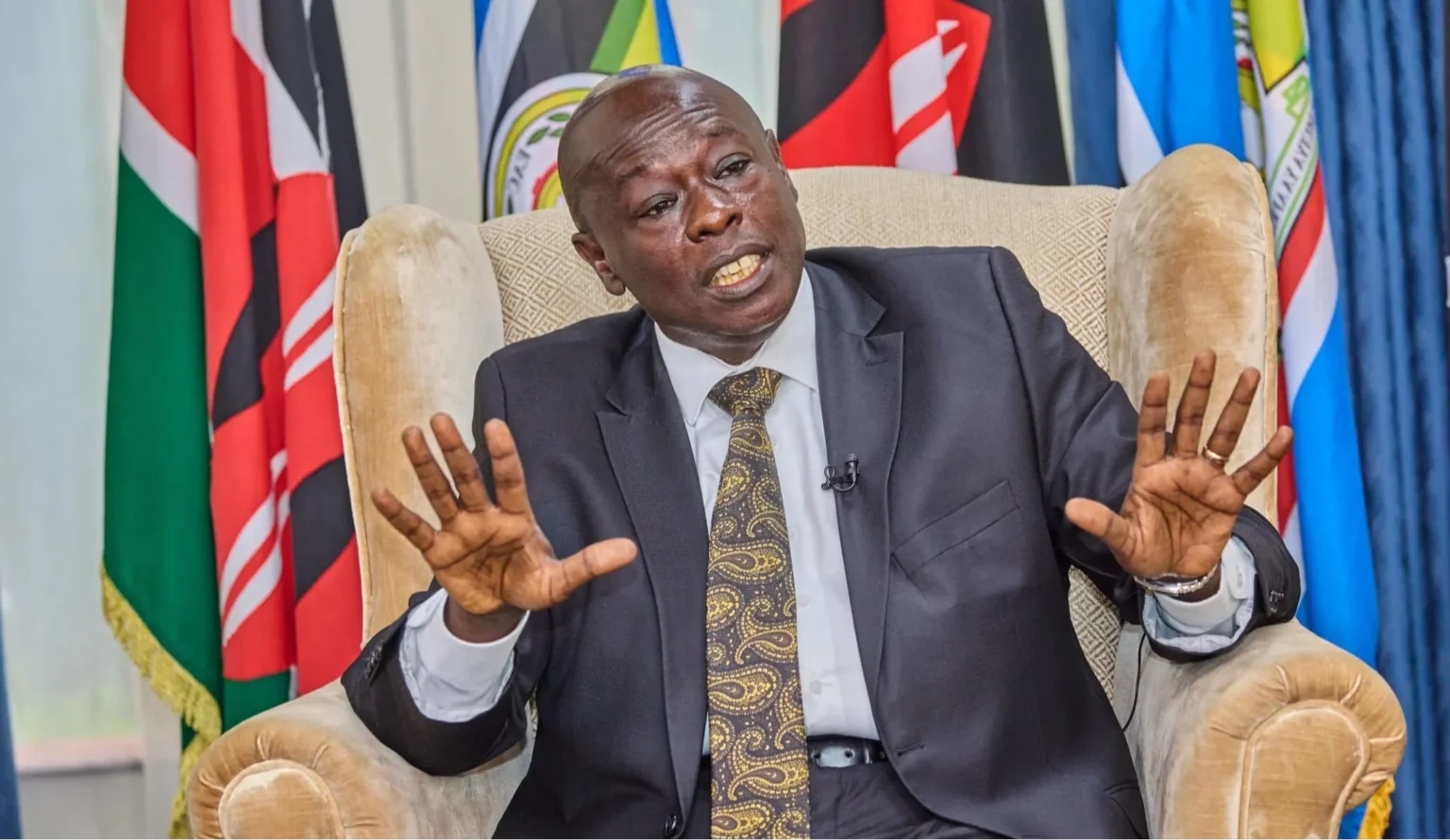
MERU, Kenya — Former Deputy President Rigathi Gachagua has alleged that a demand for a KSh3 billion bribe by Kenyan officials prompted the British Army Training Unit Kenya (BATUK) to relocate part of its military training programme to neighbouring Tanzania, claims that had not been independently verified by the time of publication.
Speaking during a church service at St Teresa Catholic Church in Imenti Central Constituency, Meru County, on Sunday, Gachagua accused members of Parliament’s Defence and Foreign Relations Committee of seeking billions of shillings before renewing a military training agreement involving BATUK.
He specifically named the committee’s chairperson, Nelson Koech, while making the allegations.
“The committee of Parliament for Defence and Foreign Relations. The chairman is called Nelson Koech. He is a Kasongo man. He told these whites, ‘For us to renew the contract, we want Ksh3 billion,’” Gachagua claimed.
According to Gachagua, representatives of the British military questioned why such a payment was being requested and whether it related to any legitimate contractual obligation.
He alleged that negotiations dragged on for nearly eight months, with the British delegation repeatedly refusing to make the payment.
“Take one or two billion and send it to Kasongo. The whites asked, What do you want three billion for? Is there a receipt? Is it for work, or is it for a crime, to seek votes? This dragged on for eight months,” Gachagua stated.
The former Deputy President further claimed that the British government ultimately rejected the alleged demand and instead transferred one of its military training programmes to Mezama in Tanzania, abandoning plans to continue that specific activity in Kenya.
If confirmed, such a move would represent a significant development in defence cooperation between Kenya and the United Kingdom.
However, Vivid Voice News has not independently verified the allegations.
By the time of publication, the National Assembly’s Defence and Foreign Relations Committee, the Kenyan government, and the United Kingdom Ministry of Defence had not publicly responded to Gachagua’s claims.
The British Army Training Unit Kenya has maintained a military presence in Kenya for decades, making it one of the country’s longest-standing international defence partnerships.
Operating primarily from Nanyuki, BATUK conducts joint military exercises involving British and Kenyan forces while providing specialised training in environments that closely resemble operational conditions encountered by British troops in various parts of the world.
The partnership has survived successive administrations dating back to the presidency of Jomo Kenyatta, continuing under Daniel arap Moi, Mwai Kibaki, Uhuru Kenyatta and President William Ruto.
Beyond military cooperation, BATUK has become an important economic pillar for communities surrounding Nanyuki.
Hotels, restaurants, transport operators, landlords, suppliers and numerous small businesses derive significant income from British personnel stationed in the area throughout the year.
Gachagua argued that any reduction in BATUK’s presence would therefore extend beyond defence cooperation and directly affect thousands of livelihoods.
He said the military partnership has long supported economic activity around Nyati Barracks, where British troops regularly conduct training alongside the Kenya Defence Forces (KDF).
He warned that losing sections of BATUK’s operations could significantly weaken the local economy that has grown around the training base over several decades.
The allegations also arrive against the backdrop of broader political tensions between Gachagua and President William Ruto’s administration.
Since leaving office, Gachagua has increasingly positioned himself as one of the government’s sharpest critics, frequently raising allegations of corruption, governance failures and abuse of public institutions.
His latest claims, however, concern a strategically sensitive area involving international defence cooperation.
Any suggestion that corruption influenced military agreements between Kenya and one of its closest defence partners would carry implications extending beyond domestic politics.
Security analysts have previously noted that defence cooperation agreements often involve complex diplomatic negotiations covering military training, logistics, infrastructure, environmental concerns and legal protections for foreign personnel.
Changes to such arrangements can arise from numerous operational, diplomatic or administrative considerations.
Also Read: British soldiers still paying for sex in Kenya despite ban, inquiry finds
At this stage, there is no publicly available evidence confirming that BATUK relocated training activities because of the alleged bribery demands described by Gachagua.
The absence of official responses means many questions remain unanswered, including whether any changes to BATUK’s operational footprint in Kenya have occurred, the reasons for any such adjustments and whether Tanzanian facilities are now hosting training previously conducted in Kenya.
Those questions are likely to attract increased public and parliamentary attention if the allegations prompt official investigations or responses from either Nairobi or London.
For now, the claims remain part of Kenya’s increasingly heated political discourse, with independent verification and official responses expected to determine whether they evolve into a broader governance and diplomatic issue.