


KAMPALA, Uganda — In Ugandan politics, absence is rarely just absence. It is often a signal—sometimes procedural, sometimes political, and at times deeply symbolic.
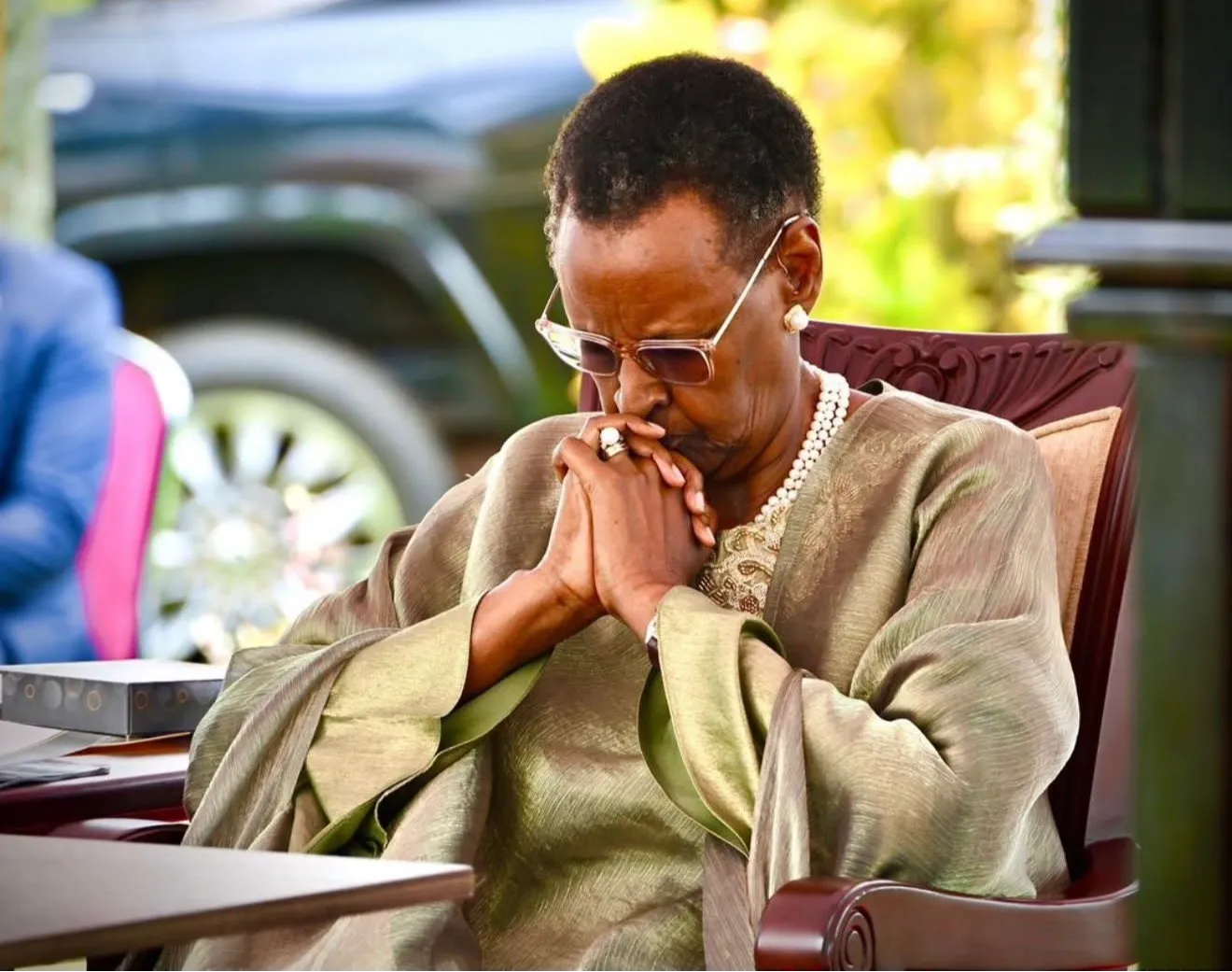
That is why the failure by Uganda’s First Lady and Education Minister-designate Janet Museveni to appear before Parliament’s Appointments Committee for ministerial vetting has triggered a wave of questions across political circles, media spaces, and public discourse: Where is Janet Museveni, and what does her absence mean at this moment of cabinet transition?
According to parliamentary reporting, Ms Museveni did not show up for the two-day vetting exercise despite being among the high-profile nominees expected to be processed ahead of the swearing-in of the new Cabinet.
While most of the President’s nominees presented themselves and were cleared, her seat remained conspicuously empty—one of the few unresolved cases in an otherwise completed vetting cycle.
Parliamentary officials have confirmed that she is among a small number of nominees whose approval remains pending, with lawmakers indicating that she either requested additional time or failed to attend the scheduled session.
In past instances, committees have allowed nominees to appear later, including via alternative arrangements, but no formal appearance had been recorded at the closure of the exercise.
On the surface, this is administrative. In practice, it is politically loaded.
Janet Museveni is not an ordinary cabinet nominee. She is Uganda’s First Lady, a long-serving minister of Education and Sports since 2016, and one of the most influential figures in the country’s governance architecture. Her political presence sits at the intersection of family, state, and ruling party power—making any deviation from expected procedure a matter of national curiosity rather than routine bureaucracy.
Her absence has therefore created a vacuum that is quickly being filled with speculation, not because of confirmed scandal or controversy, but because of the political weight she carries and the opacity that often surrounds high-level executive decision-making in Uganda’s system of governance.
The timing is particularly significant.
First Lady Janet Museveni was also notably absent on Tuesday 12, May 2026 as President Yoweri Museveni was sworn in for seventh term at the Kololo Ceremonial Grounds in Kampala, triggering widespread public concern and speculation over her health.
It marked the first time since Uganda’s 1996 elections that Janet Museveni failed to attend her husband’s presidential inauguration ceremony, an absence that quickly dominated conversations both at the venue and across social media platforms.
Instead of the First Lady, Museveni was accompanied by his daughter, Natasha Karugire, who stood beside him as he took the oath of office before regional leaders, diplomats and thousands of supporters gathered at Kololo.
This is a cabinet reshuffle phase in which President Yoweri Museveni is reconstituting his administration following another electoral cycle and extended tenure in power. Vetting exercises have proceeded largely smoothly, with most nominees—including senior political and military figures—cleared without major disruption. The expectation was procedural completion, not suspense.
Instead, the absence of one of the most senior figures in government has disrupted that rhythm.
Analytically, three interpretations dominate political conversation.
The first is administrative delay. Parliamentary committees have previously granted extensions to nominees unable to attend scheduled vetting sessions due to logistical, health, or official constraints. In this reading, Janet Museveni’s absence is not unusual but procedural, an extension rather than an exception.
The second is political shielding. In highly centralized political systems, senior figures sometimes undergo parallel vetting processes outside public parliamentary scrutiny before formal approval is concluded. In such cases, public absence does not necessarily mean absence from evaluation, it simply means the process is not fully visible.
The third, and most sensitive interpretation, is that absence itself is a signal of transition—either of role, readiness, or reconfiguration within the cabinet structure. However, no official communication currently supports this reading.
What is clear is that Parliament has continued its work largely without interruption, vetting dozens of ministers and completing most approvals within schedule.
Yet the absence of Janet Museveni stands out precisely because of what she represents in Uganda’s political architecture.
She is not only a long-serving cabinet minister but also a foundational figure in the broader Museveni-era governance system, where state, party, and family networks often overlap in political significance.
Also Read: ‘Healed and recovered’ First Lady misses Museveni’s swearing-in fete
In such a context, even procedural silence becomes politically meaningful.
For now, official explanations remain limited. Parliament has indicated that she did not appear during the scheduled vetting window, and no detailed public justification has been issued at the time of reporting.
What follows next will likely be decisive, not only for her ministerial position but for the narrative momentum surrounding the new cabinet itself.
Because in Ugandan politics, unanswered questions do not remain unanswered for long. They either get clarified, or they become part of the political record.
And right now, the question still hanging in the air is simple:
Where is Janet Museveni?