



MUKONO, Uganda — At first glance, Thursday’s Mukono Women Council elections looked much like countless village polls held across Uganda.
Women arrived early, many dressed in brightly coloured gomesi, others wearing headscarves and carrying babies on their backs. Election officials quietly verified names as neighbours exchanged greetings while waiting to cast ballots in an exercise designed to strengthen women’s participation in local governance.
Then the atmosphere shifted.
Among the voters stood individuals who appeared no different from everyone else—until closer scrutiny raised suspicion. Within minutes, what had begun as an ordinary election transformed into one of the day’s most extraordinary political stories, exposing not only an alleged attempt to infiltrate a women-only vote but also the growing importance of grassroots political contests in Uganda.
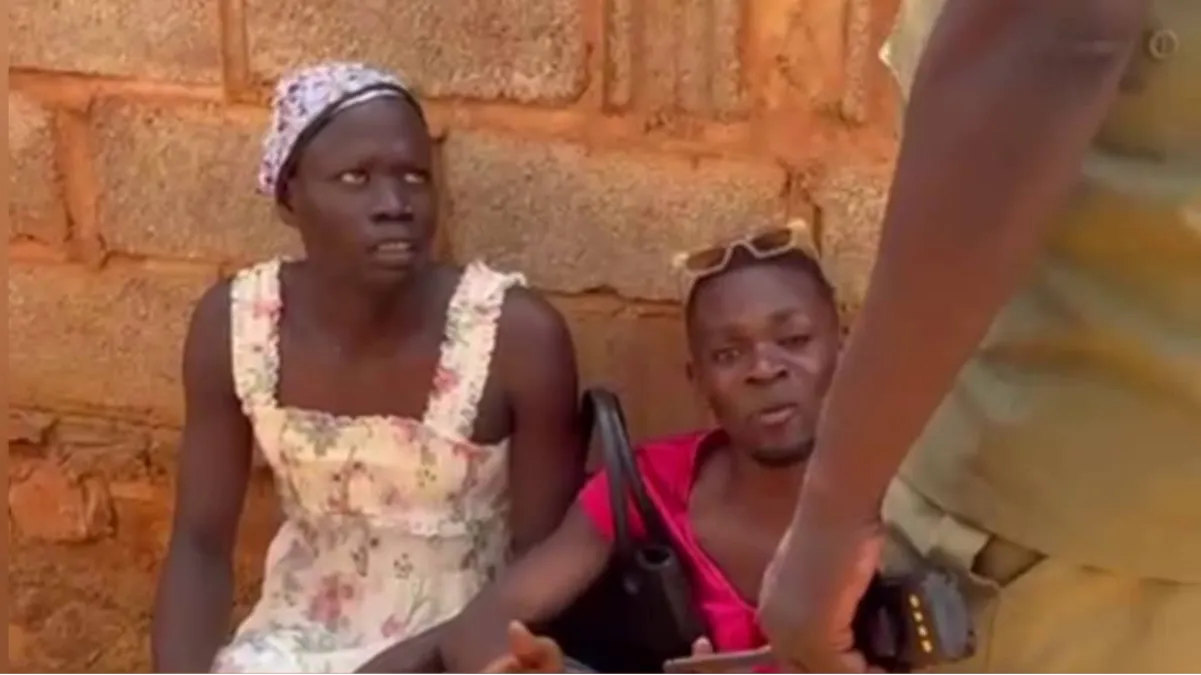
The incident unfolded at Kiwanga-Lwanda Cell in Goma Division, where two unidentified men were reportedly discovered dressed in elaborate female attire.
Witnesses said the pair wore traditional gomesi flowing to the ground, neatly wrapped hijabs, carefully fitted wigs and glasses in what appeared to be an effort to blend seamlessly into the queue of women preparing to vote.
To many residents, the appearance was convincing.
To election officials, however, something did not quite fit.
The two men were arrested on the spot and handed over to police.
Authorities believe they were not acting alone.
According to preliminary accounts, two other men suspected of participating in the scheme escaped before they could be apprehended.
Beyond the spectacle
The images of men disguised as women quickly attracted public attention, but beneath the unusual incident lay a more significant question.
Why would anyone risk arrest to participate in an election reserved exclusively for women?
Political analysts have long argued that local government elections, often dismissed as low-profile contests, have become increasingly influential because they shape community leadership, local resource mobilisation and future political careers.
Women’s councils, in particular, were established to strengthen female participation in governance and ensure women influence decision-making at village and parish levels.
Attempting to manipulate such elections therefore carries implications that extend beyond a single vote.
The Mukono incident illustrates how even grassroots political positions are becoming increasingly competitive.
Calm disrupted elsewhere
The day’s tensions were not confined to Kiwanga-Lwanda.
At St Paul Catholic Parish polling station in Mukono Central Division, voting had initially proceeded peacefully as women queued under the supervision of election officials.
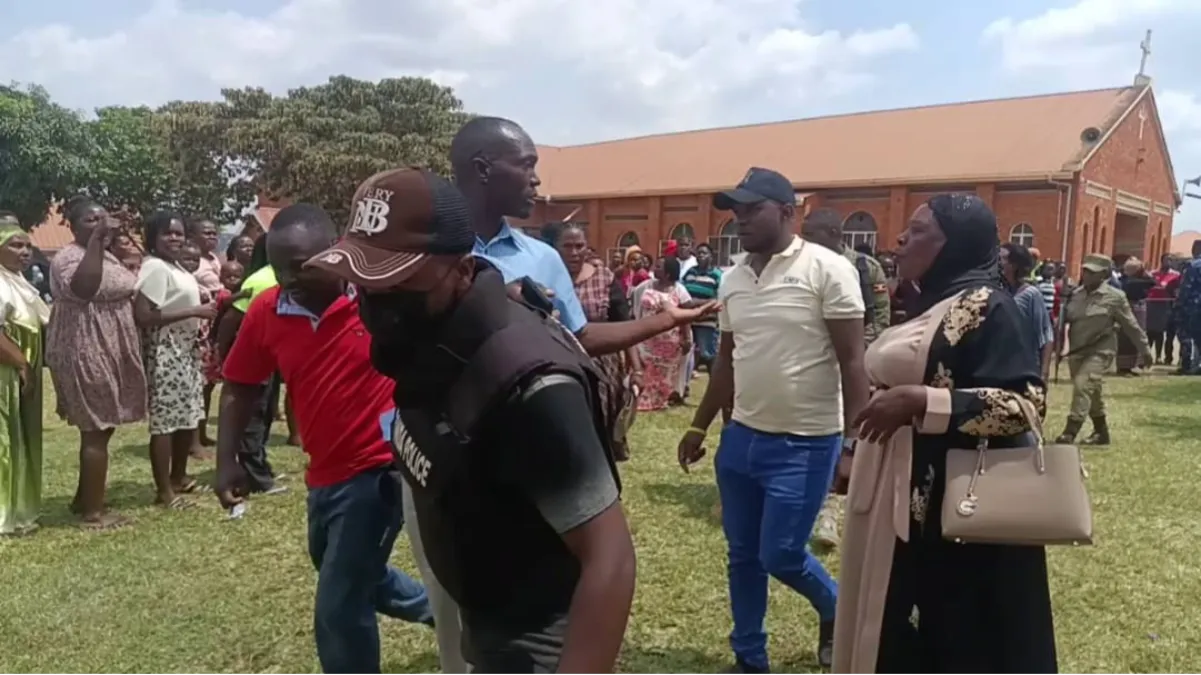
The orderly atmosphere was briefly interrupted when officers from Wantoni Police arrested three more men accused of disrupting the election.
Election officials alleged that some attempted to participate in the women-only vote, including the husband of one of the contestants, Lady Florence Nabuguzi.
Police also removed two youths identified only as Didiz and Gideon, who were reportedly campaigning for a National Resistance Movement (NRM) candidate during the polling process.
Residents, assisted by police officers, escorted the pair away after they were accused of causing disturbances.
Although voting later resumed, the incidents reinforced concerns about maintaining electoral integrity even during local government elections that rarely receive national attention.
The quieter disputes
While disguises and arrests dominated conversations, other controversies unfolded away from the cameras.
At Nama 2 Village in Nama Sub-county, independent candidate Florence Namyalo dramatically withdrew from the contest after raising concerns about the voters’ register.
She alleged that voters from neighbouring Buyuki Village had been included on Nama 2’s register and accused election officials of refusing to address her complaints before declaring her rival, Betty Nasaze, elected unopposed.
“We were denied a fair hearing despite raising concerns about the voters’ register,” Namyalo said.
Her protest reflected another recurring challenge in local elections: disputes over voter registration and election administration.
Although such disagreements often receive limited national coverage, election observers note that confidence in electoral processes is built—or undermined—at precisely this level.
Leadership beyond politics
For many successful candidates, however, the election represented less a political contest than an opportunity to address everyday community problems.
In Kiwanga-Lwanda Village, Florence Nakyeyune celebrated victory by thanking residents for placing their trust in her leadership.
Elsewhere, newly elected Kavule Cell representative Sherina Nansubuga outlined priorities extending well beyond politics.
She pledged to champion women’s and children’s rights, strengthen efforts against gender-based violence and defilement, and encourage greater participation in government livelihood programmes.
Suzan Mayanja, elected in Kitega Village, similarly promised to work closely with residents and remain accountable throughout her term.
Their priorities served as a reminder that Women’s Council leaders often operate closest to communities, dealing with issues that directly affect families, livelihoods and social welfare.
Why Women’s Councils matter
Women Council elections rarely command the attention given to parliamentary or presidential contests, yet governance experts argue they play a crucial role in Uganda’s democratic structure.
The councils provide women with formal representation at village level while creating pathways into higher political office.
Many national leaders have previously served in local government before advancing into district or parliamentary politics.
Protecting the integrity of these elections is therefore viewed as essential not only for women’s representation but also for maintaining public confidence in grassroots democracy.
Attempts to unlawfully participate, interfere with polling or manipulate outcomes risk undermining institutions specifically designed to expand women’s political participation.
A largely peaceful exercise
Despite the isolated incidents, electoral officials maintained that voting across Mukono remained largely peaceful.
Mukono Central Division Electoral Officer Robert Sekirya described the Women Council elections as orderly overall, noting that the reported attempts by men to enter the women-only vote were exceptional rather than representative of the broader exercise.
By the close of polling, most communities had successfully elected their Women’s Council representatives.
Also Read: Police investigate man ‘dressed as a woman’ to secure house help job
Police, however, continued investigating the arrests.
By press time, authorities had not released the identities of the detained suspects, and investigations remained ongoing.
A revealing day for grassroots democracy
The disguises may ultimately become the most memorable images from Mukono’s Women’s Council elections.
Yet they also revealed something larger.
When people are allegedly willing to disguise themselves to access a village-level ballot, it suggests local political offices are carrying increasing influence within Uganda’s political landscape.
Behind the flowing gomesi and dramatic arrests lay a more enduring lesson.
The strength of democracy is measured not only in presidential elections or national campaigns but also in the credibility of the smallest community vote.
Thursday’s events in Mukono demonstrated that even the most local elections are becoming contests worth protecting.