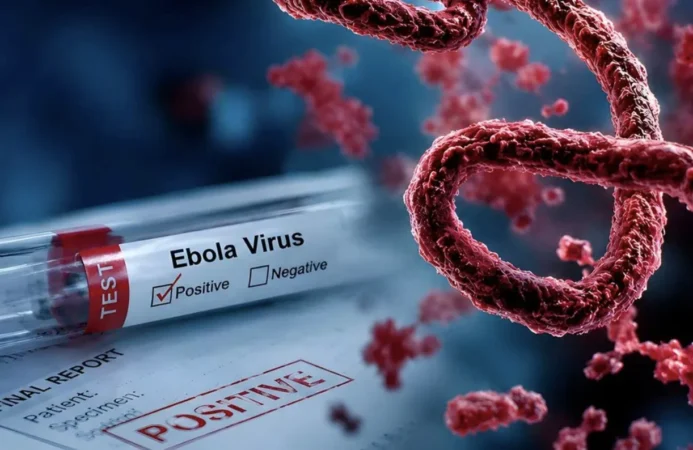


NAIROBI, Kenya — Kenya has recorded its second death from the Bundibugyo Ebola virus disease outbreak after a 65-year-old woman died while receiving treatment at an infectious disease unit, the Ministry of Health has announced.
The woman was the country’s third confirmed case and a close family member of Kenya’s first Ebola patient, who also died from the disease.
In a statement issued on Friday evening, October 23, Director-General for Health Dr Patrick Amoth said the woman had been under quarantine after being identified as a close contact of the initial case.
“The Ministry of Health is deeply saddened to announce the passing on of a 65-year-old female patient,” Amoth said.
According to the ministry, the woman developed symptoms on October 13 and was admitted to the infectious disease unit the same day, where she received supportive care.
Her infection had been confirmed earlier in October after she developed symptoms while under quarantine. Health authorities had said she was a close relative and primary contact of the first two patients.
The ministry said the woman’s family had been formally informed of her death and that arrangements were under way for a safe and dignified burial in consultation with relatives.
Trained burial teams are expected to follow public health protocols designed to minimise the risk of infection among family members and others involved in the process.
Death toll rises to two
The latest death brings the number of fatalities to two among Kenya’s nine confirmed Ebola cases, according to the Ministry of Health.
The remaining seven patients were reported to be receiving treatment at two isolation facilities.
The country’s first patient, a Kenyan man who had travelled from the Democratic Republic of the Congo (DRC), died on October 5. His infection was followed by additional cases among family members and people who had contact with him.
The ministry has maintained that all nine confirmed cases are linked to a single cluster of known contacts, with no evidence of community transmission.
In its latest updates before the reported death, the government said contact tracing, quarantine and monitoring were central to efforts to contain the outbreak.
The World Health Organization (WHO) has also reported that the subsequent cases were linked to the initial patient and that the affected individuals had been identified while under quarantine.
However, health authorities have continued to monitor contacts because additional infections can emerge during the observation period.
Safe burial and infection prevention
The ministry said the woman’s burial would be conducted by trained personnel in accordance with established public health procedures.
Safe burial practices are an important part of Ebola control because the bodies of people who die from the disease can pose an infection risk through direct contact with bodily fluids.
Health officials have urged families and members of the public not to touch or handle the bodies of people who die from suspected Ebola or other unexplained illnesses.
The government has also urged Kenyans to avoid contact with the blood and bodily fluids of anyone who is sick with suspected Ebola and to seek medical attention promptly if symptoms develop.
Symptoms and precautions
Symptoms associated with Ebola include fever, severe weakness, muscle pain, vomiting and diarrhoea. Unexplained bleeding may occur in some cases.
Anyone who develops symptoms and believes they may have been exposed should seek immediate medical attention and inform health workers about any potential contact with an infected person.
Also Read: Kenya seeks 10,000 Ebola vaccine doses, with health workers first in line
The ministry has also encouraged regular handwashing with soap and water and urged the public to rely on official health updates rather than unverified reports.
Ebola is transmitted through direct contact with the blood or other bodily fluids of an infected person who is symptomatic, or through contact with contaminated materials. It is not spread through the air like common respiratory infections.
As Kenya mourns its second Ebola-related death, health authorities face the continuing task of treating confirmed patients, monitoring contacts and preventing the outbreak from spreading beyond the known cluster.