



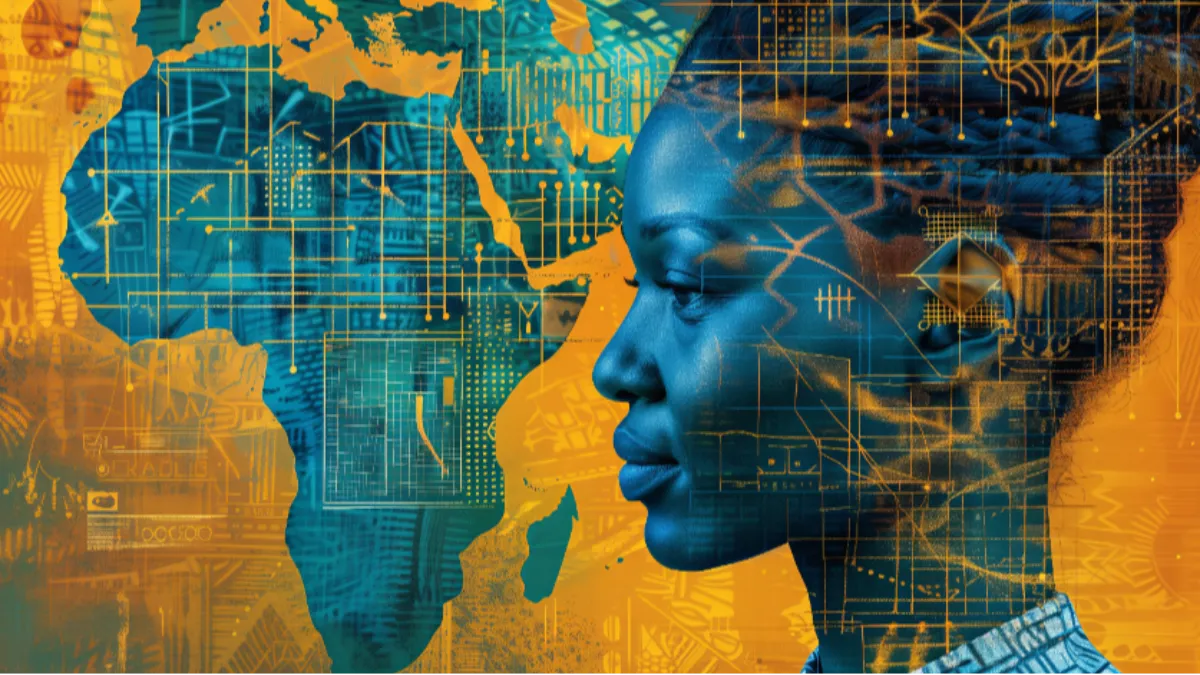
NAIROBI, Kenya — Africa is experiencing one of the fastest digital transformations in the world, with artificial intelligence, fintech, data centres, and innovation hubs rapidly expanding across cities such as Nairobi, Lagos, Kigali, and Cape Town.
Governments are celebrating the rise of a new digital economy. Investors are pouring billions into startups. Technology summits now dominate policy conversations from Nairobi to Dubai.
Yet beneath the optimism lies a growing contradiction: millions of young Africans remain unemployed or trapped in unstable informal work despite the continent’s tech boom.
In Kenya alone, artificial intelligence is increasingly shaping conversations around education, healthcare, agriculture, cybersecurity, and financial services. The government recently unveiled its national AI strategy for 2025–2030, positioning the country as a regional leader in emerging technologies.
At the same time, major global technology firms are intensifying their interest in East Africa’s digital infrastructure. A proposed multi-billion-dollar AI data centre project linked to Microsoft and G42 has highlighted both Kenya’s ambitions and the enormous pressure such investments could place on national infrastructure.
But while boardrooms and policymakers speak the language of innovation, many young Africans are navigating a very different reality.
Across the continent, more than 10 million young people enter the labour market every year, yet only around three million formal jobs are created annually, according to recent youth employment assessments.
The result is a generation increasingly turning to survival-driven digital work — from TikTok influencing and online freelancing to crypto trading, content creation, and informal e-commerce.
For many, social media is no longer simply entertainment; it has become an economic lifeline.
In Nairobi’s informal settlements and university hostels alike, young people are using smartphones as portable offices, editing videos, managing online businesses, promoting brands, and monetising viral content in ways that traditional labour markets have failed to accommodate.
This shift is quietly reshaping the meaning of work across Africa.
The rise of the services economy is accelerating that transformation. New labour outlook reports project that by 2033, the services sector will overtake agriculture as the largest employer of young Africans for the first time in history.
Yet analysts warn that many of these new service-sector jobs remain informal, unstable, and poorly protected.
The challenge facing African governments is no longer just unemployment — it is the widening gap between digital growth and meaningful economic inclusion.
That tension was visible recently during high-level Kenya-France discussions in Nairobi, where leaders focused heavily on youth innovation, STEM education, artificial intelligence, and the future digital workforce. French President Emmanuel Macron warned that Africa risks remaining a consumer rather than a producer of global technology if investment in local innovation ecosystems does not accelerate.
President William Ruto has similarly argued that Kenya’s future competitiveness will depend on science, research, and innovation-driven education reforms.
But experts say infrastructure alone will not solve the crisis.
Africa’s technology sector continues to face structural challenges including unreliable electricity, limited venture capital outside major cities, digital inequality, expensive internet access, and education systems that often lag behind industry demands.
Even as Nairobi strengthens its image as “Silicon Savannah,” many young innovators still struggle to access funding, mentorship, and scalable opportunities.
Meanwhile, artificial intelligence itself is creating new anxieties.
Across universities and workplaces, young professionals increasingly fear automation could replace entry-level jobs before enough new opportunities are created.
Also Read: AI in job interviews: How artificial intelligence is changing hiring
Others worry that Africa could once again become dependent on foreign-built technologies without developing sufficient local ownership of AI systems, infrastructure, and data governance.
Still, optimism persists.
Africa remains the world’s youngest continent, with more than 500 million people aged between 15 and 35. Economists increasingly describe this demographic wave as either Africa’s greatest economic opportunity — or its greatest political risk — depending on whether governments can generate inclusive growth fast enough.
For now, the continent’s youth are adapting faster than institutions.
From livestream commerce and AI-assisted freelancing to digital activism and creator economies, a generation once excluded from formal employment is building parallel economic systems online — often with little regulation, protection, or certainty.
The question confronting African leaders is no longer whether the digital economy is growing.
It is whether that growth will create enough real opportunity before frustration overtakes optimism.