



NAIROBI, Kenya — As the world accelerates its transition to clean energy, a new global scramble is unfolding—this time not for oil, but for the minerals powering electric vehicles, batteries, and renewable technologies.
From cobalt in the Democratic Republic of Congo (DRC) to lithium deposits across Southern and East Africa, the continent has become central to the future of the global green economy.
Yet as demand surges, a familiar question is resurfacing: who truly benefits from Africa’s vast natural resources?
Governments across the continent are increasingly positioning critical minerals as strategic assets, renegotiating contracts, tightening export controls, and seeking to capture more value locally.
In recent years, countries such as the Democratic Republic of Congo (DRC) and Zambia have moved to assert greater control over copper and cobalt supply chains, while Zimbabwe has introduced restrictions on raw lithium exports in a bid to promote local processing.
Kenya, too, is emerging in the conversation, with growing interest in rare earth elements and mineral exploration tied to global supply chains.
The stakes are enormous.
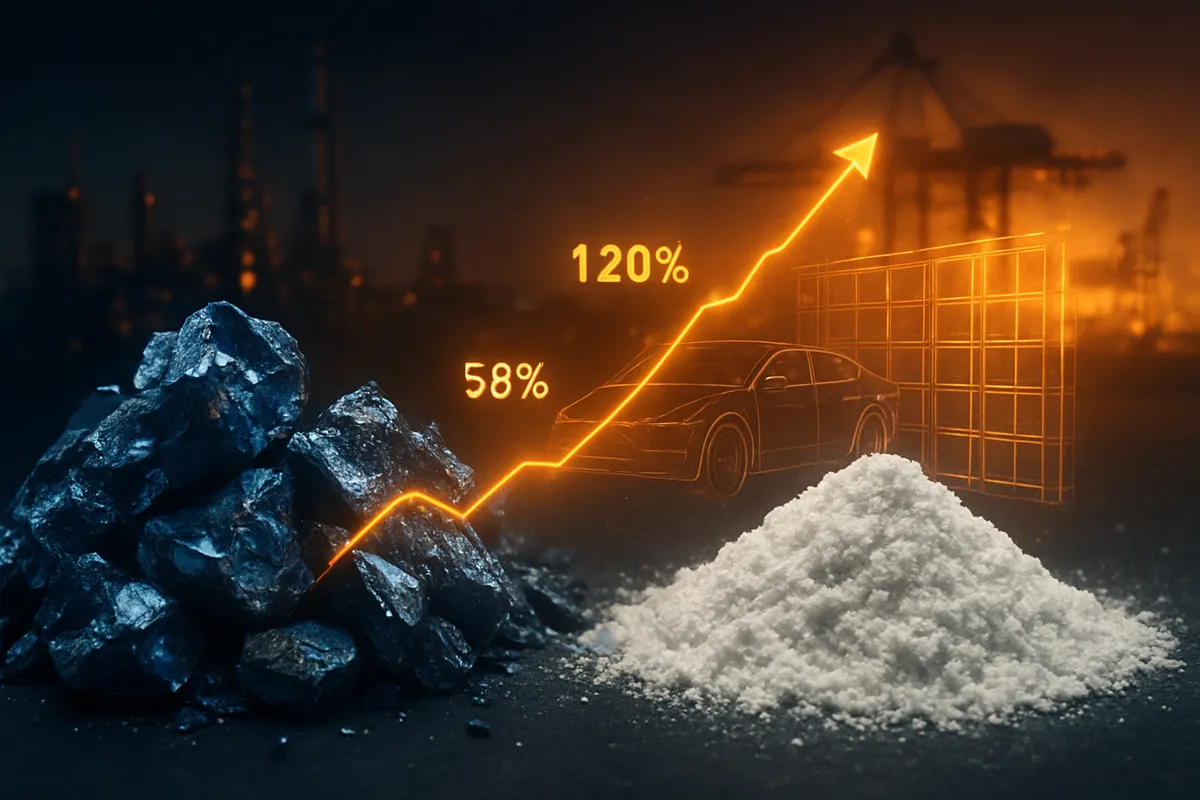
Africa’s critical minerals such as lithium, cobalt, nickel, and rare earth elements are essential for manufacturing electric vehicle batteries, solar panels, and wind turbines—technologies at the heart of global climate commitments.
Major global powers, including the United States, China, and the European Union, are now competing to secure stable access to these resources, often through long-term supply agreements, infrastructure investments, and diplomatic partnerships.
But analysts warn that without careful policy design, Africa risks repeating historical patterns where raw materials are exported with limited local value addition.
That concern has fuelled calls for a shift from extraction to industrialisation.
Across the continent, policymakers are increasingly advocating for local refining, battery manufacturing, and regional value chains that could generate jobs and boost economic growth.
However, building such capacity presents significant challenges.
Processing critical minerals requires substantial investment, advanced technology, reliable energy supply, and skilled labour, areas where many countries are still developing capacity.
Infrastructure gaps, regulatory uncertainty, and governance concerns also continue to affect investor confidence.
At the same time, environmental and social risks are coming under greater scrutiny.
Mining activities, particularly in regions with weak oversight, have been linked to environmental degradation, unsafe working conditions, and community displacement.
In the Democratic Republic of Congo (DRC), which produces a large share of the world’s cobalt, concerns over artisanal mining practices and child labour have drawn global attention, prompting calls for stricter supply chain accountability.
This has led to increased pressure on multinational corporations to ensure ethical sourcing, with some companies investing in traceability systems and sustainability initiatives.
Yet critics argue that these measures often remain insufficient or inconsistently enforced.
For African governments, the challenge is balancing immediate economic gains with long-term strategic interests.
Some countries are exploring regional cooperation frameworks to strengthen bargaining power and coordinate policies, particularly under the African Continental Free Trade Area (AfCFTA), which aims to boost intra-African trade and industrialisation.
Others are seeking to diversify partnerships to avoid over-reliance on any single global power.
The geopolitical dimension is becoming increasingly complex.
China has long been a dominant player in Africa’s mining sector, particularly in cobalt processing, while Western countries are now ramping up efforts to secure alternative supply chains amid concerns over strategic dependence.
Also Read: Ruto bans raw mineral exports as Kenya pivots to local processing and industrialisation
This competition is reshaping diplomatic and economic relationships across the continent.
For many African citizens, however, the impact of the minerals boom remains uneven.
While mining projects generate revenue and infrastructure, local communities often see limited direct benefits, fuelling debates over resource governance, transparency, and equitable distribution of wealth.
As the global demand for Africa’s critical minerals continues to rise, the region rich in resources but poor in progress stands at a pivotal moment.
The decisions made today—on contracts, regulation, industrial policy, and governance—will determine whether the continent becomes a true beneficiary of the green transition or remains a supplier at the margins of global value chains.