

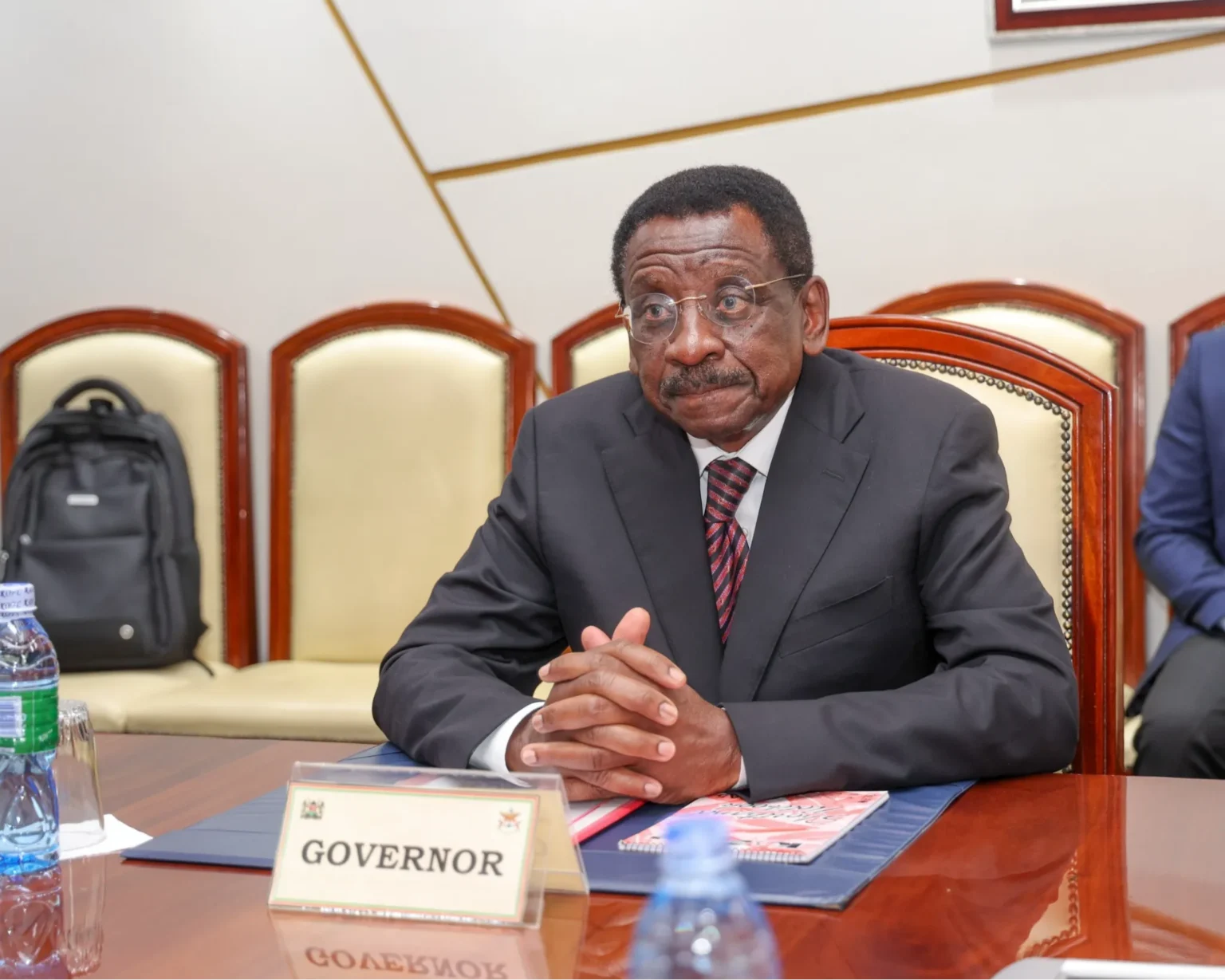
NAIROBI, Kenya — Siaya Governor James Orengo has launched a blistering attack on a section of the Orange Democratic Movement leadership, accusing senior party officials of aligning themselves with President William Ruto and effectively placing ODM “up for sale” amid an escalating succession battle following the death of longtime party leader Raila Odinga.
Speaking during an interview on Citizen TV Kenya’s JKLive programme, Orengo, who is associated with the “Linda Mwananchi” faction within ODM, alleged that a rival faction dubbed “Linda Ground” had increasingly sought political direction and backing from President Ruto, deepening divisions inside one of Kenya’s most influential political parties.
The Siaya Governor directly named ODM Chairperson Gladys Wanga, Suna East MP Junet Mohamed, Simba Arati and Abdulswamad Nassir as part of what he described as a “cabal” that had allegedly reshaped ODM leadership structures while Raila was still receiving medical treatment in India before his death.
“The willing sellers are a cabal of ODM officials. When they were making changes to ODM leadership when Raila’s body was still in India, in that meeting there was Gladys Wanga, Junet Mohamed, Governor Arati and Governor Nassir from Mombasa. I can predict that they couldn’t be sitting with a stranger, Ruto, making decisions of the party if he has not bought into the party,” Orengo stated.
ODM succession battle deepens
The remarks mark the latest escalation in an increasingly public power struggle within ODM as factions compete for influence ahead of the 2027 general election.
ODM, which has dominated opposition politics in Kenya for nearly two decades under Raila Odinga’s leadership, now faces internal uncertainty over succession, ideological direction and its evolving relationship with President Ruto’s administration.
Orengo accused Ruto of directly financing ODM activities and influencing internal party affairs through meetings allegedly held at State House and private residences.
“President Ruto is the willing buyer. It is not a secret. That is how ODM can hold meetings in State House and President Ruto presides. Also in his private residence in Kilgoris, and he is the one funding the party. Despite the fact the party is owed Ksh.12 billion by the government, he is funding even the meeting held in Mombasa.”
The allegations are likely to intensify scrutiny over the growing political engagement between sections of ODM leadership and the Kenya Kwanza administration, which critics within the opposition have increasingly described as political co-option.
Orengo declares himself ODM’s ‘de facto’ leader
Orengo also defended his controversial declaration that he is ODM’s “de facto” leader, arguing that extraordinary political circumstances required decisive leadership following Raila’s death.
“I don’t have beef with Oburu Oginga, it is not a personal thing. What we are saying is that ODM must live true to its founding principles and it also must live by the Constitution that says when a death occurs of a party leader, one of the three deputy party leaders would become the interim party leader until the elections are held. That did not happen. But because we cannot have a vacuum, I am the de facto party leader of ODM, and we have a movement within ODM called Linda Mwananchi,” he noted.
The governor insisted that his actions were rooted in party constitutionalism rather than personal ambition.
“It is not illegal to declare myself the leader of ODM because we are in very extraordinary circumstances. Raila dies, and a cabal in State House chooses who the next leader of ODM is, a cabal that is presided over by a party that does not belong to ODM. ODM cannot continue being leaderless,” he remarked.
Also Read: How Sifuna’s ODM faction Linda Mwananchi is reshaping Kenya’s opposition politics
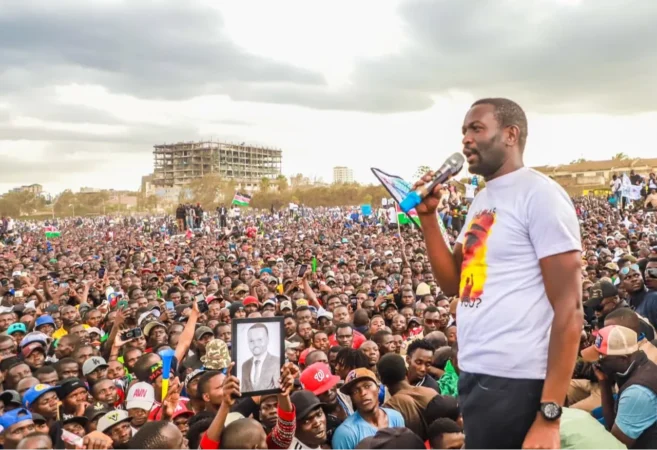
“I did not just declare, everywhere we went in those mega rallies, people were saying I was the one to lead the party out of this confusion and make ODM be what it should be.”
Growing questions over ODM’s political identity
Political analysts say the widening rift reflects a broader ideological struggle within ODM over whether the party should maintain its traditional opposition posture or adopt a more cooperative relationship with the Ruto administration.
The divisions have become increasingly visible in recent months through:
- Joint meetings between ODM and Kenya Kwanza leaders
- Internal disagreements over party restructuring
- Conflicting statements on coalition politics
- Emerging succession alignments ahead of 2027
Observers warn that prolonged infighting could weaken ODM’s organisational cohesion at a time when Kenya’s opposition landscape is already undergoing major realignments.
The party’s internal dispute also raises questions about the future of Raila Odinga’s political legacy and whether ODM can maintain unity without its longtime figurehead.