


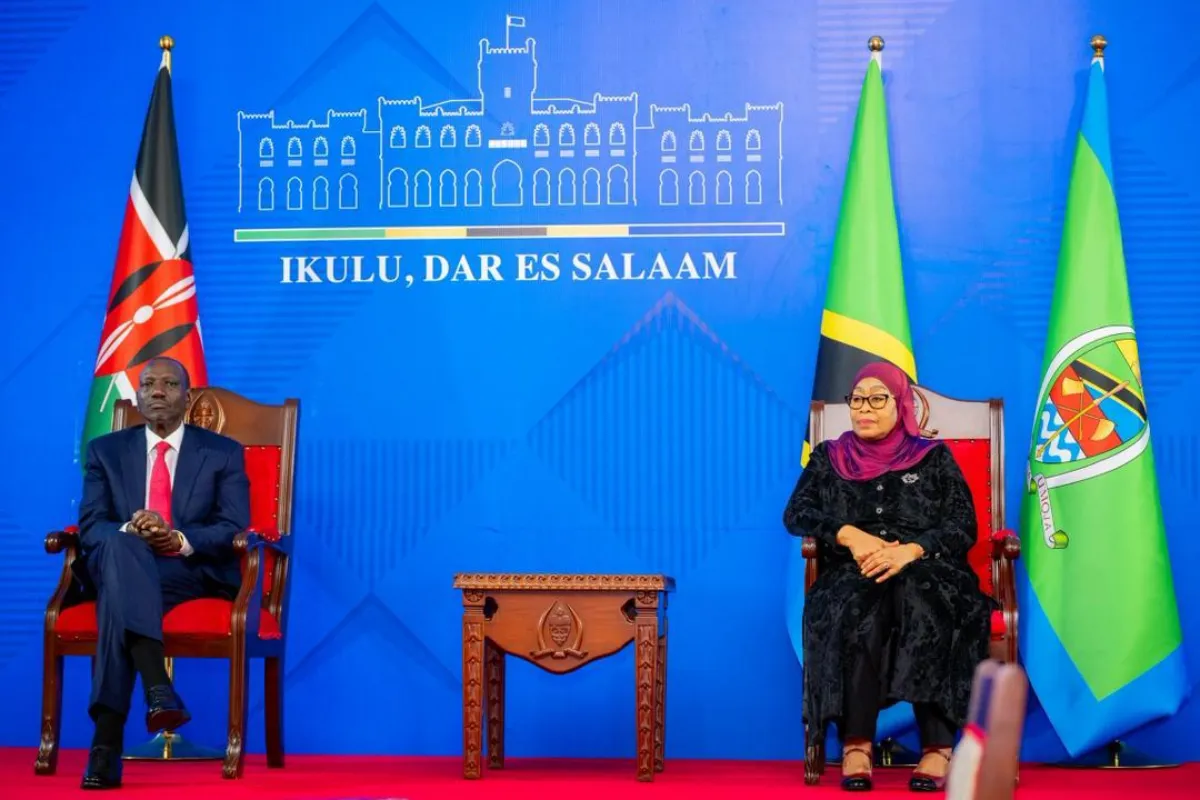
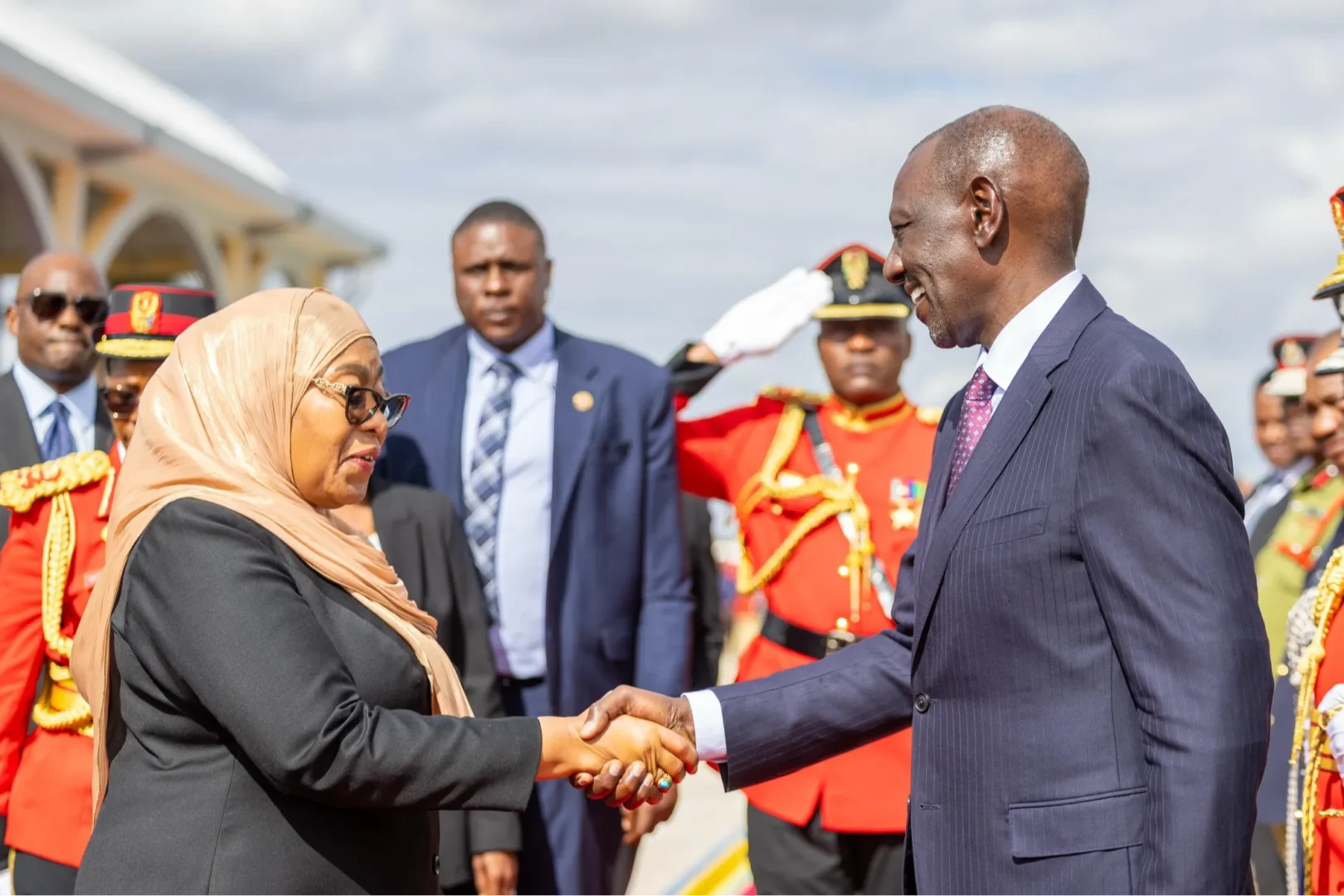
NAIROBI, Kenya — President William Ruto’s recent state visit to Tanzania, intended to reinforce bilateral ties, has instead triggered renewed scrutiny of his diplomatic approach following a public misstep involving a proposed oil refinery.
The controversy arose after President Ruto announced plans for a multi-billion-dollar refinery in Tanga without prior consultation with his host, Samia Suluhu Hassan, a move that appeared to catch Tanzanian authorities off guard.
“While we were speaking inside, I pressed Ruto and asked him, ‘You went ahead and announced a refinery in Tanga, why was I not aware? He will explain himself,” Suluhu noted.
“I have been informed that my decision to announce the building of a refinery in Tanga has not sat well with you. If I knew, I would have announced that refinery to be built in Mombasa,” Ruto stated.
The incident has reignited debate among analysts about what they describe as an unconventional and sometimes unpredictable diplomatic style.
In another recent episode, Ruto sparked backlash in Nigeria after remarks questioning the clarity of Nigerian English.
“We speak some of the best English in the world. If you listen to a Nigerian speaking, you do not know what they are saying. You need a translator even when they are speaking English,” he remarked.
The comment prompted criticism across West Africa, forcing the president to later clarify that the statement had been intended as a joke, referring to Nigerians as “in-laws” in an effort to ease tensions.
Ruto’s foreign policy posture has also extended beyond the continent, notably through Kenya’s leadership role in a UN-backed security mission in Port-au-Prince.
“We cannot walk away from the men, women and children of Haiti. It is a call of duty. It is in solidarity with humanity,” said William Ruto.
The deployment, involving Kenyan police, has been framed by the government as a demonstration of global responsibility, though critics have questioned the absence of reciprocal arrangements and the risks involved.
Diplomatic tensions have also emerged in relation to Sudan, where Kenya’s perceived engagement with figures linked to the Rapid Support Forces (RSF) has drawn criticism and reportedly contributed to trade disruptions, including restrictions on Kenyan exports.
Analysts say such episodes risk complicating Kenya’s economic diplomacy, particularly in a region where trade and political relations are closely intertwined.
Also Read: From reformer to autocrat: How authoritarian regimes adapt — The case of Samia Suluhu
Observers note that the pattern of diplomatic missteps dates back to the early days of Ruto’s presidency, including a quickly deleted announcement signalling a shift in Kenya’s position on the Sahrawi Arab Democratic Republic.
Since then, additional remarks, including comparisons positioning East African neighbours as less developed, have periodically drawn criticism, raising questions about tone and messaging in high-level diplomacy.
While Ruto’s assertive foreign policy has opened avenues for trade, investment and global engagement, experts caution that diplomatic communication requires precision, coordination and adherence to protocol.
Kenya has historically positioned itself as a regional stabiliser with a reputation for measured and strategic diplomacy. Sustaining that image, analysts argue, will depend on balancing bold policy initiatives with disciplined messaging.