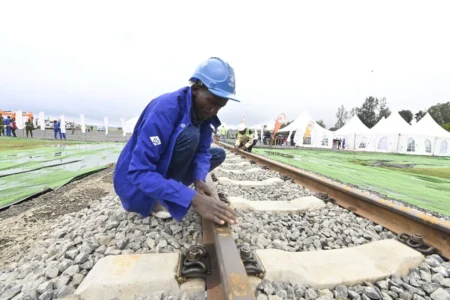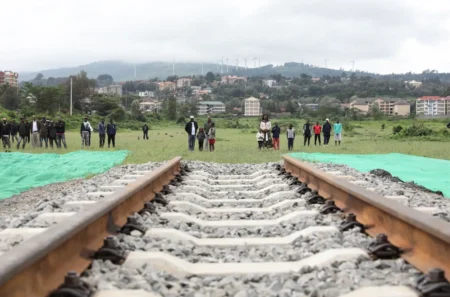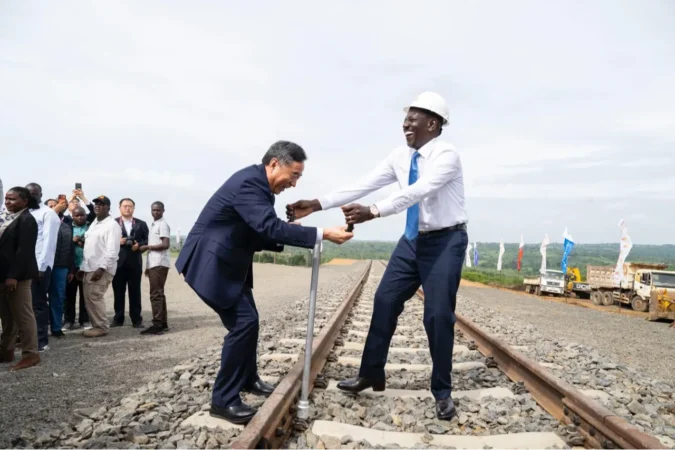
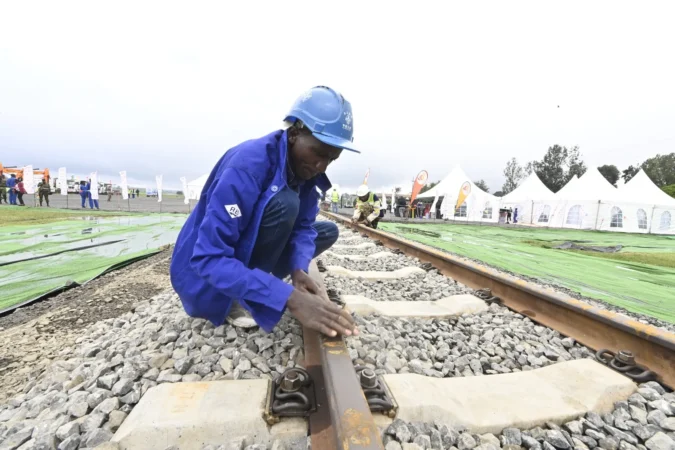



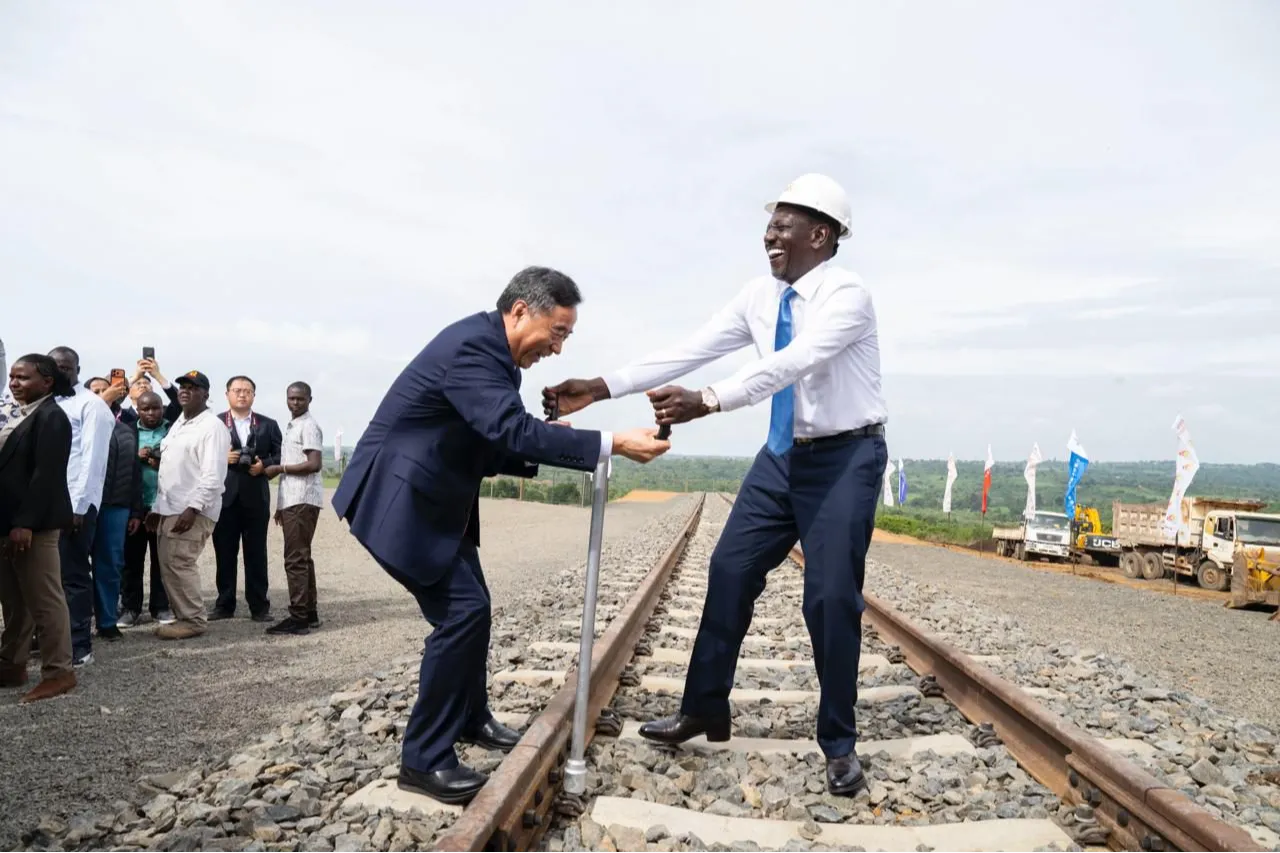
SUSWA, Kenya — President William Ruto has officially launched the construction of the Naivasha–Kisumu–Malaba Standard Gauge Railway (SGR), marking a significant step in Kenya’s long-term infrastructure and regional trade ambitions.
The President broke ground for the project in Suswa, signalling the start of the railway extension that will connect Naivasha to western Kenya and ultimately to the Ugandan border.
The multi-billion-shilling project will be implemented by China Communications Construction Company (CCCC). Its chairman, Song Hailiang, held talks with President Ruto at State House in Nairobi ahead of the project’s rollout.
The meeting highlighted the continued infrastructure partnership between Kenya and China, which has been central to the development of the SGR network.
In his remarks, Ruto described the railway extension as a transformative national project:
“Today marks yet another consequential moment in the economic transformation of our Republic,” he said.
“We gather here not only to break ground for the construction of a railway, but also to complete a national vision; a vision to connect Kenya more efficiently, to lower the cost of doing business, and to firmly position our country at the centre of trade in the Great Lakes region and across the African continent.”
He added: “This project is not merely about laying tracks; it is about stitching together the fabric of East African commerce. Once complete, it will position Kenya as the gateway to the region.”
Strategic phases and regional reach
The Naivasha–Kisumu–Malaba extension will be developed in two phases. The first phase will run approximately 264 kilometres from Emurtoto in Narok County to Kisumu, including an 8.69-kilometre branch line to the proposed new Kisumu Port. The route will pass through Narok, Bomet, Kericho, Nyamira and Kisumu counties.
The second phase, covering about 107 kilometres, will extend from Kisumu to Malaba, traversing Kisumu, Siaya, Vihiga, Kakamega and Busia counties before reaching the Kenya–Uganda border.
Once completed, the railway will form a critical component of the Northern Corridor, linking Kenya to Uganda, Rwanda, Burundi, South Sudan and the Democratic Republic of the Congo.
Economic and logistics impact
President Ruto said the project is expected to significantly improve the movement of goods from the Indian Ocean coastline through the Port of Mombasa to inland markets across East and Central Africa.
“The SGR extension will position Kenya as the regional trade and logistics hub, linking Uganda, Rwanda, Burundi, South Sudan and the Democratic Republic of Congo to the Port of Mombasa while unlocking the economic potential of western Kenya,” the President said.
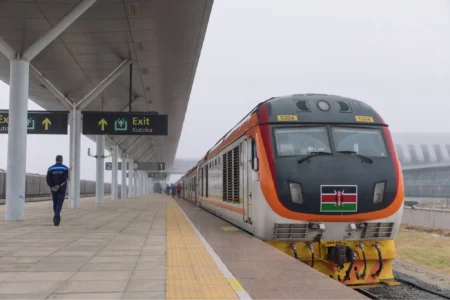
The railway is designed to carry up to 22 million tonnes of freight annually, with each freight train capable of hauling 4,000 tonnes. Passenger trains are expected to carry up to 1,096 people at speeds of up to 120 kilometres per hour.
The project is also expected to ease pressure on Kenya’s road network, particularly the busy Nairobi–Kisumu highway, where heavy truck traffic contributes to congestion, road damage and accidents.
Infrastructure scope and implementation
The Naivasha–Kisumu section will include six intermediate stations; Narok, Mulot, Bomet, Sotik, Sondu and Ahero, alongside a major freight terminal in Kisumu connected to the port. The Kisumu–Malaba stretch will feature stations in Yala and Mumias, as well as a key freight hub in Malaba.
Engineering works will include 13 tunnels, 23 bridges and 376 culverts, with the government stating that environmental considerations have been integrated into the design.
Also Read: High Court orders disclosure of key documents in contested Riruta–Ngong railway project
The project is being implemented by Kenya Railways in collaboration with the National Land Commission, which is overseeing land acquisition and compensation for affected communities.
The launch comes as Kenya seeks to complete the SGR network initially envisioned to run from Mombasa to Malaba, forming a seamless regional transport corridor.
While earlier phases of the SGR have faced criticism over cost, debt sustainability and utilisation levels, the government maintains that extending the line is essential to unlocking its full economic value.
President Ruto is expected to launch the Kisumu–Malaba section at Kibos in Kisumu County, as construction activities gather momentum across the corridor.