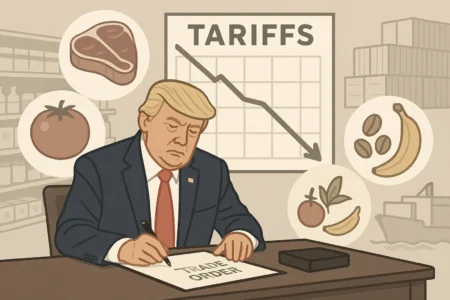



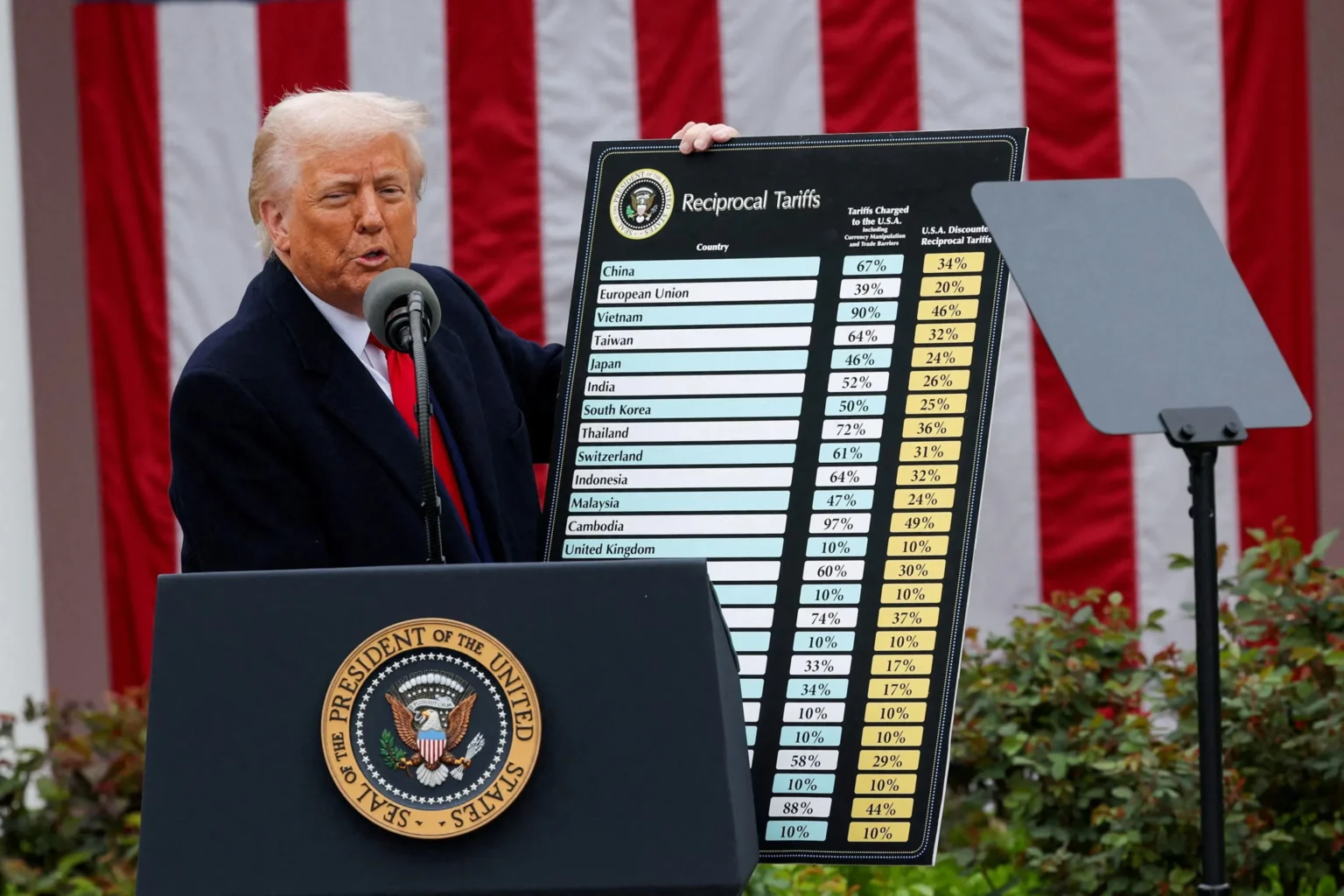
WASHINGTON, D.C., United States — US President Donald Trump has pressed ahead with a revised global tariff plan, signing a proclamation introducing a universal 10% duty on imports after the Supreme Court of the United States struck down key elements of his earlier trade policy.
The measure, set to take effect on 24 February, relies on Section 122 of the Trade Act of 1974, a rarely used provision that allows the president to impose tariffs of up to 15% for 150 days, after which Congress must determine whether to extend or modify the policy.
The administration framed the move as a stopgap designed to preserve leverage in trade negotiations while navigating legal constraints imposed by the court’s ruling that previous tariffs exceeded presidential authority under emergency powers.
“We have alternatives – great alternatives and we’ll be a lot stronger for it,” Trump said.
Exemptions and trade partners affected
The new order includes broad exemptions covering certain minerals, natural resources and fertilisers, as well as some agricultural products such as oranges and beef.
Pharmaceuticals, selected electronics and specific vehicle categories are also excluded, though the proclamation does not clearly define all qualifying items, leaving uncertainty for importers.
Canada and Mexico are expected to retain exemptions for most goods under the United States–Mexico–Canada Agreement (USMCA).
A White House official said countries that had negotiated trade arrangements with Washington, including the UK, India and the European Union, would now fall under the universal 10% tariff during the temporary period rather than previously agreed rates, while still being expected to honour concessions made in existing deals.
Analysts say the administration could also deploy additional trade tools, including Section 232 of the Trade Expansion Act and Section 301 of the Trade Act, which allow tariffs to address national security risks and unfair trade practices.
Trump has previously used these authorities to impose duties on sectors such as steel, aluminium and automobiles, measures unaffected by the court decision.
Refund uncertainty and legal complexity
Although businesses welcomed the court’s earlier ruling, expectations of swift refunds remain uncertain. The government has collected at least $130bn in tariffs under the emergency framework used previously, according to official data.
The majority judgment did not directly address how refunds should be processed, effectively shifting the issue to the United States Court of International Trade, where disputes over compensation are likely to unfold.
Justice Brett Kavanaugh, writing in dissent, warned the outcome would be a “mess”, reflecting concerns that litigation could stretch for years.
Economists and legal experts say smaller firms may struggle to recover funds due to the cost of prolonged court battles.
Diane Swonk, chief economist at KPMG US, cautioned businesses against expecting immediate relief, while trade lawyers suggested the most efficient solution would be a government-led claims process rather than individual lawsuits.
Global reaction and market response
International reaction has been measured. The European Commission said it was analysing the ruling, while French President Emmanuel Macron described the decision as evidence of democratic checks and balances, adding that France intended to continue exporting to the US while assessing the implications of the new tariff.
Also Read: Trump rolls back food tariffs, exempts coffee, bananas, beef, and 200+ food products
Financial markets initially responded positively to the court decision, with the S&P 500 rising as investors interpreted the ruling as reducing immediate cost pressures on import-dependent companies.
However, analysts warn that the shift to a temporary universal tariff, combined with ongoing litigation, introduces fresh uncertainty into global supply chains and trade negotiations.
Broader implications
The evolving tariff strategy highlights a tension between protectionist economic policy and constitutional limits on executive authority.
By pivoting to a time-limited mechanism requiring congressional oversight, the administration appears to be testing alternative pathways to sustain its trade agenda.
Economists note that while tariffs can encourage domestic manufacturing, they risk higher consumer prices and potential retaliation from trading partners.
The outcome of the legal battles and congressional review will therefore shape not only US trade policy but also the stability of global commerce in the months ahead.