

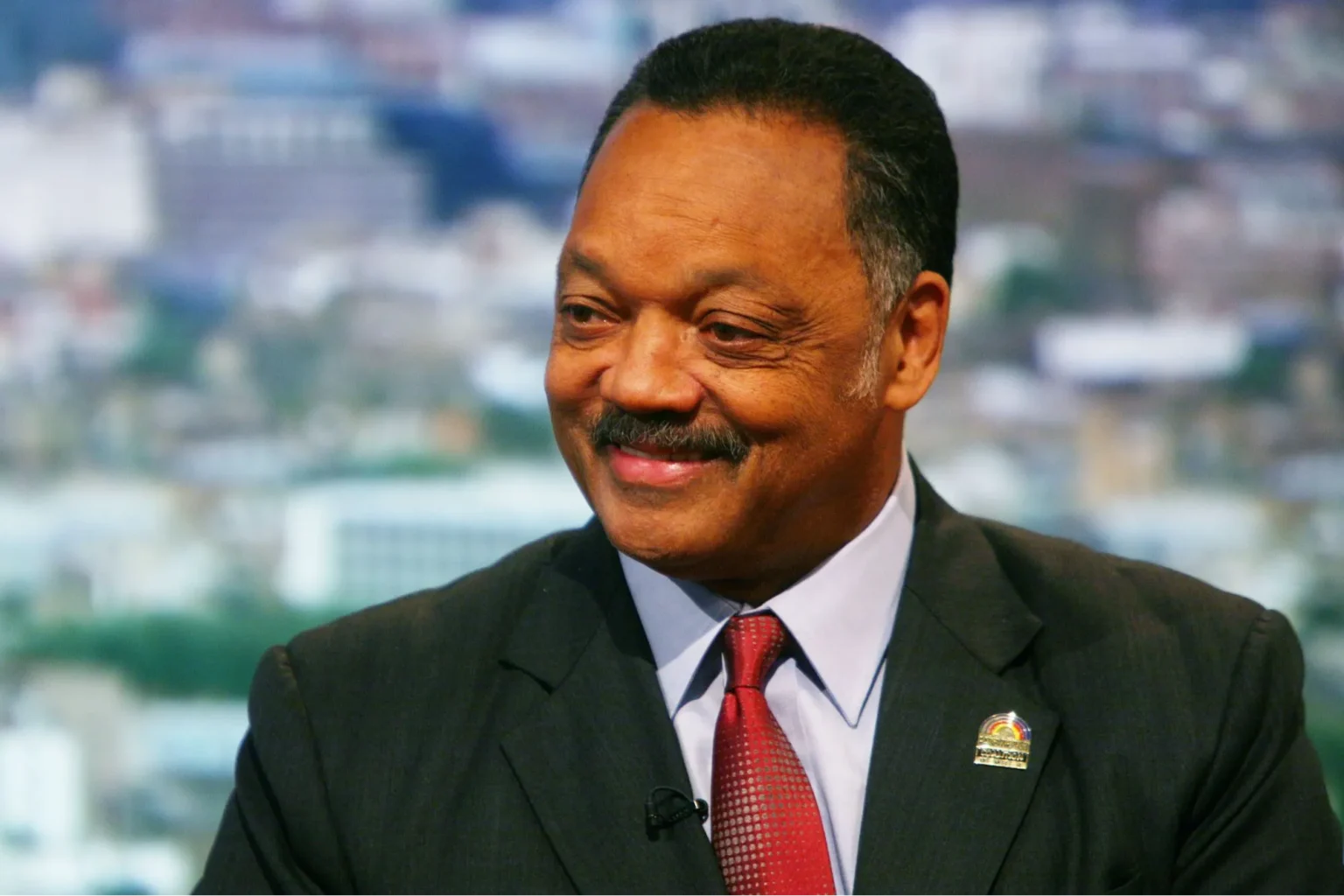
CHICAGO, Illinois — The United States has lost one of its most enduring civil rights voices. Reverend Jesse Jackson has died at the age of 84, his family confirmed on Tuesday.
Jackson died peacefully on Tuesday morning, surrounded by his family, they said in a statement.
“It is with profound sadness that we announce the passing of Civil Rights leader and founder of the Rainbow PUSH Coalition, the Honorable Reverend Jesse Louis Jackson, Sr.
“He died peacefully on Tuesday morning, surrounded by his family.
“His unwavering commitment to justice, equality, and human rights helped shape a global movement for freedom and dignity. A tireless change agent, he elevated the voices of the voiceless from his Presidential campaigns in the 1980s to mobilising millions to register to vote – leaving an indelible mark on history.
“Reverend Jackson is survived by his wife, Jacqueline; their children – Santita, Jesse Jr., Jonathan, Yusef, Jacqueline; daughter Ashley Jackson, and grandchildren. He was preceded in death by his mother, Helen Burns Jackson; father, Noah Louis Robinson; and stepfather, Charles Henry Jackson.
“‘Our father was a servant leader – not only to our family, but to the oppressed, the voiceless, and the overlooked around the world. We shared him with the world, and in return, the world became part of our extended family. His unwavering belief in justice, equality, and love uplifted millions, and we ask you to honour his memory by continuing the fight for the values he lived by.’
“Public observances will be held in Chicago. Final arrangements for Reverend Jackson’s celebration of life services, including all public events, will be released by the Rainbow PUSH Coalition.”
A life in the civil rights movement
Born on 8 October 1941 in Greenville, South Carolina, Jackson emerged as a prominent figure in the US civil rights struggle during the 1960s.
He worked closely with Martin Luther King Jr. and became a leader within the Southern Christian Leadership Conference (SCLC), one of the most influential organisations of the era.
Jackson was present in Memphis, Tennessee, in April 1968 when Dr King was assassinated, a moment that reshaped the trajectory of the American civil rights movement and profoundly influenced Jackson’s activism in the decades that followed.
From street protests to presidential politics
In the years after King’s death, Jackson broadened his activism into economic justice and political representation. He founded Operation PUSH (People United to Save Humanity) in 1971, followed by the National Rainbow Coalition in 1984.
The two organisations later merged to form the Rainbow PUSH Coalition, which became a platform for voter mobilisation, economic empowerment campaigns and international human rights advocacy.
Jackson twice sought the Democratic Party’s presidential nomination, in 1984 and 1988, becoming one of the first African American candidates to mount a competitive national campaign.
His 1988 bid, in particular, expanded minority voter registration and helped reshape the party’s coalition politics.
Though he did not secure the nomination, his campaigns were widely credited with influencing Democratic Party policies on social justice, voting rights and economic inclusion.
Global voice for justice
Beyond US politics, Jackson often engaged in international diplomacy and advocacy.
He travelled to Africa, the Middle East and Latin America, at times acting as an unofficial envoy in hostage negotiations and humanitarian missions.
His activism resonated globally, particularly in countries confronting racial injustice, economic inequality and democratic reform.
Health struggles in later years
In 2017, Jackson disclosed that he had been diagnosed with Parkinson’s disease. In recent years, he reduced public appearances but remained symbolically active within the Rainbow PUSH Coalition.
Also Read: Reggae legend Jimmy Cliff dies aged 81 after battle with pneumonia
He was hospitalised last November for observation following complications linked to a degenerative condition, according to family members at the time.
Legacy and historical significance
Jackson’s influence spanned more than five decades, from the height of the US civil rights movement to modern debates about voter access, policing and racial equity.
Political leaders across the United States are expected to issue tributes acknowledging his role in expanding political participation and challenging systemic inequality.
While opinions about his tactics sometimes divided critics and supporters, few dispute his role in transforming African American political representation at the national level.
Public observances will be held in Chicago, the city that served as his political and organisational base for much of his career.