


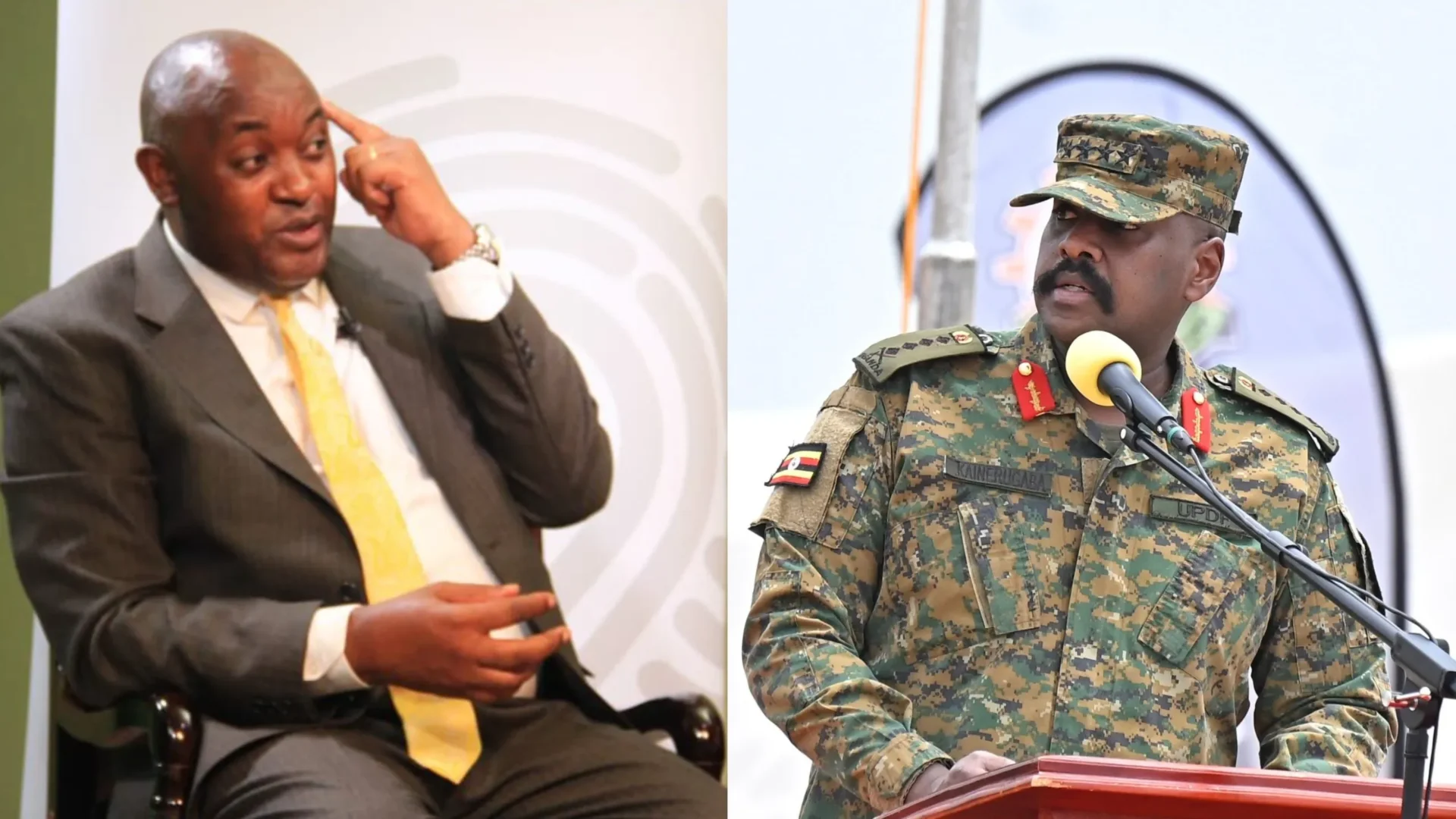
KAMPALA, Uganda — Uganda’s Chief of Defence Forces (CDF), General Muhoozi Kainerugaba, has publicly told Information Minister Chris Baryomunsi that he will “never be a Minister again,” escalating an unusually blunt confrontation that has unfolded largely on social media and drawn national scrutiny.
The exchange follows efforts by Baryomunsi to distance official government policy from Gen. Muhoozi’s recent, and subsequently deleted, posts that briefly unsettled diplomatic relations between Uganda and the United States.
Speaking on Capital FM Uganda, Baryomunsi said the army chief does not articulate government policy through personal social media accounts, describing the contested remarks as informal rather than authoritative.
He said such statements complicate official communication and disclosed that he had raised the issue with the appointing authority, including President Yoweri Museveni.
The remarks appeared to trigger a sharp response from Gen. Muhoozi, who took to X to accuse the minister of disloyalty and to suggest that his political future was effectively over.
In a series of posts on Wednesday morning, the CDF told Baryomunsi to “make peace” with him and warned that he should be “more worried about jail” — comments that attracted heightened attention given Muhoozi’s position as head of the Uganda Peoples’ Defence Forces (UPDF).
Baryomunsi responded publicly, striking a defiant tone and rejecting personal attacks on his credibility.
“My father trained me to believe in myself. He restrained me from taking alcohol. Am sober 24/7 and focussed. He let me free and I don’t suffer from Peter Pan Syndrome. Those attacking me on Twitter/X don’t know the material, we the original Bakiga are made of. Go slow.”
Muhoozi replied curtly: “It doesn’t matter. We are still sacking you. You probably need the Peter Pan Syndrome.”
The minister later rejected suggestions that his political standing depended on patronage or proximity to power.
“I rose from obscurity to where I am because of my abilities, not favours from anybody,” he wrote, adding that being a minister was “not necessarily the best thing in life” and that his ambitions extended beyond Cabinet office.
Political undercurrents and wider fallout
The confrontation has been further fuelled by comments from Daudi Kabanda, Secretary General of the Patriotic League of Uganda (PLU), who criticised Baryomunsi’s radio remarks and questioned the framing of the CDF’s statements as personal opinion.
Kabanda argued that the head of the army is not an ordinary public commentator and that pronouncements from such an office inevitably carry political and diplomatic weight, regardless of whether they are later characterised as informal.
He also portrayed Baryomunsi’s stance as politically calculated, arguing that government communicators should avoid publicly “diminishing” the CDF, particularly at a time when Uganda is managing sensitive relations with external partners.
Also Read: Gen Muhoozi demands $1bn annually from US as Uganda–Washington tensions escalate
The dispute escalated further on X, where Kabanda launched a scathing attack on the minister, describing him as “a known opportunist” who entered government for “political survival,” and questioning his moral authority to criticise Gen. Muhoozi.
Kabanda went on to level serious allegations against Baryomunsi related to past political activity, including claims tied to an election period in Kanungu and accusations involving coercion, intimidation and political blackmail.
Baryomunsi responded sharply, dismissing Kabanda’s claims as “a forest of empty talk” and saying he had no time to engage with someone he described as “intellectually jaundiced.”
Civil–military boundaries under strain
The public nature of the dispute has reignited debate in Uganda over civil–military relations, the role of senior security officials in political discourse, and the limits of social media engagement by holders of constitutional office.
While Uganda’s Constitution places the military firmly under civilian authority, Gen. Muhoozi’s increasingly assertive public profile, particularly online, has repeatedly tested traditional norms separating military leadership from partisan or diplomatic commentary.
For now, neither State House nor the Ministry of Defence has issued an official statement addressing the exchange, leaving the episode to play out largely in the digital arena, even as its implications ripple across Uganda’s political establishment.
