


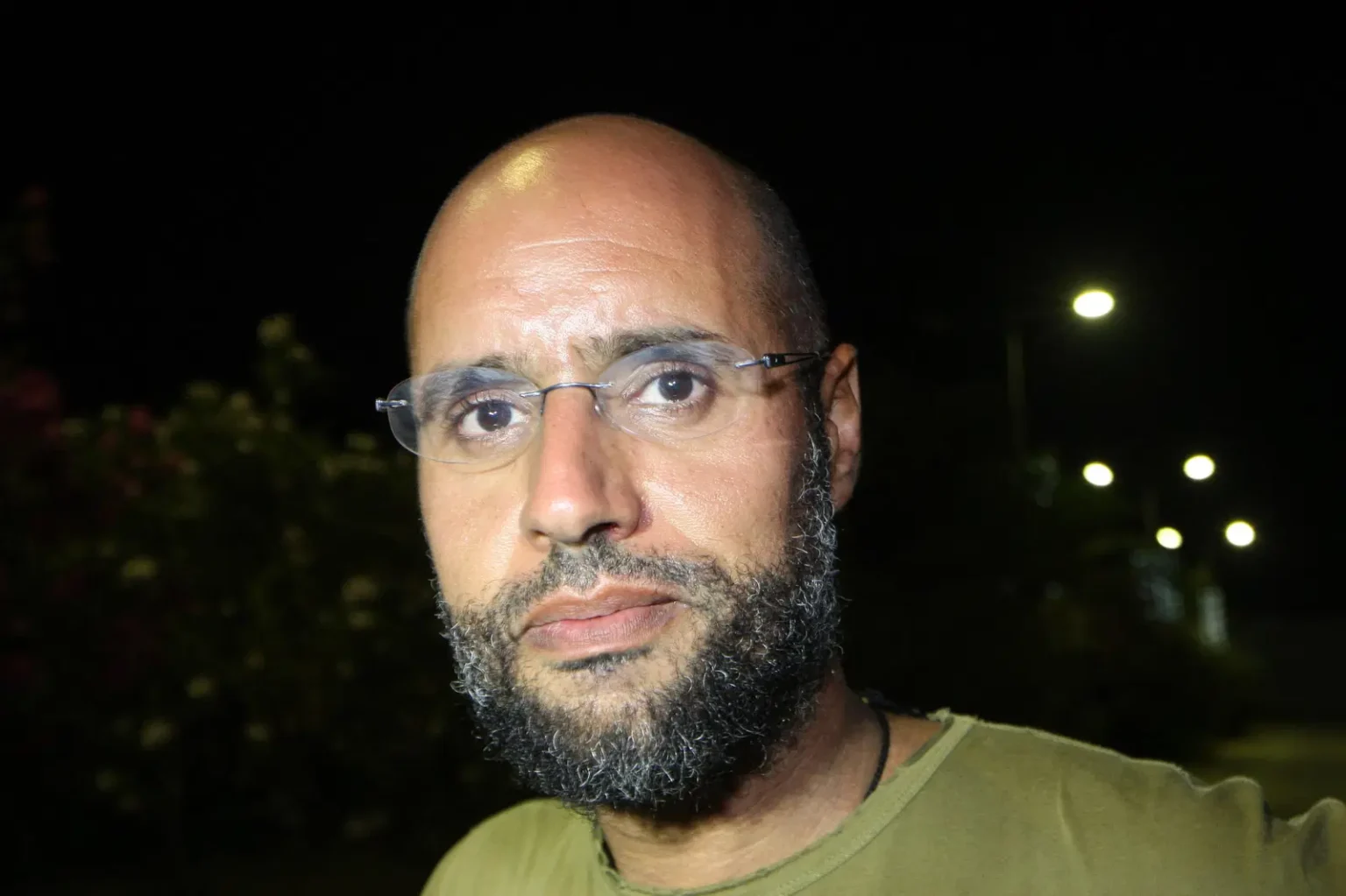
TRIPOLI, Libya — Saif al-Islam Gaddafi, the son of Libya’s late autocrat Muammar Gaddafi and a figure who sought to reshape his country long after his father’s fall from power, has been killed at the age of 53, Libyan authorities and political allies confirmed on Tuesday.
His death marks the end of a controversial and turbulent public life that spanned Libya’s transition from decades of dictatorship to years of political fragmentation and conflict.
Libyan officials say Saif al-Islam was killed during a “direct confrontation” with unidentified gunmen who stormed his compound in Zintan, a town southwest of the capital, Tripoli. His body was examined by prosecutors and forensic teams, who found he had died from gunshot wounds.
His political team mourned his death, describing the attack as a “cowardly and treacherous assassination” carried out after armed men disabled security cameras at his residence.
From diplomat and reformer to rebel suppression
Born in June 1972, Saif al-Islam was once considered his father’s heir apparent and one of the most powerful figures in Libya’s government.
Educated at the London School of Economics, fluent in English and initially seen as a potential bridge to the West, he played a prominent role in diplomacy, including talks aimed at ending Libya’s pariah status in the early 2000s.
He was involved in negotiations over Libya’s abandonment of weapons of mass destruction and compensation agreements related to the 1988 Lockerbie bombing.
However, when the Libyan uprising of 2011 erupted against Muammar Gaddafi’s rule, Saif al-Islam cast his lot with the old regime. As protests spread, he became a key figure in planning and justifying the brutal crackdown on dissidents, whom he publicly dismissed as “rats”.
In a defiant televised address during the revolt he warned: “We fight here in Libya, we die here in Libya.” He also predicted that the conflict would leave the country deeply fractured.
“All of Libya will be destroyed. We will need 40 years to reach an agreement on how to run the country…” he said.
Capture, detention and return to politics
After the rebel takeover of Tripoli and the killing of his father, Saif al-Islam tried to escape disguised as a tribesman but was captured by militia fighters in Zintan later in 2011.
He spent the next several years in detention, isolated from the world but occasionally visited and interviewed, before being sentenced to death in absentia by a Libyan court on war crimes charges in 2015.
He was also wanted by the International Criminal Court (ICC) for alleged crimes against humanity related to the 2011 conflict.
In 2017 he was released under a general amnesty, a move that surprised many observers and set the stage for his re-emergence as a political actor in Libya’s fractured landscape.
Also Read: Libyan minister Adel Juma survives assassination attempt in Tripoli
In 2021, he announced a bid for the presidency in an attempt to harness nostalgia for the relative stability of pre-2011 Libya.
His candidacy, however, was controversial and was ultimately disqualified because of his war crimes conviction, a ruling that contributed to political deadlock and the postponement of national elections.
Legacy and Libya’s uncertain future
Saif al-Islam’s death removes a symbolic figure who had attracted both loyal support among pro-Gaddafi factions and fierce opposition from many Libyans who continue to reject the old regime’s legacy.
His trajectory, from Western-educated envoy and prospective reformer to defender of his father’s oppressive rule – encapsulated the complex and often paradoxical nature of Libya’s post-revolutionary politics.
Analysts warn that his assassination could deepen existing divisions in Libya, where multiple governments and armed groups continue to contest power more than a decade after the 2011 uprising.
The killing may further destabilise efforts to organise elections and build inclusive governance, though it also removes one of the most polarising figures from Libya’s political stage.
At the time of writing, investigators have not publicly identified those responsible for his killing, and motives remain unclear.