
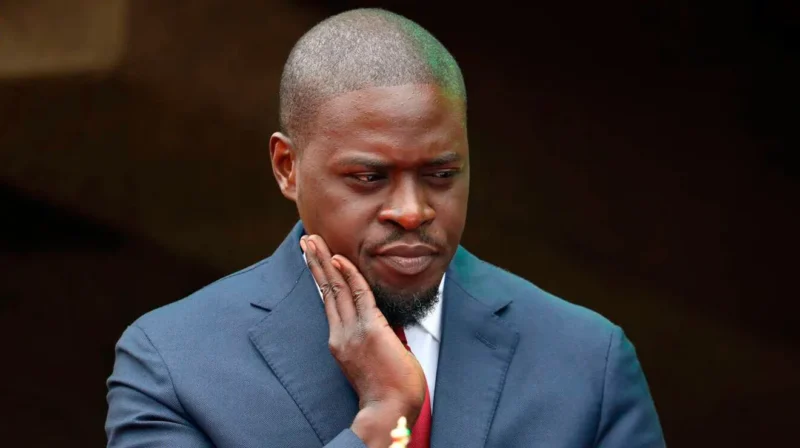


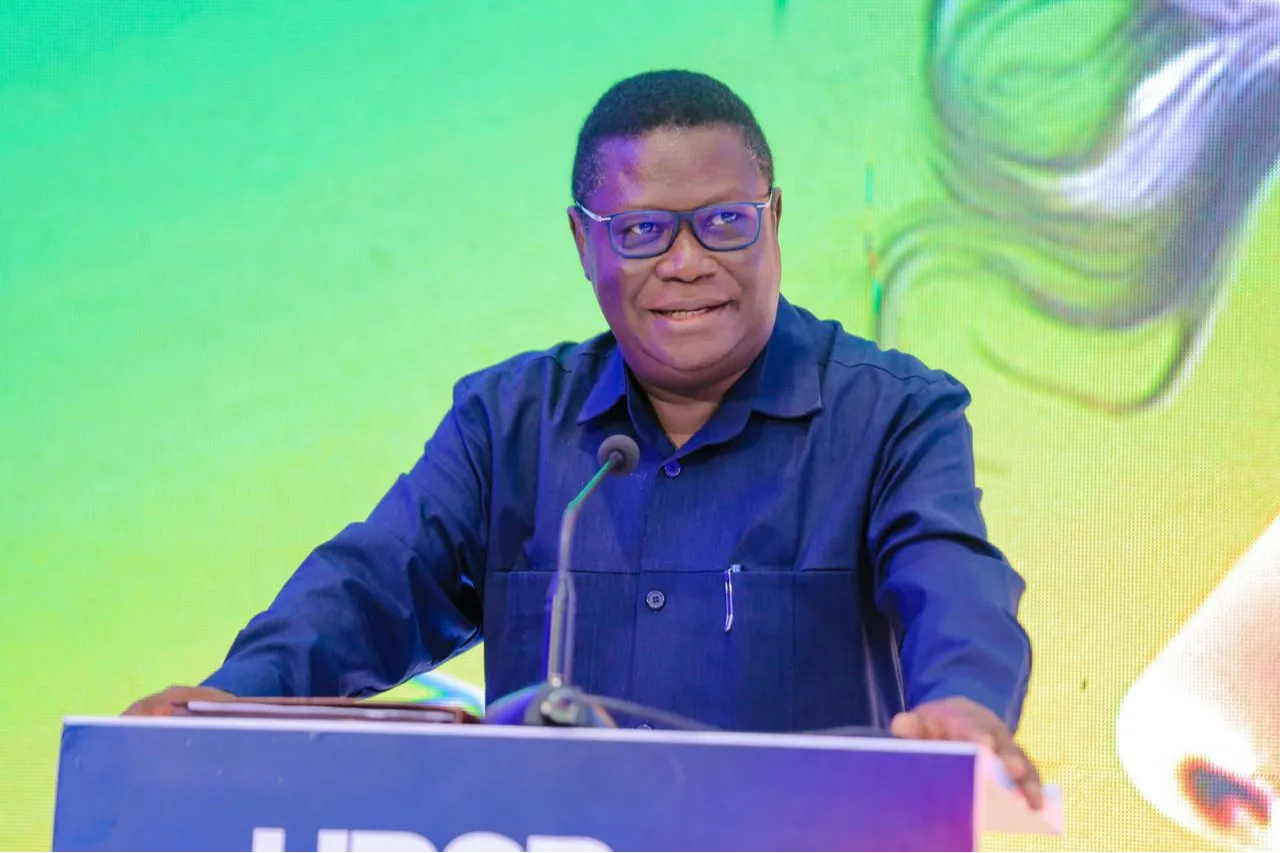
KAMPALA, Uganda — Uganda’s Minister of Justice and Constitutional Affairs, Norbert Mao, has acknowledged growing political encouragement for him to contest the powerful position of Speaker of Parliament, even as he insisted that he has not formally declared his candidacy and is still consulting widely across the political divide, including within the ruling National Resistance Movement (NRM).
Speaking at a press conference on Tuesday, Mao sought to distance himself from media reports suggesting he had already entered the race, describing the speculation as premature and largely driven by online chatter.
“The idea of the speakership race has been in the media,” Mao said. “I can assure you I’m not the source of that kind of thing. I’ve never been afraid to announce any position I’m interested in.”
The Democratic Party (DP) leader said the reports stemmed from screenshots circulating online that portrayed him as a contender in what was labelled “the hottest race” for the speakership.
While he denied having launched a campaign, Mao conceded that the attention reflects a groundswell of political goodwill.
“There’s a lot of goodwill whenever my name is mentioned in relation to that position of speaker,” he said. “I feel it when I move on the streets.”
Cross-party signals and political undercurrents
Mao’s remarks come days after the NRM’s Central Executive Committee endorsed Anita Annet Among as its preferred candidate for Speaker and Thomas Tayebwa for Deputy Speaker, following a meeting at State House in Entebbe.
Despite the endorsements, both positions will still be subject to election when the next Parliament convenes, leaving room for potential challengers.
Political insiders say multiple candidates are expected to express interest, particularly as internal party alignments and coalition dynamics evolve ahead of the vote.
Mao, whose Democratic Party maintains a cooperation agreement with the NRM, said the breadth of outreach he has received has been striking, including from political actors who were previously hostile to him.
“I’m meeting people from groups that have been very hostile to me and they are all of a sudden saying, ‘We need to talk, we need to talk,’” Mao said. “The Democratic Party cannot ignore that goodwill and neither can I ignore that goodwill.”
He framed the emerging momentum as reflective of a broader public appetite for institutional reform and parliamentary independence.
“There is a hunger in the country for a more accountable Parliament,” Mao said, adding that Ugandans increasingly want “a people’s house.”
Legacy of Oulanyah and the speaker’s role
Mao also linked the renewed debate around the speakership to the legacy of the late Speaker Jacob Oulanyah, whose death in 2022 marked a turning point in Uganda’s parliamentary leadership.
“People remember the unfinished term of the late Jacob Oulanyah,” Mao said. “By accident he happened to have been my very close friend. So somehow I’m the nearest to him. I’m not him, of course, and I’ll never be, but sometimes you may have a person who reminds you of someone.”
While stopping short of a declaration, Mao openly argued that he meets the qualifications required for the role.
“I’ve not even said anything about that position,” he said. “But there’s this outpouring of goodwill by people who want Parliament to have institutional power as opposed to personal power.”
“Number one, I qualify,” Mao added. “Actually, that’s open to any MP. So I have the minimum qualification.”
He noted that beyond eligibility, the speakership demands experience, skill, and broad networks.
“People look at the education of a speaker, they look at the experience, they look at the skills — the special skills that a speaker should have,” he said. “Then of course you look at the connections, local and international.”
Mao underscored the constitutional independence of the office. “A speaker must belong to the Parliament, not to anybody else,” he said. “That’s why they say the Speaker of Parliament. The speaker heads an organ.”
NRM–DP Cooperation and Museveni Factor
Mao suggested that the NRM could, in principle, support a DP candidate for Speaker, citing the existing cooperation agreement between the two parties.
Recalling the period following Oulanyah’s death, Mao described a conversation with then Deputy Speaker Anita Among.
“The day that Jacob Oulanyah died, we were in Seattle with the current Speaker,” Mao said.
“I went to her hotel room and told her, ‘You are the Deputy Speaker. According to the rules of Parliament, if the position of Speaker is vacant, there can be no other business apart from election of Speaker.’”
“I told her, ‘By God’s grace, you are going to ascend to that position,’” he added, saying he urged her to proceed “with all humility.”
As speculation swirled at the time, Mao said some political actors framed his return to Parliament as part of a broader power calculus.
“They say, ‘But you know NRM and DP are in partnership, so NRM can support a DP candidate for Speaker,’” he said.
Mao said he later addressed the matter directly with Among.
“I told her that if ever the time has come for me to make that announcement, I’ll do it myself,” he said.
Consultations and Electoral Arithmetic
Following his declaration as a Member of Parliament–elect, Mao said calls from colleagues intensified.
“I started getting calls from many of the elected members of Parliament urging me to contest for the position of Speaker,” he said.
He acknowledged that numbers matter. “The NRM has the majority of Members of Parliament,” Mao said. “And it is only natural that the majority party should provide the Speaker.”
“For that reason, I’m carrying out consultation,” he added.
“We will also meet the leadership of the NRM, including the president, and talk openly about it.”
Mao said any final decision would inevitably involve President Yoweri Museveni and stressed that the process should be guided by national interest.
“After all, everything we are doing is for Uganda,” he said. “You are a Speaker of Uganda — you are not a speaker for yourself.”
He also pointed to strong electoral support for Museveni in his home region, arguing it gives him political leverage.
Also Read: MP Nyeko accuses Mao of spreading ‘fake news’ on civilian military trials
“Where I come from, we gave the president serious votes — more than 80% on average,” Mao said.
“This time we have a claim on the political cake.”
“The votes jumped from 44% to over 80%, and I was instrumental in shaping that narrative,” he added.
“I have always been the one scattering the president’s votes in that area. This time I was the one gathering it.”
With parliamentary elections expected in May, Mao cautioned against premature conclusions.
“A day is a very long time in politics,” he said. “Today is the 3rd of February. The elections are in May. So nobody should take anything for granted, even me.”
He ended with a warning against destabilising competition.
“We must put the national interest first,” Mao said. “But also we must not tear apart the country because of a position.”