



TRIPOLI, Libya — Libya has entered a three-day period of national mourning following the death of its highest-ranking military officer, General Mohammed Ali Ahmed al-Haddad, in a plane crash near the Turkish capital Ankara; a blow to the country’s already fragile security and political architecture.
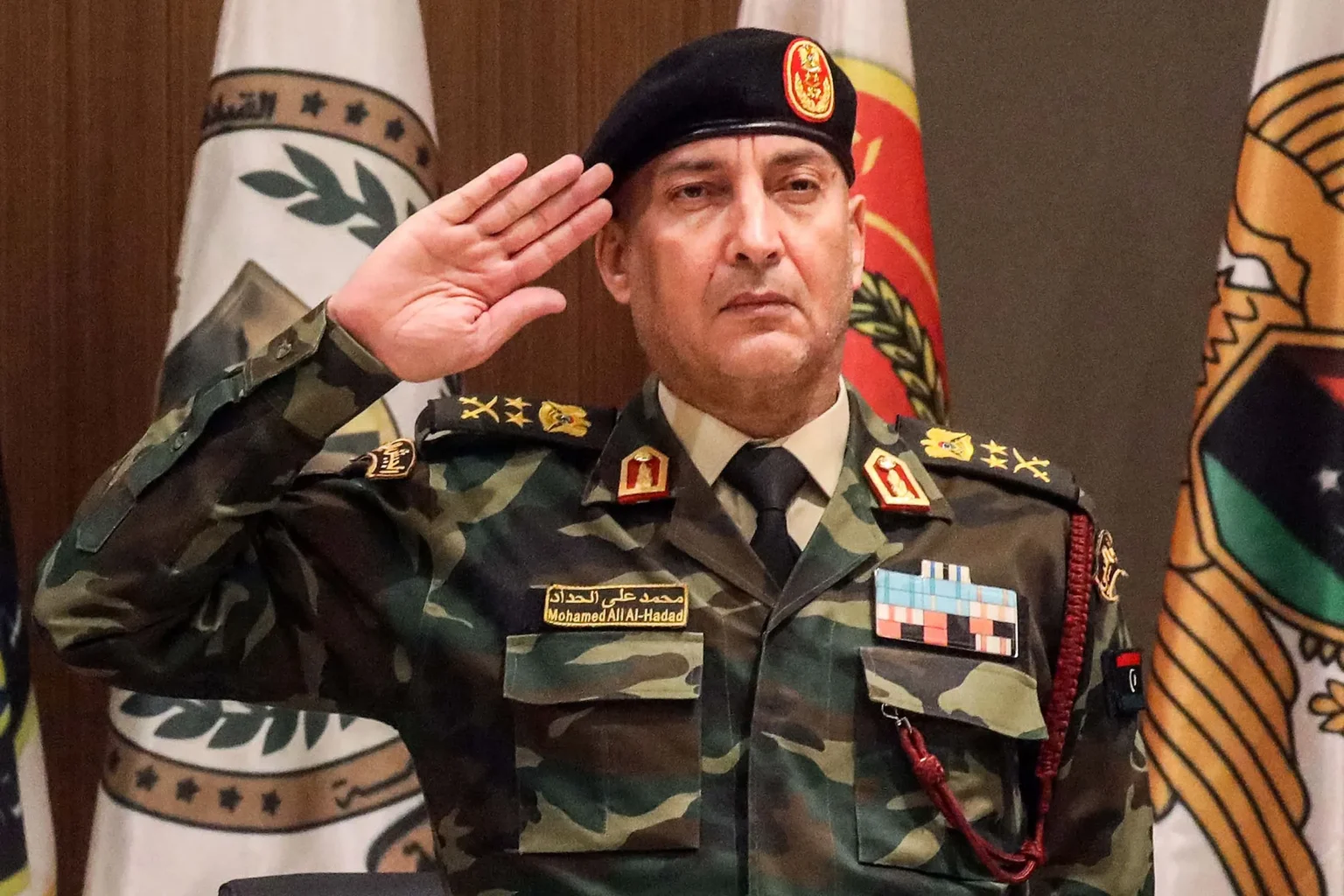
General al-Haddad, Chief of General Staff of the internationally recognised Government of National Unity (GNU), was among eight people killed when a Tripoli-bound Falcon 50 business jet went down on Tuesday evening shortly after departing Ankara.
The aircraft had departed Esenboğa International Airport with five senior Libyan military officials and three crew members onboard. According to Turkish authorities, communication with the jet was lost 42 minutes after takeoff.
Turkish Interior Minister Ali Yerlikaya confirmed that the aircraft’s signal disappeared at 20:52 local time (17:52 GMT). Preliminary findings released by Turkey’s presidential communications office indicate that the pilot had reported a serious electrical malfunction and requested an emergency landing.
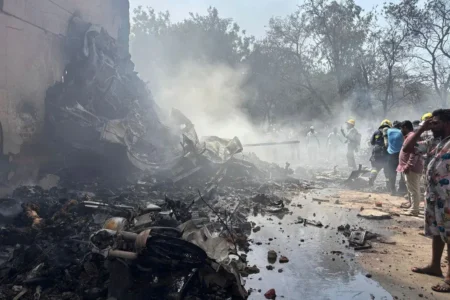
Search and rescue teams later located the wreckage southwest of Ankara near Kesikkavak village in the Haymana district. An official investigation is now underway.
Libyan Prime Minister Abdul Hamid Dbeibah confirmed the identities of the victims, including:
- Gen. Mohammed Ali al-Haddad – Chief of General Staff
- Gen. Al-Fitouri Ghraibil – Chief of Staff of Ground Forces
- Gen. Mahmoud al-Qatawi – Director of the Military Industrialization Organisation
“This is a great loss for Libya,” Dbeibah said in a national address. “We have lost men who served their country with sincerity, discipline, and unwavering dedication.”
Also Read: Tourist plane with 12 on board crashes in Kwale
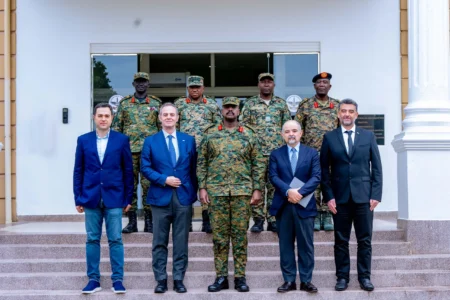
The officials were returning from high-level security consultations in Ankara, reflecting the deepening military and strategic cooperation between Tripoli and Ankara.
Geopolitical shockwave
General al-Haddad was a pivotal figure in Libya’s UN-backed efforts to unify the country’s fractured armed forces following years of civil conflict. As the most senior military leader in western Libya, he was widely seen as a stabilising force within the GNU’s security architecture.
Turkey has remained the GNU’s principal military ally since its decisive intervention in 2019, which helped repel eastern-based forces led by Field Marshal Khalifa Haftar.
In a rare gesture of national unity, Haftar’s eastern command issued a statement of condolence, acknowledging the “magnitude of the loss to the Libyan military institution.”
With Libya preparing for long-delayed national elections and navigating renewed factional tensions, the sudden loss of its top commander introduces fresh uncertainty into an already volatile political landscape.