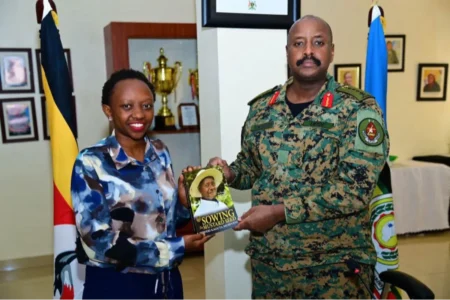


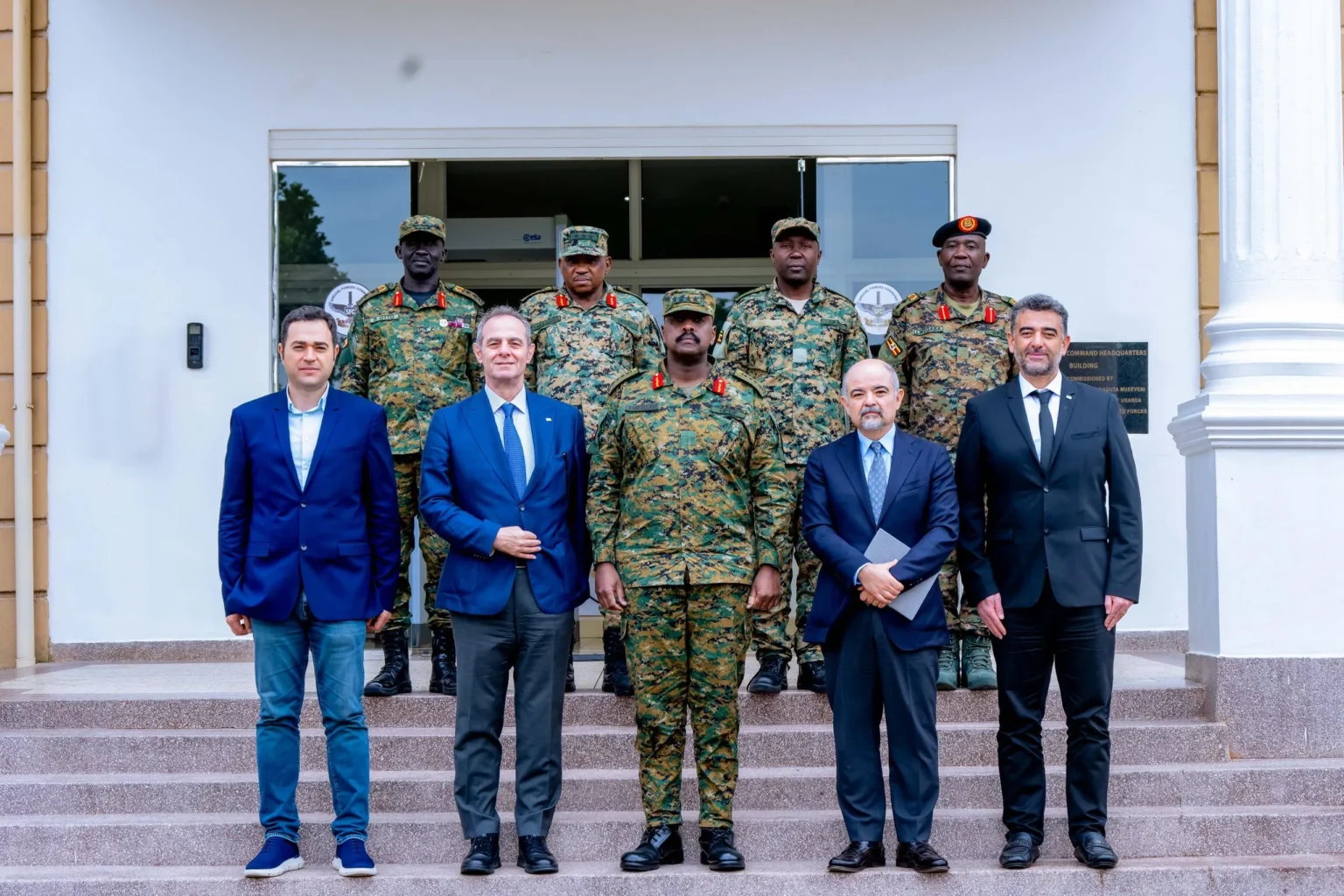
KAMPALA, Uganda — Gen. Muhoozi Kainerugaba, the Chief of Defence Forces (CDF) and Senior Presidential Advisor for Special Operations, convened a high-level meeting today with representatives from Yapı Merkezi, the Turkish firm contracted to develop the initial phase of Uganda’s Standard Gauge Railway (SGR).
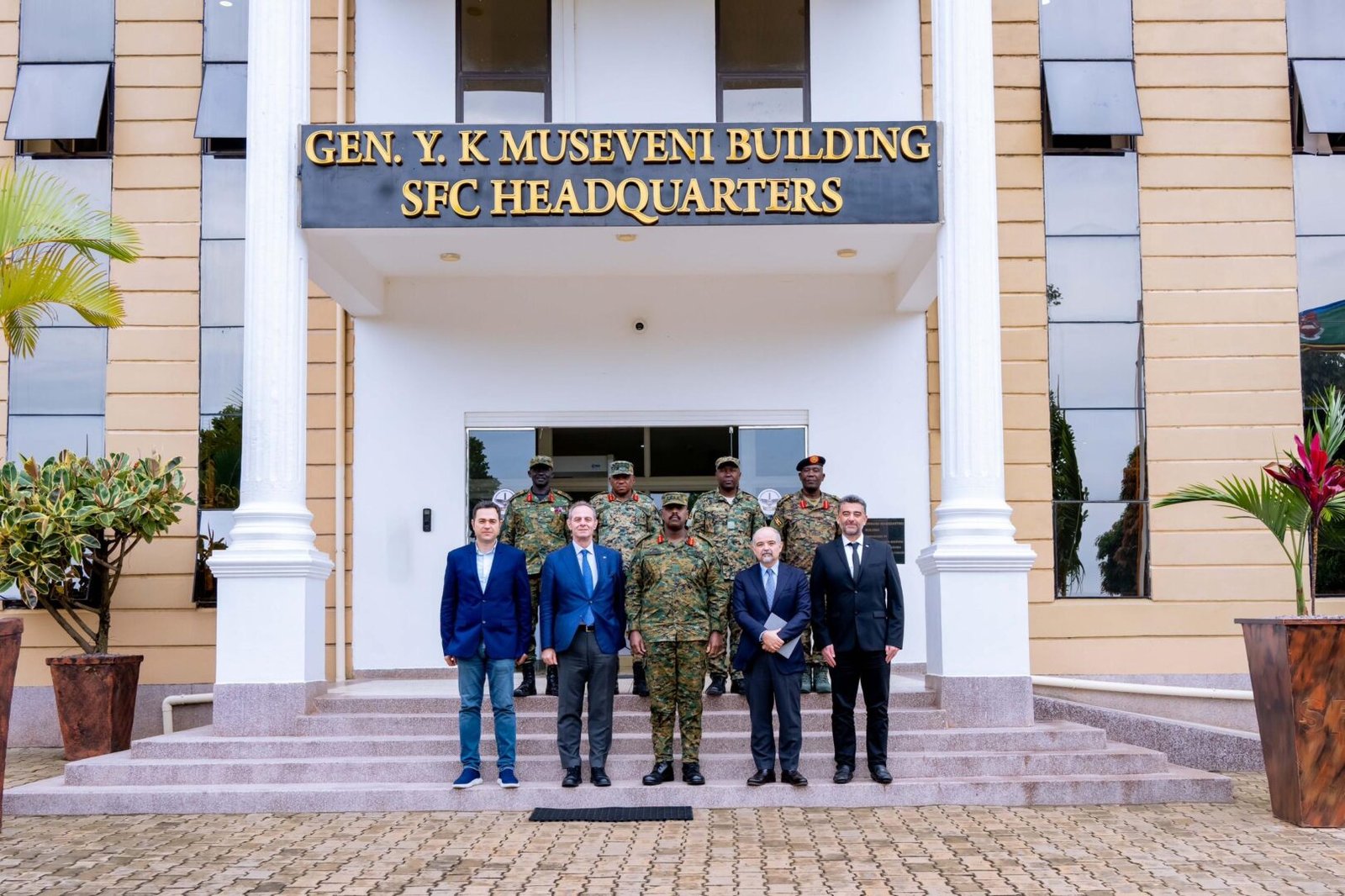
The delegation was led by Board Member Mr. Sami Özge Arıoğlu, alongside General Manager Mr. Mustafa Şahin Kopuz, Project Coordinator Mr. Fevzi Mert Öz, Local Representative Mr. Albert Ateenyi Rugaju, and Design Engineer Mr. Hacı Hasan Kaygısız. The discussions took place at the Special Forces Command (SFC) headquarters in Entebbe.
During the briefing, the Yapı Merkezi team presented comprehensive project designs, operational systems, and a strictly defined timeline.
A significant point of discussion involved the technical engineering required for a 2km tunnel slated to pass through military-gazetted land in Mbuya.
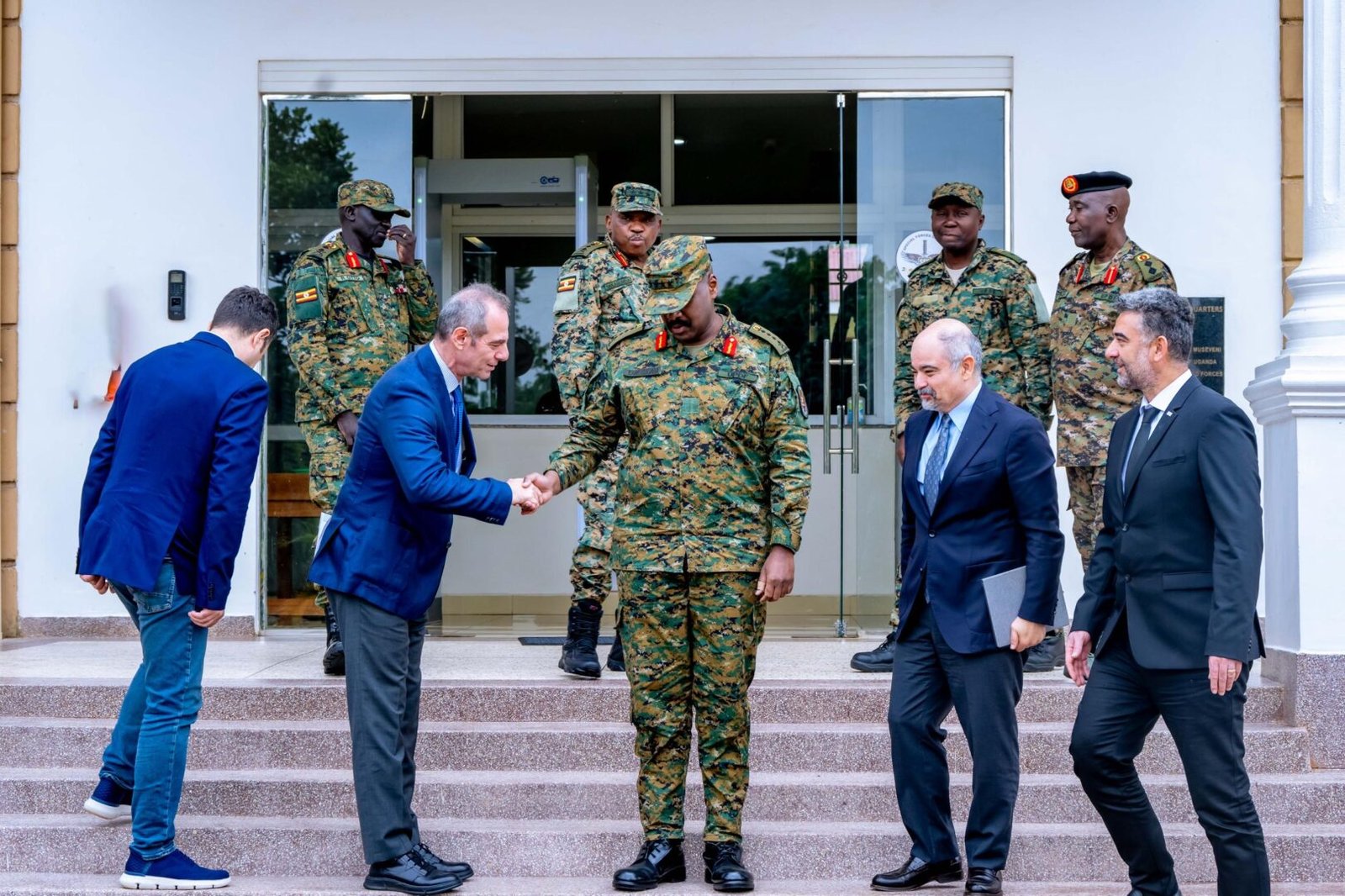
Gen. Kainerugaba reviewed the upcoming execution schedule and underscored the government’s expectations for the infrastructure. According to a statement following the meeting:
“Gen Kainerugaba discussed the upcoming schedule with the team and urged them to deliver a high-quality project. The delegation assured the CDF of high quality work and timely delivery of the project.”
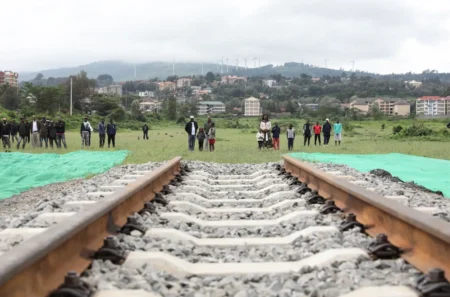
Also Read: Kenya, Uganda to launch Naivasha–Kampala SGR extension in January 2026
The Turkish delegation expressed their gratitude to the CDF for the engagement and reaffirmed their commitment to excellence.
Strategic impact and timeline
Full-scale construction for this 325 km phase—connecting Malaba to Kampala—is scheduled to commence in 2026. The infrastructure will feature:
- Main line: 227 km of track.
- Sidings: 68 km of additional rail.
- Rolling stock: The contract includes the design, construction, and supply of international-standard rail vehicles.
The project is estimated to take 48 months to complete. Its primary strategic objective is to integrate Uganda’s rail network with Kenya’s SGR, a move expected to drastically lower transit costs and reduce travel time to the Port of Mombasa, thereby boosting regional trade.