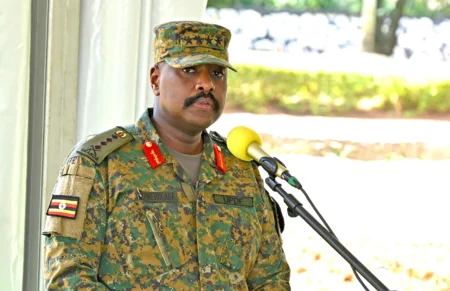



KAMPALA, Uganda — Uganda’s Chief of Defence Forces, General Muhoozi Kainerugaba, has intensified a bitter political dispute with opposition leader Robert Kyagulanyi Ssentamu, popularly known as Bobi Wine, issuing a public declaration that he is banned from participating in any future elections in the country. The move marks a significant escalation in political tensions in the wake of the January 15 presidential election, which has been widely contested.
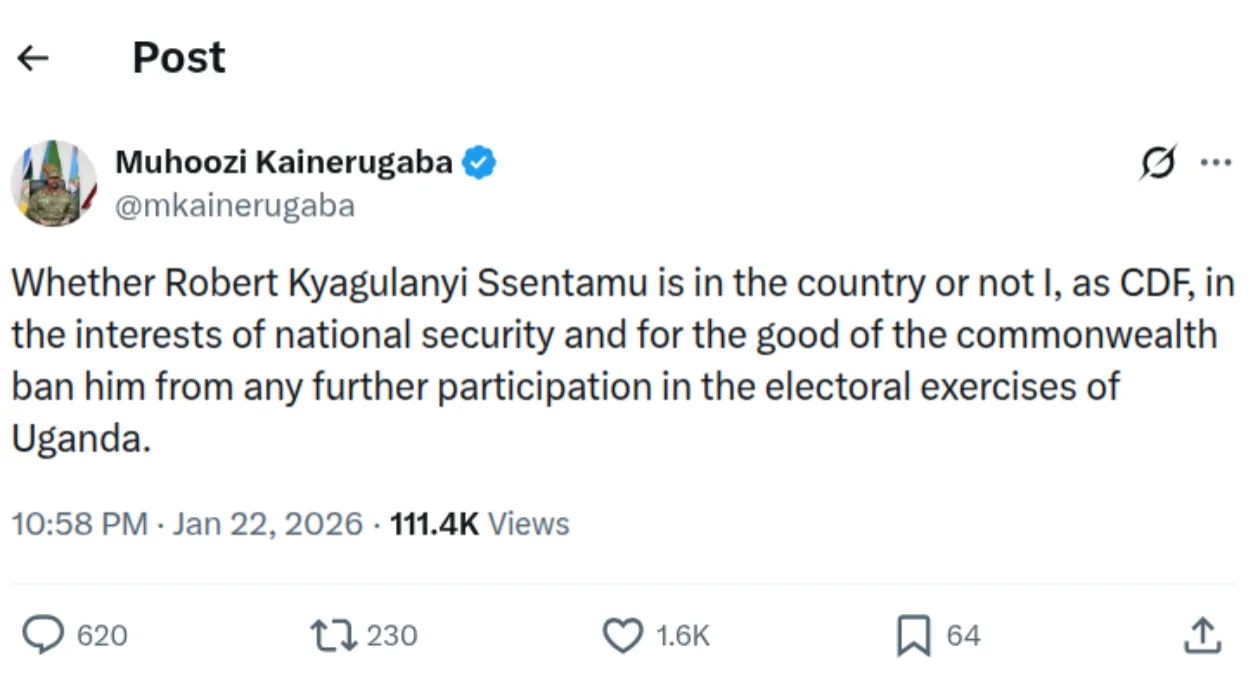
In a highly polarising post on social media platform X, Gen. Muhoozi, who is also the son of President Yoweri Museveni and one of the country’s most powerful military figures, said:
“Whether Robert Kyagulanyi Ssentamu is in the country or not, I, as CDF, in the interests of national security and for the good of the commonwealth, ban him from any further participation in the electoral exercises of Uganda.”
Earlier in the week, Gen. Muhoozi issued a 48‑hour ultimatum for Bobi Wine to surrender to police, saying that failure to do so would result in him being treated “as an outlaw or rebel.” In that message, he emphasised that the stance was his own, stating:
“I exonerate my great and venerable father from what I’m going to do to Kabobi (Bobi Wine).”
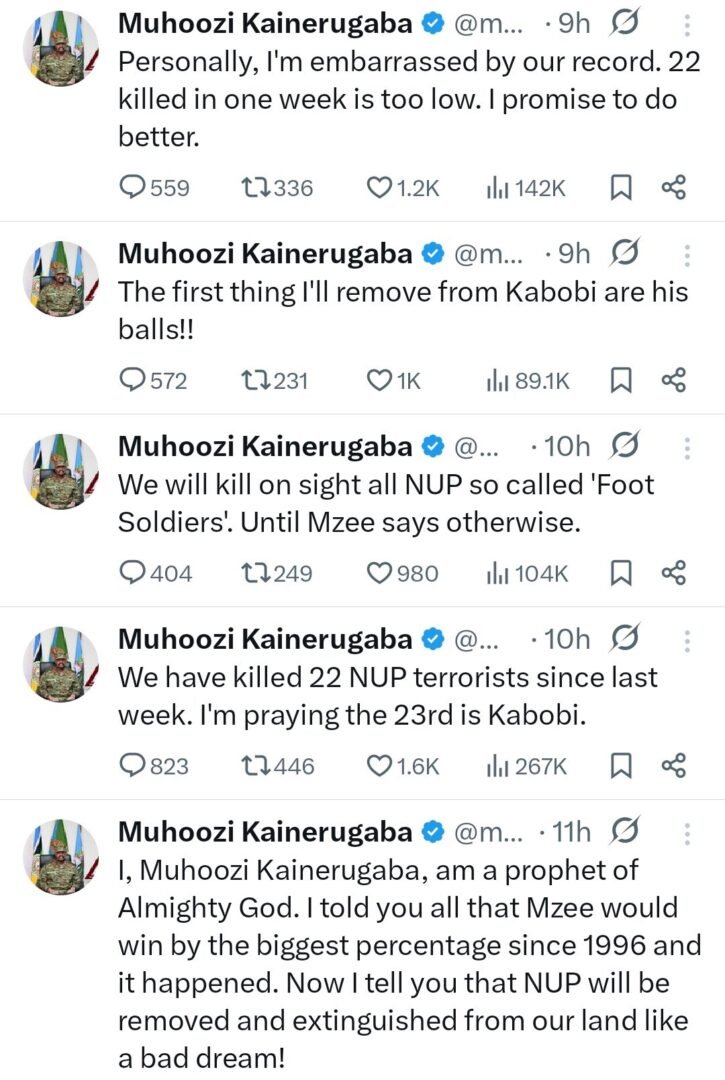
The tweets also included inflammatory language that was later deleted, during which Muhoozi made threats that shocked observers and civil society groups.
Bobi Wine’s response and claims
Bobi Wine responded swiftly, rejecting extensive claims by military authorities and asserting that security forces had raided his home, a charge the state has denied.
He characterised the incursion as an attempt to harm him. “You ordered the raid on my house to harm me,” he wrote, adding that he had “escaped” an alleged attempt to detain him.
He also dismissed official denials that he was being pursued, saying Gen Muhoozi’s ultimatum contradicted earlier claims by authorities.
Bobi Wine accused the security establishment of committing what he called “atrocities against Ugandans,” and stated his intention to reappear “on my own terms.” “Anyway, I will resurface when I decide.”
Election dispute and political climate
The public spat comes amid a heated post‑election environment in Uganda, where President Museveni was declared the winner with 71.65 per cent of the vote, while Bobi Wine garnered 24.72 per cent, according to official results.
Wine and his National Unity Platform (NUP) have rejected the outcome as fraudulent, alleging widespread irregularities, including ballot stuffing and intimidation, and has questioned the legitimacy of the results.
International observers, including United Nations representatives and African regional groups, noted a climate of intimidation and repression surrounding the polls, including an internet blackout imposed during the election period and reports of arrests and violence.
Opposition coalitions and civil society groups have condemned what they describe as a “militarised power grab” and have called for accountability and respect for democratic norms.
Security and opposition response
Other reports indicate that Bobi Wine’s home was the subject of a police and military operation in the days after the election, prompting him to go into hiding.
He later told Vivid Voice News that he was being protected by supporters while on the move but was not in custody.
Separately, frustration among opposition ranks has surfaced over ongoing restrictions on political activity and perceived harassment of party supporters following the elections.
These include allegations that military personnel occupied the homes of political figures, raised barriers to essential supplies, and exerted pressure on families of opposition leaders.