


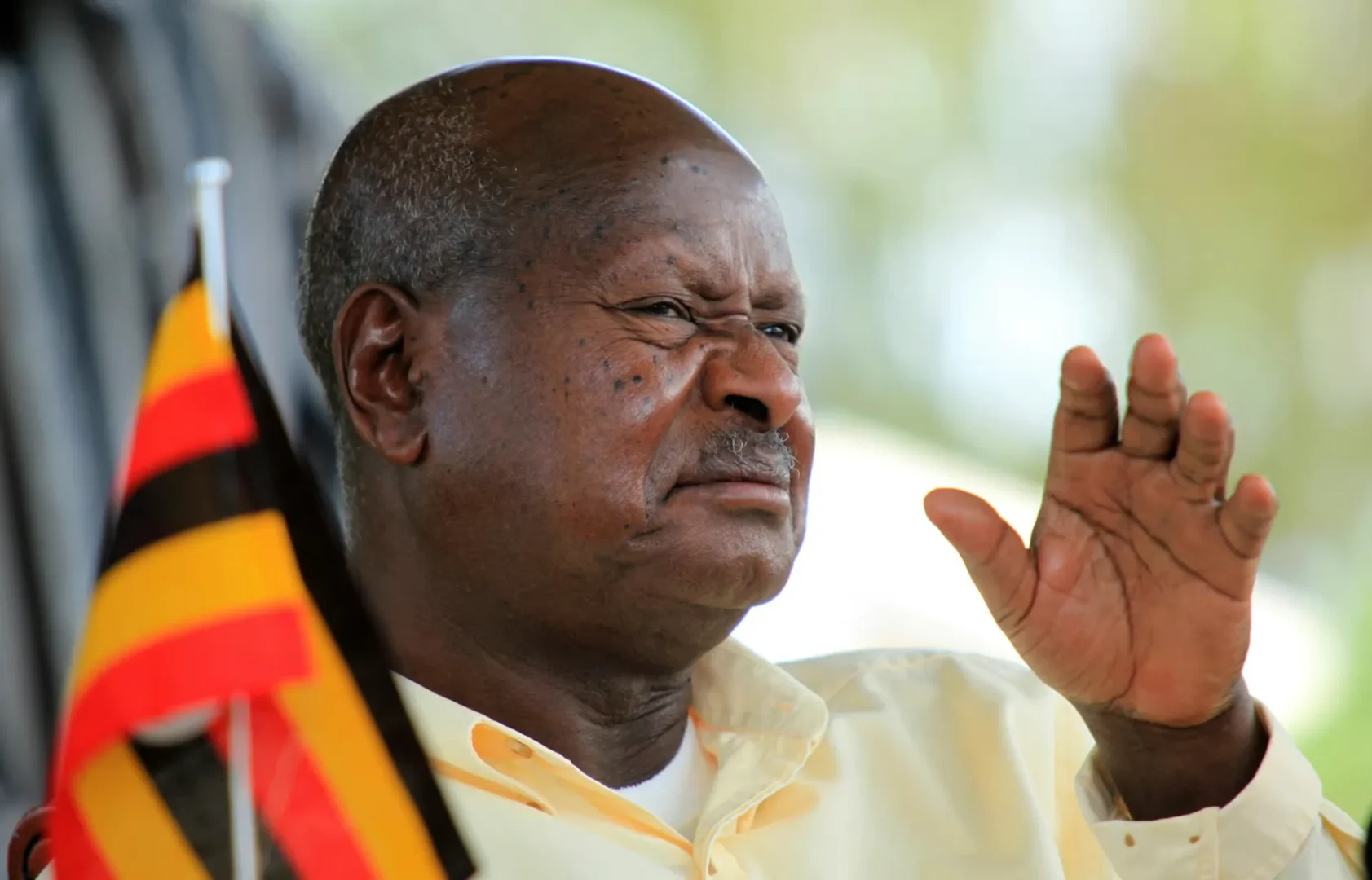
KAMPALA, Uganda — As Uganda prepares for its general election on 15 January 2026, the country’s political landscape is sharply divided over the nearly four decades of rule under President Yoweri Museveni, 81, and the rising challenge from opposition voices led by Robert Kyagulanyi Ssentamu, known as Bobi Wine.
Critics argue that Uganda’s democratic space has shrunk under repeated constitutional changes and increased repression, while supporters credit Museveni with decades of stability and development.
For a majority of Ugandans under 40, who account for more than three-quarters of the population, Museveni is the only head of state they have known.
He came to power in 1986 as leader of the National Resistance Movement (NRM) after a five-year insurgency and has since overseen periods of economic growth, expanded education access and a reduction in HIV infection rates, achievements that many of his backers emphasise.
Yet his tenure has also seen constitutional amendments removing term and age limits, enabling him to pursue a seventh consecutive term and potentially push his time in office toward half a century.
Contested power and institutional change
Museveni’s critics point to the removal of constitutional safeguards as evidence of systemic entrenchment of his power.
The 2005 abolition of term limits and the controversial 2017 elimination of presidential age caps are widely seen as tailored to his continued incumbency, sparking intense debate about the erosion of democratic norms.
In recent years legal scholars and civil society organisations have warned that such legal reforms contribute to weakening of independent institutions, particularly the judiciary and Parliament, a phenomenon some describe as a shift toward a “hybrid state” where democratic forms coexist with authoritarian practice.
Opposition under pressure
The 2026 election campaign has been marred by escalating repression, according to reports from the United Nations Human Rights Office and Amnesty International.
The UN rights chief warned of a “deepening crackdown” on opposition figures, journalists and civil society, and documented widespread arrests of supporters of the National Unity Platform (NUP) ahead of polling day.
Amnesty’s research found that security forces frequently used tear gas, batons and pepper spray to disperse peaceful assemblies, and that dozens of opposition supporters have been arbitrarily detained, in some cases reportedly subjected to brutality.
Opposition candidates and activists also say their campaign materials are being selectively removed, creating an uneven environment for political contestation. Leaders in areas such as Entebbe have accused security agents of tearing down posters for challengers while leaving ruling party materials untouched.
Bobi Wine, who has become a central symbol of youth mobilisation and popular dissent, has been repeatedly confronted by security forces during his campaign.
At a rally in Bweyogerere, he urged supporters to remain non-violent amid what he described as deliberate provocation by police. “Please don’t give in to police provocation,” he told crowds, “They want you to get angry … but the only weapons we have are the national flag, cameras and the truth.”
Historical and personal stakes
The current election follows the long-standing marginalisation of seasoned opposition voices. Prominent figure Dr Kizza Besigye, a former Museveni ally and four-time presidential candidate, has been held in detention on treason charges since 2024, a move critics characterise as politically motivated.
Many of Bobi Wine’s supporters resonate with his decades-long push for change, but Uganda’s history shows a pattern of state pushback against dissent.
Observers note that even periods of economic progress have been accompanied by increasing constraints on civic freedoms and political expression.
Stability and support for the incumbent
Supporters of Museveni emphasise the relative stability and development enjoyed under his rule.
They highlight Uganda’s large refugee population, over 1.7 million people fleeing conflict in neighbouring countries have found asylum in Uganda, a point used to underline the government’s role in regional stability.
Also Read: Ugandans decide – or do they? The 2026 vote, power, and the truth
Many voters also express a belief that continuity will secure further economic development, especially as Uganda looks toward the expansion of oil production and increased foreign investment agreements with countries such as the United Arab Emirates and China.
Youth, change and the future
Despite these developments, a growing share of Ugandans, particularly in urban centres, voice frustration over entrenched leadership, high youth unemployment and limited political opportunities.
Advocacy groups and surveys suggest significant public support among younger citizens for restoring constitutional limits on presidential terms and expanding democratic participation.
As election day approaches, the contest reflects deep societal questions about leadership, institutional resilience and the balance between stability and democratic change in Uganda’s future.
