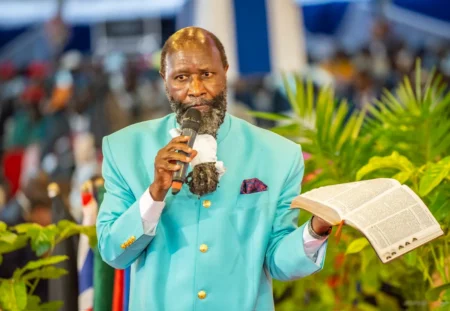




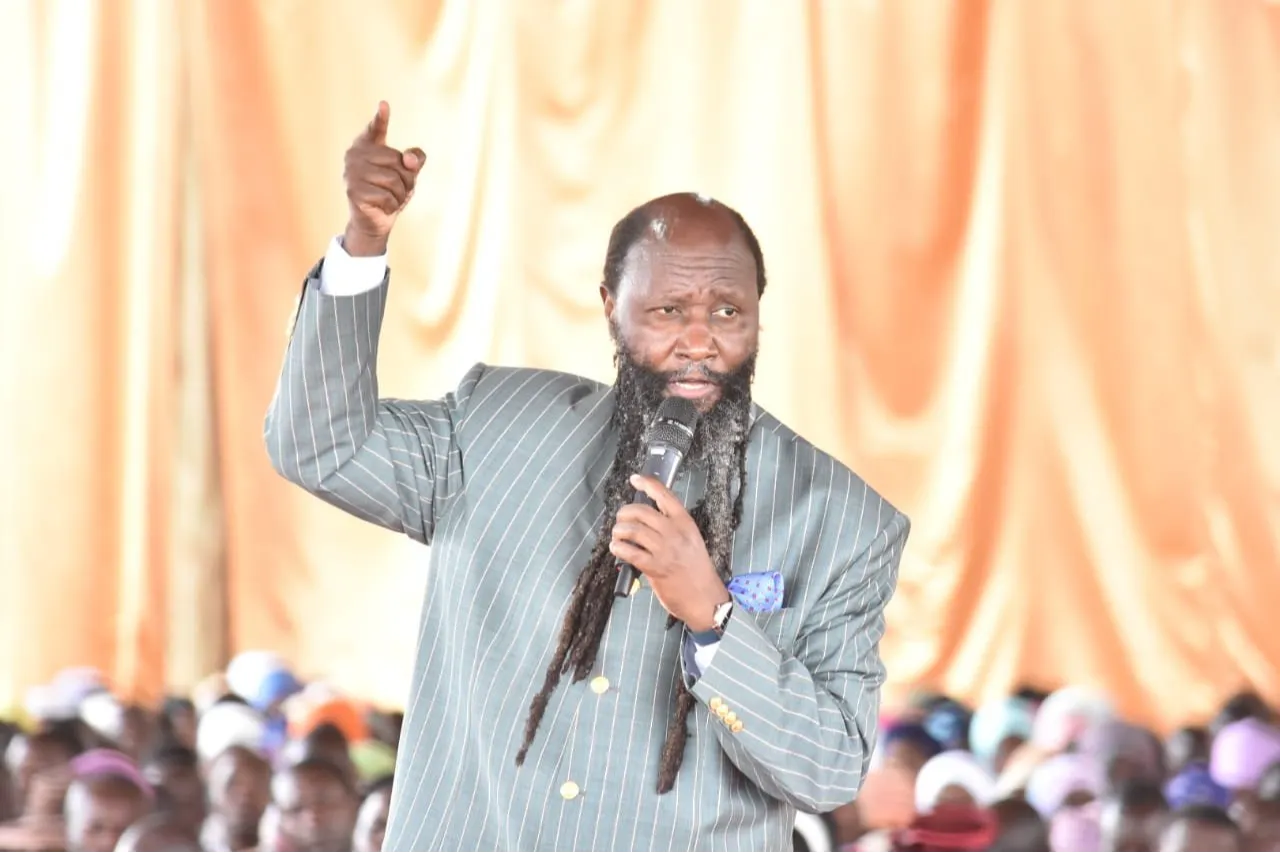
NAIROBI, Kenya — In recent weeks, self-styled religious figure Prophet Dr David Owuor has dominated headlines across Kenya for his controversial claims of miraculous healings, apocalyptic warnings and calls for formal investigations into his ministry’s purported cures for serious illnesses such as HIV/AIDS.
The debate has reignited broader questions about the role of charismatic preachers, the rise of “one-man churches,” and the intersection of faith, authority and exploitation in contemporary religion.
Owuor, leader of the Ministry of Repentance and Holiness (MRH), has attracted large crowds to his crusades, particularly a late-December 2025 revival in Nakuru City. He frames his mission as a call to holiness, repentance and a return to biblical values, bolstered by dramatic claims of divine revelation and miraculous healing that are shared widely on social media.
At a recent public conference, Owuor issued a challenge to authorities:
“Given that we have extensive medical documentation spanning numerous cases, we’re calling on the Government of Kenya, through the Ministry of Health and the KMPDC, to conduct a thorough, formal investigation of these documented healings. We’re not asking for blind acceptance. We’re asking for an examination.”
The statement came amid mounting scrutiny from both church leaders and government bodies. The National Council of Churches of Kenya (NCCK) has officially distanced itself from Owuor’s extraordinary claims, emphasising that divine healing is a matter of faith and not the exclusive domain of any single preacher.
“No single preacher holds exclusive divine authority over healing,” said Rev Elias Otieno, NCCK National Chair, urging believers not to abandon established medical care. “We believe it is God who heals, and He chooses whom to heal at His own time.”
The concern is not purely theological. The Kenya Medical Practitioners and Dentists Council (KMPDC) has warned that unsupported assertions about curing life-threatening conditions could lead patients to forsake evidence-based treatment, with potentially fatal consequences. The regulator is reportedly preparing to pursue disciplinary action against medical professionals who appeared to endorse unverified faith-healing claims.
Miracles, money and media
The controversy around Owuor is the latest chapter in a long-standing pattern across Kenya’s evolving religious landscape: the rise of self-proclaimed prophets whose extravagant claims blur the lines between spiritual leadership, fame and exploitation.
Kenya’s history has seen several high-profile examples of religious figures courting controversy and public scrutiny. One 2019 exposé highlighted “prophets” whose purported miracles and teachings were tied to lucrative tithes, mandatory payments and staged testimonies, revealing how some charismatic leaders coaxed followers into giving significant sums in exchange for divine favour or healing.
In one documented case, televised services reportedly involved washing feet with chemical solutions presented as miraculous cures, and staged healings using paid participants, all used to solicit donations from believers.
While Owuor’s ministry denies outlandish rumours, including viral claims that he had predicted specific dates for the “end of the world,” such narratives persist on social media and in informal networks, further complicating public understanding of faith and fact.
The church has publicly refuted these claims, reiterating that “no one knows the day or the hour” of any eschatological event.
The social and ethical stakes
Critics argue that the power of such preachers lies not just in religious messaging but in their ability to leverage media, spectacle and social fear.
Viral videos of Owuor declaring the “sound of the final trumpet” have sparked a mix of wonder and scepticism online, with some followers hailing him as an instrumental voice and others disparaging such performances as theatrics.
Social commentary on platforms such as Reddit and Twitter reflects wider public ambivalence. Some former followers describe Owuor’s gatherings as cult-like environments marked by psychological control and doctrinal absolutism, while others dismiss the critiques as uninformed or hostile to faith.
These discussions highlight the deep emotional investment many believers place in their spiritual leaders, often at personal and financial cost.
The persistence of such movements points to broader societal currents. In contexts where public services are increasingly strained, unemployment and social instability prevail and access to healthcare remains uneven, large-scale religious crusades offer meaning, community and hope.
Yet experts caution that hope without accountability can also become a vehicle for exploitation.
Faith in the age of celebrity prophets
The rise of figures like Owuor underscores a global trend: religious leadership intersecting with media savviness, charismatic performance and celebrity culture.
The phenomenon is not unique to Kenya. Across Africa and beyond, self-declared prophets have drawn millions, often combining biblical rhetoric with claims of supernatural insight and salvation — a blend that appeals to both devotion and curiosity.
Also Read: Controversial Kenyan ‘miracle babies’ Bishop Gilbert Deya dies in tragic road accident
But for public health officials, theologians and sceptical observers, the core question remains: Where should society draw the line between faith and verification?
While believers argue that spiritual experiences transcend empirical measurement, critics maintain that unchecked miracle claims risk real harm, especially when they influence decisions about health, finances and family wellbeing.
As Owuor’s call for formal investigation continues to reverberate, Kenya finds itself at a crossroads, grappling not only with questions of faith, but with how religious authority is exercised, regulated and understood in a modern society.