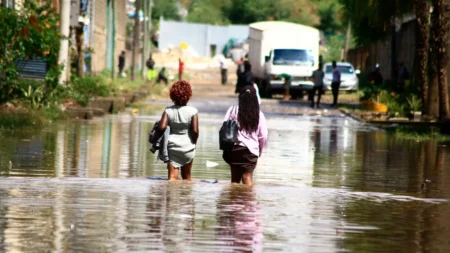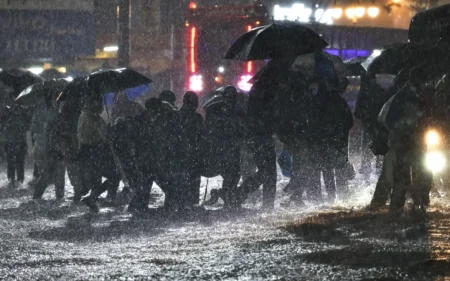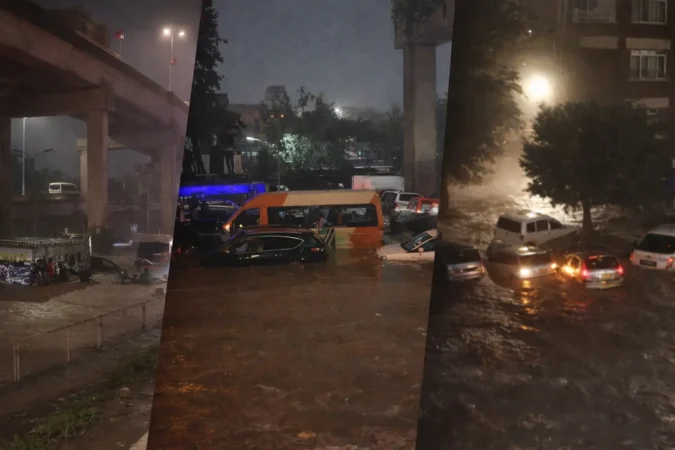




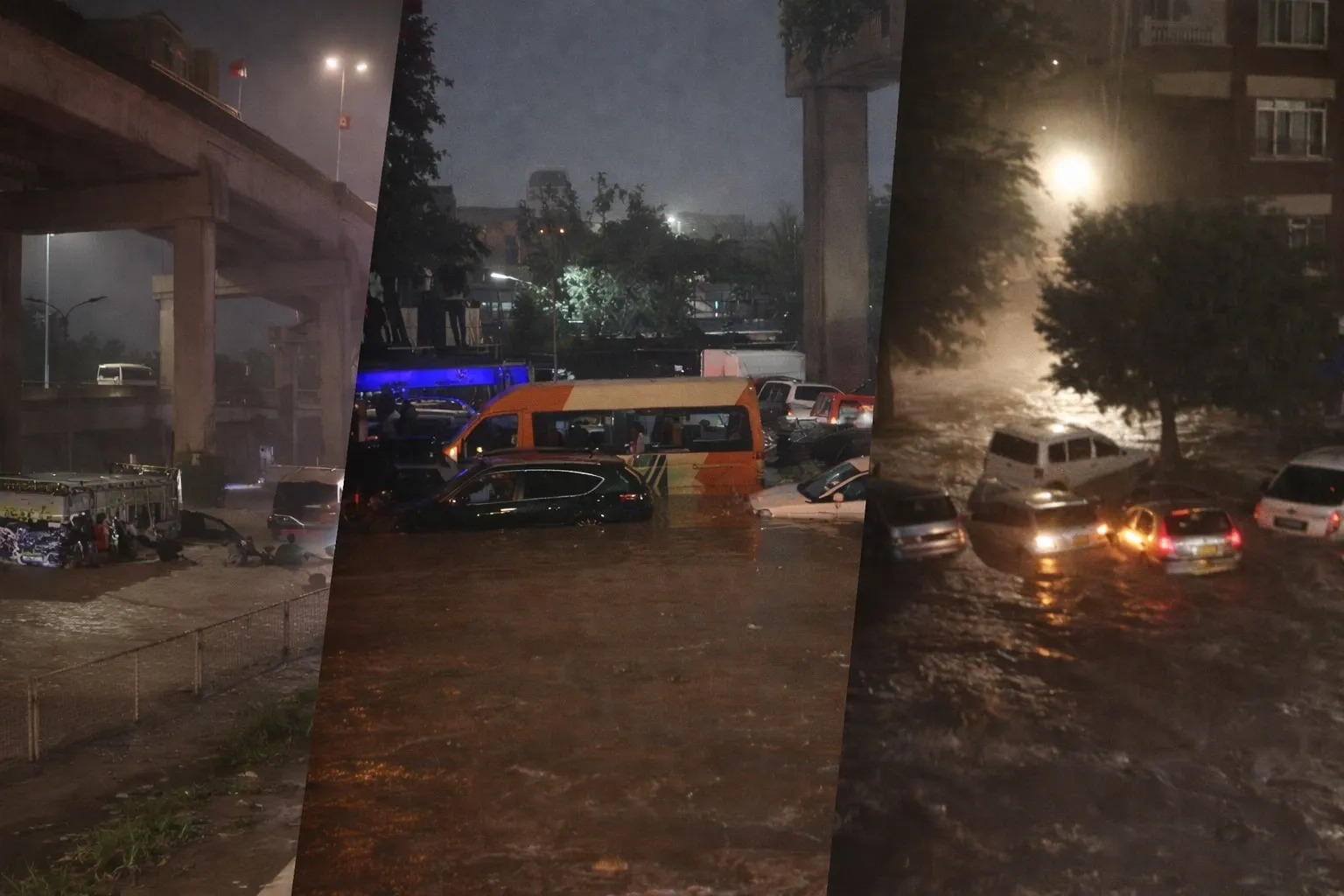
NAIROBI, Kenya — Large parts of Nairobi were flooded on Saturday after heavy rainfall overwhelmed drainage systems and caused rivers to burst their banks, damaging homes and leaving major roads impassable.
The flooding comes just a week after another intense downpour displaced hundreds of residents across the Kenyan capital, raising concerns about the city’s vulnerability to extreme weather and poor drainage infrastructure.
Authorities have now identified 37 neighbourhoods in Nairobi as high-risk flood zones, according to the Ministry of Interior.
The areas were mapped under the Nairobi Rivers Regeneration Programme, a government initiative aimed at restoring river corridors and improving environmental management within the city.
According to the ministry, the mapping exercise identified settlements located along riverbanks and low-lying areas prone to flooding, including locations along the Nairobi River and its tributaries.
These include communities situated downstream, midstream and upstream along the river network.
Flood-prone areas across Nairobi
In Nairobi East, the identified neighbourhoods include Kiambiu, Dandora, Kariobangi, Kayole, Komarock, Njiru, Ruai, Mwiki, Donholm, Savannah, Tassia and Fedha.
In Nairobi West, the flood-risk areas include Madaraka, Nairobi West, Lang’ata, Kawangware, Kangemi, Lavington, Westlands, Parklands, Kitisuru, Spring Valley, Kileleshwa and Chiromo.
Meanwhile, the Nairobi North corridor includes Mathare, Korogocho and Lucky Summer, which lie along the Mathare River, where dense informal settlements are built close to riverbanks.
Within Nairobi Central, flood-prone locations include the Central Business District (CBD), Globe, Gikomba, Eastleigh and the Industrial Area.
Further south, areas such as Kilimani, Kibera, South C, South B, Mukuru Kwa Reuben and Kwa Njenga, located along the Ngong River corridor, were also identified as vulnerable to flooding.
Authorities have urged residents living in riparian zones and low-lying neighbourhoods to remain alert during periods of heavy rainfall.
Rescue operations after city floods
Saturday night’s downpour left parts of the city marooned after the Nairobi and Ngong rivers overflowed, cutting off roads and trapping residents.
The Kenya Red Cross Society confirmed that at least 13 people were rescued during emergency operations.
Eleven of those rescued were passengers stranded inside a matatu along Bunyala Road, while two children were trapped inside a flooded house in Kilimani.
Emergency teams responded overnight to assist affected residents and clear blocked drainage channels.
Government response
President William Ruto has assured Kenyans that the government is responding to the flooding and coordinating rescue operations.
In a statement issued on Sunday, the Head of State said the “government remains fully mobilised to respond.”
Also Read: Kenya issues heavy rain alert for Nairobi as flood and disease risks rise
According to the President, a multi-agency team comprising emergency services, security agencies, humanitarian organisations and technical departments has been deployed to manage the situation in Nairobi and other affected regions.
“Relevant agencies are also actively assisting with rescue and evacuation operations, as well as clearing blocked drainage systems and restoring access routes in affected areas,” added Ruto.
Growing flood concerns in Nairobi
Seasonal floods have increasingly affected Nairobi in recent years due to rapid urbanisation, encroachment on riverbanks and inadequate drainage infrastructure.
Environmental experts warn that climate change and extreme rainfall events could worsen flooding risks unless major infrastructure and river restoration projects are implemented.
The government’s Nairobi Rivers Regeneration Programme aims to rehabilitate polluted waterways, reclaim riparian land and improve flood management systems across the city.
Authorities have urged residents to remain vigilant as the rainy season continues, particularly those living in flood-prone areas.