



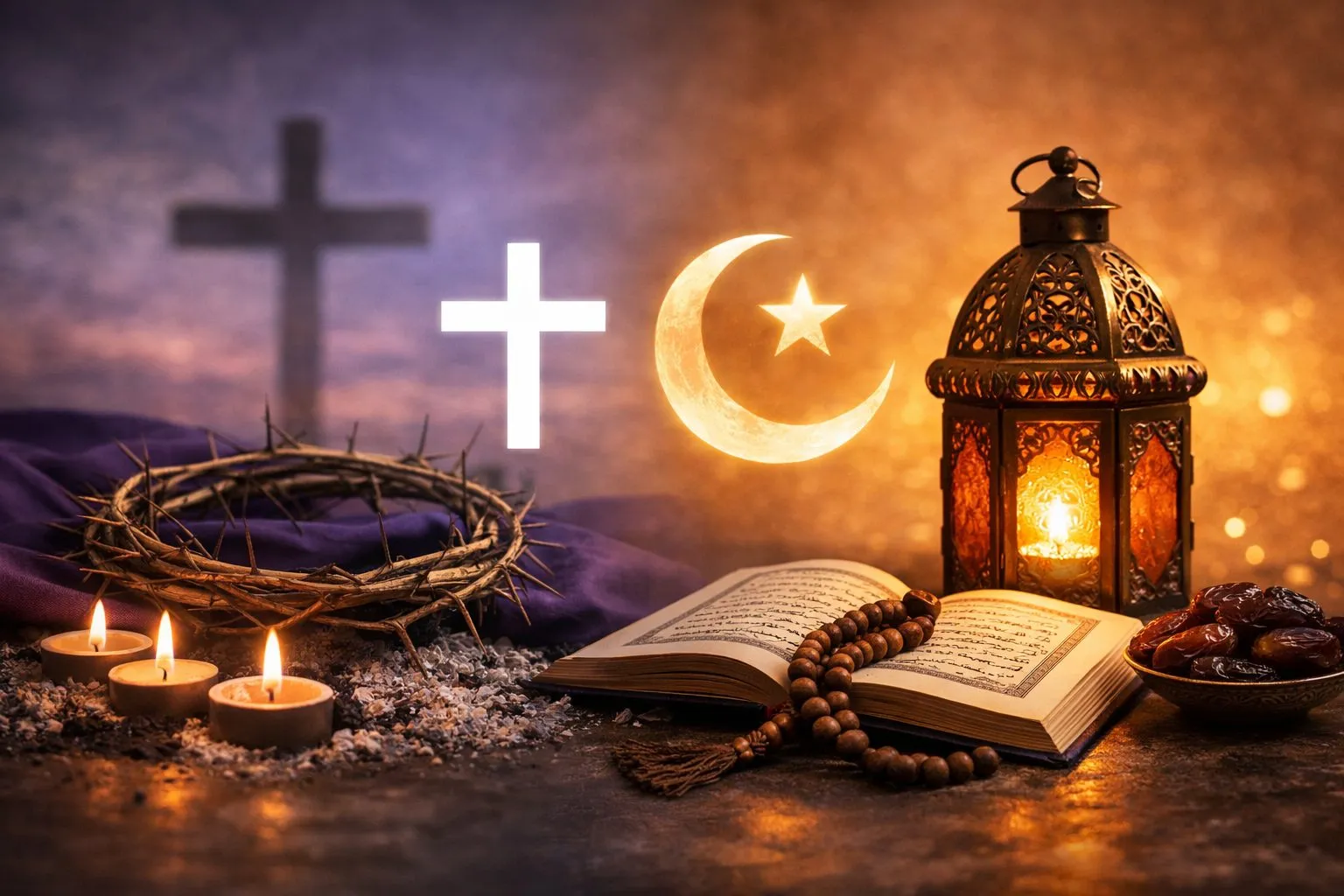
NAIROBI, Kenya — Christians and Muslims across the world are beginning sacred fasting seasons at the same time, a convergence not seen in more than three decades.
This year, the start of Ramadan coincides with Ash Wednesday, which marks the beginning of Lent in the Christian calendar.
While the overlap is calendrical rather than theological, it has drawn attention to the shared spiritual themes of fasting, repentance and renewal that underpin both traditions.
Ash Wednesday and the meaning of Lent
For many Christians, particularly within the Roman Catholic Church, as well as Anglican, Lutheran and Methodist communities, Ash Wednesday signals the start of a 40-day period of reflection leading to Easter.
The imposition of ashes on believers’ foreheads serves as a visible sign of repentance and humility. Clergy traditionally recite the words, “Remember that you are dust, and to dust you shall return,” underscoring the transient nature of human life.
The symbolism of ashes is rooted in biblical tradition. In the Old Testament, ashes and sackcloth represented mourning and repentance, including the people of Nineveh responding to Jonah’s preaching and Job’s declaration of contrition. In the New Testament, Jesus referenced “sackcloth and ashes” when rebuking cities that did not repent.
Historically, Lent emerged in the early centuries of Christianity as a period of public atonement for grave sins and preparation for baptism.
By the fourth century, it evolved into a 40-day observance reflecting Jesus’ time of fasting in the wilderness, as well as Moses’ 40 days on Mount Sinai.
Contemporary practice around the world
Today, practices vary globally. In many churches, ashes are prepared from burned palm branches from the previous year’s Palm Sunday services. Psalm 51, known as the Miserere, is often recited as a penitential prayer.
Catholics traditionally abstain from meat on Fridays during Lent. Adults are expected to eat one full meal and two smaller meals on Ash Wednesday and Good Friday, while many believers give up personal luxuries as a form of discipline.
In some countries, local customs have developed distinctive expressions of the day. In Ireland, Ash Wednesday has sometimes been linked symbolically to “National No Smoking Day,” encouraging believers to give up smoking as part of Lenten sacrifice.
In the United States, several churches conduct “ashes to go” services, distributing ashes in public spaces to reach commuters and passers-by.
The late Pope Benedict XVI once described Lent as a spiritual struggle requiring discipline and faith.
“Lent is a period of spiritual ‘combat’ which we must experience alongside Jesus, not with pride and presumption, but using the arms of faith: prayer, listening to the word of God and penance. In this way, we will be able to celebrate Easter in truth, ready to renew the promises of our Baptism,” he said.
Ramadan’s parallel spiritual journey
At the same time, Muslims worldwide are entering Ramadan, a month of dawn-to-sunset fasting, prayer and charitable giving commemorating the revelation of the Qur’an.
Although Islam follows a lunar calendar and Christianity largely follows a solar-based liturgical calendar, occasional overlaps occur.
Also Read: Several injured in Yumbe as Muslims, Christians clash over pork business
Scholars note that such alignments highlight shared Abrahamic traditions of fasting as a pathway to spiritual renewal.
For both faith communities, the season emphasises self-discipline, repentance, generosity and moral reflection.
A moment of shared reflection
Religious leaders have observed that the convergence offers a unique opportunity for interfaith understanding in diverse societies where Christians and Muslims live side by side.
While the theological foundations differ, the simultaneous observance underscores common themes: humility, spiritual recalibration and preparation for renewal, culminating in Easter for Christians and Eid al-Fitr for Muslims.
Ash Wednesday ultimately reminds believers of mortality and the call to transformation, while Ramadan invites Muslims to deepen devotion and strengthen community bonds.
This year’s rare alignment offers a powerful symbolic reminder of the universal human search for meaning, repentance and hope.