


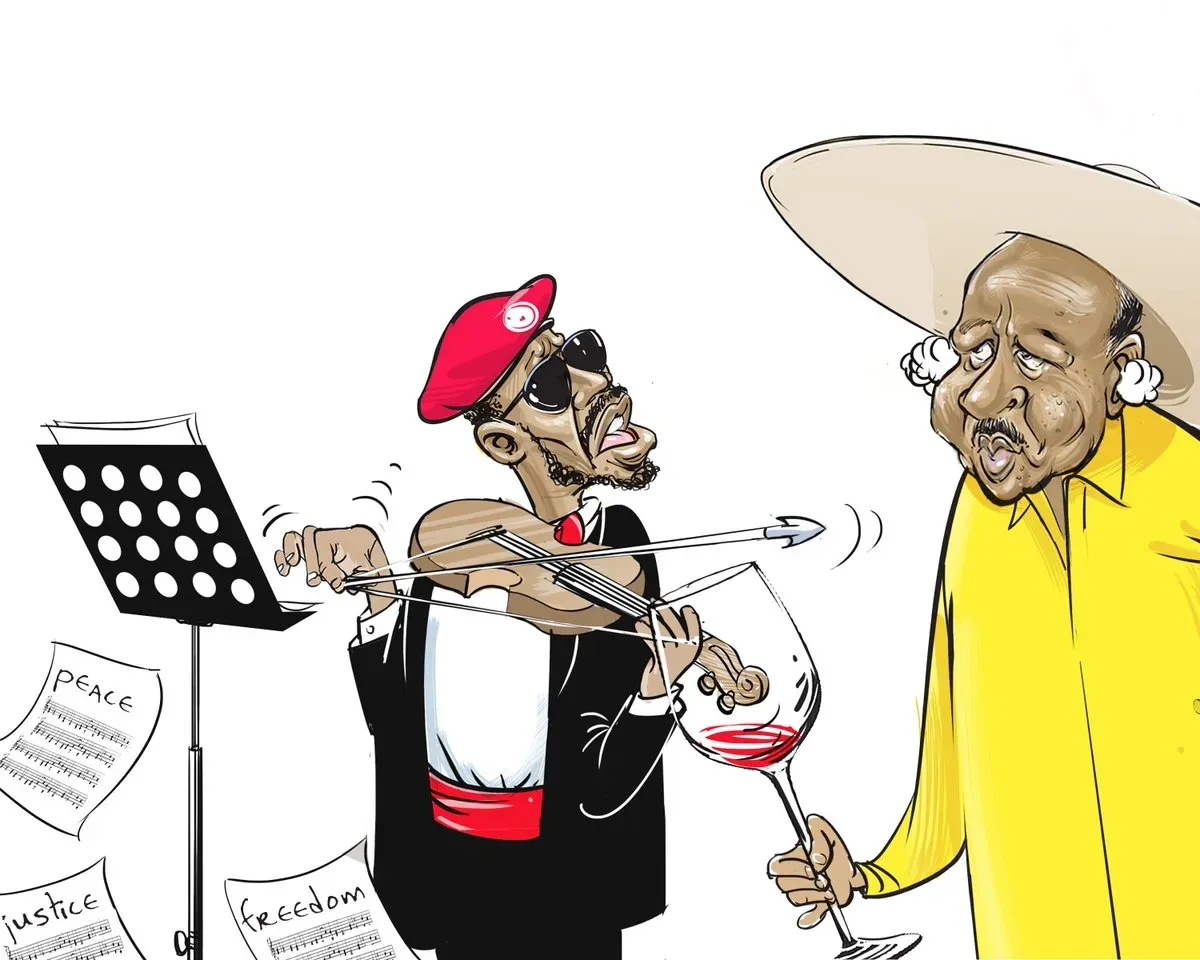
KAMPALA, Uganda — As Ugandans prepare to vote next week, the country faces a defining political choice: extend the nearly four-decade rule of its long-serving president or back a candidate promising sweeping reforms and generational change.
President Yoweri Museveni, 81, who has governed since 1986, is seeking a seventh consecutive term in office. His principal rival, musician-turned-politician Robert Kyagulanyi, popularly known as Bobi Wine, 43, has campaigned on a platform of deep reform in governance, economic opportunity and revitalised democratic practice.
The run-up to the vote has been marred by widespread reports of political repression. Opposition activities have been disrupted by authorities, with activists detained and rallies broken up by police, according to local and international rights groups.
Critics argue these actions have fostered a climate of fear ahead of the election.
When and what are Ugandans voting for?
The general election is scheduled for Thursday 15 January 2026. Polling stations will open at 07:00 local time (04:00 GMT) and close at 16:00, with anyone in the queue allowed to cast their ballot.
Some 21.6 million registered voters are expected to participate in multiple contests:
- Presidential election – eight candidates are on the ballot.
- Parliamentary elections – 353 constituency members of parliament to be elected.
- Women’s representative seats – 146 positions, one for each district.
The presidential contest
Among the eight presidential hopefuls, Museveni and Bobi Wine remain the dominant figures.
This election marks the second head-to-head contest between the two, following the 2021 poll, which Museveni won with about 58% of the vote to Bobi Wine’s 35%.
That election was clouded by allegations of rigging and a forceful crackdown on the opposition, drawing criticism from international observers.
Yoweri Museveni – National Resistance Movement (NRM)
Museveni first came to power as a guerrilla leader promising to restore stability and democracy after prolonged conflict and dictatorship in the 1980s.
Once celebrated as a reformer, his long tenure has become increasingly controversial, characterised by allegations of human rights abuses, harassment of opponents, and centralisation of power.
Constitutional amendments removing age and term limits have enabled Museveni to extend his rule well into his eighth decade.
Supporters credit him with maintaining relative stability and infrastructure investment. Museveni argues he remains the best guarantor of security and development for Uganda.
Bobi Wine – National Unity Platform (NUP)
Bobi Wine, born Robert Kyagulanyi, rose to prominence as a musician before entering politics. He is widely regarded as the strongest challenger to Museveni, especially among young, urban and disenfranchised voters.
Nicknamed the “ghetto president,” Bobi Wine has sought to harness widespread frustration over unemployment, corruption and lack of opportunities for youth. His party, the National Unity Platform (NUP), emerged as the largest opposition bloc in the 2021 parliamentary elections.
Since then, Bobi Wine and his supporters have frequently faced arrest and alleged intimidation at the hands of security forces.
Other candidates and opposition figures
The remaining candidates include Frank Bulira, Robert Kasibante, Joseph Mabirizi, Nandala Mafabi, Mugisha Muntu and Mubarak Munyagwa. None have matched the national profile or support bases of the two front-runners.
Prominent opposition figure Dr Kizza Besigye, a four-time presidential contender, remains out of the race. He has been held in custody since his arrest in Nairobi in 2024, facing treason charges that he denies.
Key issues for voters
Economy and unemployment
Economic concerns, especially high levels of youth unemployment, dominate the national conversation.
Despite modest increases in average incomes since the pandemic, job creation has lagged behind population growth, particularly for young Ugandans.
Access to quality education, healthcare and reliable infrastructure are recurring priorities among voters, especially in regional and rural constituencies.
Corruption remains a significant public concern. In Transparency International’s 2024 Corruption Perceptions Index, Uganda ranked 140th out of 180 countries, reflecting ongoing reports of bribery, nepotism and institutional corruption.
Freedom, fairness and security environment
The conduct of elections in Uganda has long attracted scrutiny.
Government officials insist this year’s poll will be free and fair, but United Nations experts and rights groups have warned of a “pervasive climate of fear” from ongoing harassment of opposition supporters.
Also Read: Starlink and Uganda’s 2026 election battle: Who controls the internet controls the vote
Amnesty International has documented the use of tear gas, pepper spray, beatings and other violent tactics against opposition rallies, describing the campaign period as a “brutal campaign of repression.”
The government maintains these measures are necessary to prevent unrest and ensure public safety.
Election day safeguards and risks
Bobi Wine has urged voters to remain at polling stations after voting to protect their ballots from tampering.
The Electoral Commission, however, has advised voters to cast their ballot peacefully and then go home, assuring that counting will be transparent and observed by party agents, media and international monitors.
Concerns persist over the potential for an internet shutdown, a tactic previously used during elections to disrupt communication and impede independent monitoring.
In response, the NUP has promoted a vote-monitoring app (Bitchat) that uses Bluetooth technology to share verified results even without internet connectivity.
When will results be known?
If the process runs smoothly, preliminary results are expected by 16:00 local time (13:00 GMT) on Saturday, 17 January. Under Ugandan law, the Electoral Commission has 48 hours from the close of voting to declare the presidential outcome.
Under the first-past-the-post system, a candidate must secure more than 50% of the votes to win outright. If no candidate achieves this threshold, a run-off election will be held within 30 days between the top two contenders.
Museveni has historically secured more than half of the votes in the first round in all previous elections, a record that has fuelled both confidence and controversy.
